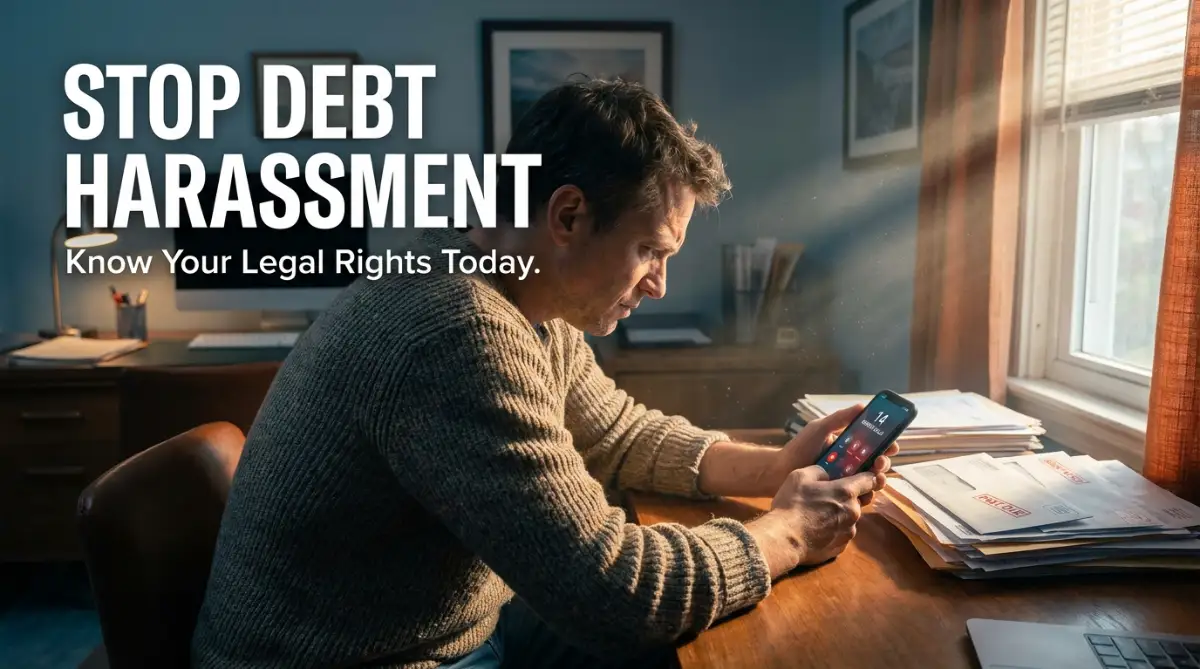
The Endless Ringing: My Nightmare With Relentless Bill Collectors
I still remember the intense knot in my stomach every time my phone rang. It felt like I was being hunted by unseen predators who knew exactly how to ruin my day. My heart would race, and I would just stare at the unknown number flashing on the screen, feeling completely paralyzed. I was dealing with aggressive debt collectors who simply would not leave me alone. I felt totally trapped, thinking they held all the power and I had absolutely none. It took me a long time to realize that I was wrong, and I actually had a strong legal shield.
When you owe money, society often makes you feel like a criminal. These aggressive agents feed on that exact shame and guilt to manipulate you. They use fear as their primary weapon, hoping you will panic and pay up without asking any questions. The constant pressure quickly begins to tear away at your mental peace. You start avoiding calls from your own friends and family because you are too scared to pick up the phone.
Every single day feels like a heavy burden when someone is constantly threatening your financial security. You might even start losing sleep, lying awake at night wondering if they will call your boss or show up at your front door. The anxiety bleeds into your work performance, your relationships, and your overall health. It is a lonely, exhausting cycle that feels completely impossible to escape.
However, you are not alone in this frightening situation. Millions of hardworking people face this exact same intimidation every single day. The reality is that falling behind on bills does not strip away your basic human rights. You deserve respect, privacy, and fair treatment, regardless of your bank account balance.
Debt collectors want you to remain blind to the rules that govern their industry. They rely heavily on your lack of legal knowledge to push their illegal agendas forward. Once you learn the boundaries they are forced to respect, their empty threats lose all their scary power. You can instantly shift the balance of power back into your own hands.
Knowledge is the strongest armor you can wear in this stressful battle. When you understand exactly what a collector can and cannot do, the fear quickly disappears. You will soon see them not as powerful authorities, but simply as ordinary workers reading from a scripted piece of paper.
Understanding the Rules of the Game: They Do Not Own You
We need to clear up a massive misconception right now. Debt collectors are not police officers, they are not judges, and they do not have special government powers. They are private business employees trying to collect a bill to make a profit. Once you view them through this realistic lens, their aggressive shouting starts to sound a lot less intimidating.

The Boundary of Basic Human Decency
The law strongly dictates that collection agencies must treat consumers with basic dignity. They are strictly forbidden from using abusive, profane, or highly offensive language during their calls. If an agent starts cursing at you or calling you degrading names, they are instantly breaking the law. You have every right to hang up the phone immediately.
Many aggressive agents will try to make you feel worthless to break your spirit. They might yell, belittle your financial situation, or insult your intelligence. Do not let their toxic words get under your skin. They are using a psychological trick designed to make you act out of pure desperation.
Setting Clear Time and Place Boundaries
Did you know that these agencies cannot just call you whenever they feel like it? The law sets very strict timeframes for their communication. Generally, they are not allowed to contact you before a certain hour in the morning or late into the night. Your local time zone determines these boundaries, and any call outside these hours is highly illegal.
Furthermore, they cannot harass you at places they know are inconvenient. If you tell a collector that you are not allowed to receive personal calls at your workplace, they must stop calling your job. Your employer has nothing to do with your personal debts, and collectors cannot use your job as a weapon to embarrass you.
The Power of the Written Word: Cease and Desist
One of the most effective tools you have is something called a "Cease and Desist" letter. This is a formal, written request demanding that the collection agency stop contacting you entirely. Once they receive this letter, they are legally required to stop calling your phone or sending you letters.
They can only contact you one final time to confirm they received your letter or to notify you of a specific legal action. Writing this letter does not erase your debt, but it instantly kills the daily harassment. You regain your quiet mornings and peaceful evenings. You take back control of your own phone.
The "Pro Tip" I Wish I Knew Earlier
I used to make the terrible mistake of arguing with debt collectors over the phone, trying to explain my sad financial story. I thought if I just explained why I was struggling, they would show some mercy and leave me alone. My realization was that these agents do not care about my personal struggles; they only care about hitting their daily collection quotas. From that day forward, I stopped explaining myself, kept my emotions completely locked down, and only communicated in writing. This simple shift completely stopped their psychological manipulation and gave me my confidence back.
Exposing the Myth of Empty Threats
Aggressive agents love to throw around terrifying legal words to make you panic. They will threaten you with immediate arrest, jail time, or completely seizing all your property by tomorrow morning. These are almost always empty lies designed to create instant panic.
Myth vs. Reality in Debt Collection
Let us look closely at some of the most common lies collectors tell to scare innocent people.
- The Jail Threat: No one goes to jail for failing to pay a standard credit card bill, medical debt, or personal loan. Debtors' prisons were abolished a very long time ago.
- The Police Threat: Collectors cannot send the local police to your house to arrest you. The police do not enforce private debt collections.
- The Instant Garnish Threat: They cannot simply reach into your bank account and take your money without a formal court order. They must sue you first, win the case, and get a judge's permission.
Never let a stranger on the phone convince you that you are going to prison. If they make these kinds of extreme threats, they are handing you the perfect evidence to report them for illegal behavior.
How to Properly Document the Harassment
If you want to fight back against aggressive bullies, you need to keep a solid paper trail. Documentation is your best friend in this battle. Every time they call, write down the date, the exact time, the name of the agent, and the name of their company.
Keep a small notebook right next to your phone specifically for this purpose. If they use bad language or make wild threats, write down their exact words as closely as you can remember. This detailed log becomes a powerful weapon if you ever need to file a formal complaint with government consumer protection agencies.
You should also save every single piece of mail they send you. Keep all the letters, envelopes, and notices in a safe folder. Never throw away anything they mail to you, even if it makes you angry to look at it. Those letters often contain hidden proof that they are violating legal collection standards.
The Strategy of Demanding Validation
Many people blindly pay debts they do not even truly owe just to make the scary phone calls stop. Collection agencies are notorious for buying old, messy debt records that are full of errors. Sometimes they target people with the same name, or they try to collect on debts that have already been paid off.
Why You Must Ask for Proof
You have the absolute right to demand that the agency prove you actually owe the money. This is called requesting "debt validation" or "debt verification." When a new collector contacts you, you have a short window of time to send them a formal letter asking for this exact proof.
Once you send a validation request, they must completely stop all collection efforts until they send you solid evidence. They cannot call you, they cannot demand payment, and they cannot report you to the credit bureaus during this pause. This simple request puts the burden of proof entirely on them.
What Actually Counts as Proof?
A simple printout with your name and a random dollar amount is not enough proof. They need to show original documents, statements from the original creditor, and a clear breakdown of any added fees or strange interest charges. If they cannot produce this solid paperwork, they have no legal right to collect the money from you.
Often, these agencies buy debts for pennies without getting any of the supporting documents. When you challenge them for proof, they simply give up and move on to an easier target. You can literally wipe away a massive headache just by asking them to do their job properly.
Avoiding the Accidental Debt Restart
You have to be incredibly careful about what you say on the phone with these agents. Debts have a legal expiration date, known as the statute of limitations. Once this time period runs out, they can no longer successfully sue you in court for the money.
However, if you make a tiny payment, or even admit that the debt is yours on a recorded line, you can accidentally restart the legal clock. This is why you should never agree to a "good faith" payment just to get them off the phone. You might be bringing a dead, uncollectible debt back to life.
Always keep your conversations extremely short and entirely strictly professional. Say things like, "I am requesting written validation of this debt," and then politely hang up the phone. You do not owe them a long, drawn-out conversation about your life choices or your current bank balance.
Safeguarding Your Personal Network
One of the most embarrassing tactics these bullies use is contacting the people around you. They will try to call your parents, your neighbors, or your coworkers to ask about you. The goal is to shame you so deeply that you pay the bill just to save your public reputation.
Strict Limits on Contacting Others
The rules about contacting third parties are incredibly strict to protect your privacy. A collector is generally only allowed to contact other people to find out your current address, your phone number, or where you work. They are absolutely forbidden from telling your friends or family that you owe a debt.
If they call your neighbor and say, "Tell John he needs to pay his credit card bill," they have committed a massive violation. They cannot discuss the details of your financial life with anyone except you or your legal attorney. Your debt is your private business, and they must keep it that way.
How to Stop the Neighbor Calls
If you find out a collector is harassing your family members, you need to act quickly. Send them a certified letter stating that they already have your correct contact information and must stop calling third parties. You should also explicitly state that they are violating your privacy rights by discussing your personal matters.
Warn your family members and friends that they might receive these strange calls. Tell them to simply hang up and not provide any information to the strangers on the phone. When your personal network refuses to play along with the collector's games, their shaming strategy completely falls apart.
Taking the Fight to the Authorities
You do not have to accept illegal behavior and suffer in silence. There are powerful government organizations designed specifically to protect regular consumers from these exact predatory practices. When you report a bad agency, you are not just helping yourself; you are protecting others from facing the same nightmare.
Where to File Your Complaints
Depending on where you live, there are usually specific financial protection bureaus or attorney general offices that handle these issues. You can easily submit a formal complaint online detailing all the harassment you have experienced. Include your detailed call logs, copies of threatening letters, and any other evidence you have gathered.
These government agencies take consumer complaints very seriously. If an agency gets too many complaints, they can face massive fines or even lose their license to operate. Your voice actually matters in the fight against unfair corporate practices.
Finding Professional Legal Support
Sometimes, the harassment is so extreme that you need to bring in heavy legal backup. Consumer protection lawyers specialize in suing debt collectors who break the rules. The best part is that many of these lawyers will take your case without charging you anything upfront.
If the lawyer wins the case, the law often forces the abusive collection agency to pay your legal fees. You might even be entitled to financial compensation for the stress and illegal treatment you endured. Do not be afraid to seek a free consultation with a legal expert if you feel overwhelmed.
We have explored the harsh reality of dealing with aggressive debt collectors and how you can start fighting back with facts. You now know that their threats are mostly empty, and you have powerful tools like validation letters and cease-and-desist notices at your disposal. Understanding your rights is the very first step toward reclaiming your peace of mind and stopping the daily harassment for good.
Next-Level Strategies for Handling Collection Agencies
Once you understand the basic rules of how collection agencies operate, it is time to step up your game. You do not just want to stop the annoying phone calls today; you want to protect your financial future for the long term. Many people think that writing one simple letter is the end of the battle.
The truth is, aggressive bill collectors are incredibly persistent. If they realize you only know the basics, they might try to find clever loopholes to keep pressuring you. You need a solid, unbreakable system to handle them like a true expert. Think of this process exactly like building a strong fence around your house to keep unwanted trespassers out.
The Certified Mail Strategy
Whenever you send a cease and desist letter or a validation request, never just drop it in a regular mailbox. You must go to the post office and send it via certified mail with a return receipt requested. This small extra step is your ultimate secret weapon.
When you use certified mail, the collection agency is forced to sign a green card proving they actually received your letter. The post office then mails that signed green card right back to you. This little green card is hard physical evidence that they got your message. If they ever try to lie and say they never received your request, you can instantly prove them wrong.
Having this solid proof makes a massive difference if you ever need to file a formal complaint. The Consumer Financial Protection Bureau (CFPB) provides strict guidelines on how debt collectors must behave, and having certified proof gives you extreme leverage. Without a signed receipt, it is simply your word against theirs, and these large companies will always deny getting your letters.
Managing Your Credit Report Like a Hawk
Aggressive agencies often use your credit report as a tool for quiet manipulation. Even if they stop calling your phone, they might illegally place duplicate or fake marks on your credit profile. They hope that when you go to buy a car or rent an apartment, the bad credit score will force you to pay them out of pure desperation.
You must get into the habit of checking your credit reports regularly. You can easily pull free reports from the major bureaus to monitor exactly what these agencies are doing behind your back. If you spot a collector reporting an old, expired debt as a brand new account, you can dispute it immediately.
Keeping an eye on your finances helps you avoid nasty surprises down the road. For example, if you are managing small business cash flow during tough times, a random hit to your personal credit can ruin your business plans. Stay proactive and never assume a quiet debt collector is playing by the rules.
Keeping a Fortress Around Your Bank Accounts
Never give a collection agent your checking account number or your debit card information over the phone. Even if you agree to a fair settlement, handing over your direct banking details is incredibly dangerous. Some shady agencies have been known to accidentally withdraw more money than agreed upon, leaving you completely broke.
Instead, if you ever decide to pay a valid debt, use a completely separate payment method. Send a cashier’s check or a standard money order that cannot be traced back to your main bank account. By doing this, you maintain total control over how much money leaves your hands.
If you feel completely overwhelmed by the financial maze, you might want to consider letting a trusted person handle your affairs. For instance, understanding power of attorney rights can help you legally assign a family member to manage these stressful communications for you.
Knowing the Rules on Call Recording
Sometimes, the best way to catch a lying debt collector is to record your phone calls with them. However, you have to be extremely careful with this strategy because recording laws change depending on where you live. In some places, you can record a call without telling the other person, which is known as a one-party consent law.
In other areas, both people on the phone must agree to the recording. If you live in a two-party consent area and secretly record an agent, you could actually get into serious legal trouble. Always check your local state laws before you hit the record button on your smartphone.
If you legally can record the calls, it is a fantastic way to catch them making illegal threats. You can share these recordings with a trusted legal services organization like Nolo to see if you have a strong case to sue the agency. A clear audio recording of an agent cursing at you is usually an automatic win in a courtroom.

Dangerous Traps Most People Fall Into
Dealing with endless phone calls puts you in a highly emotional and stressful state of mind. When we are stressed, we tend to panic and make very rushed decisions just to find some quick relief. Unfortunately, the debt collection industry is designed specifically to push you into making these exact panicked mistakes.
If you are not careful, a small slip-up can turn a minor annoyance into a massive financial disaster. Let us look closely at the worst things you can do when an aggressive collector is pressuring you.
The "Good Faith Payment" Disaster
This is arguably the most common and damaging mistake ordinary people make. An agent will call you and sound surprisingly nice, saying something like, "Just send us twenty dollars to show you are acting in good faith, and we will stop calling." It sounds so simple and harmless, right?
Do not fall for this trick. In many places, sending even one single dollar can completely reset the statute of limitations on an old debt. This means a dead debt that they could no longer sue you for is suddenly brought entirely back to life. You just handed them a fresh legal window to drag you into a courtroom.
You must be very careful with your actions, just like avoiding the fatal mistakes victims make before filing a personal injury claim. One wrong move can completely destroy your legal defenses. Never agree to pay a random small amount just to get a brief moment of silence on the phone.
Ignoring a Formal Court Summons
Sometimes, a collection agency will actually follow through on their threats and file a real lawsuit against you. When this happens, a process server or a sheriff will hand you official court papers, known as a summons. A huge number of people simply throw these papers in the trash because they are too terrified to face a judge.
Ignoring a court summons is the absolute worst thing you can possibly do. If you do not show up to court or file a written answer, the judge will automatically rule in favor of the collection agency. This is called a default judgment, and it gives the agency incredible power over your life.
With a default judgment, they can legally freeze your bank accounts or force your boss to take money directly out of your paycheck. According to the legal experts at the Legal Services Corporation, showing up to court often forces the collector to prove their case, and many times, they cannot. Simply showing up is often enough to win.
Letting the Stress Destroy Your Health
Financial problems have a very real and dangerous impact on your physical body. When your phone rings ten times a day with angry voices on the other end, your stress hormones go completely out of control. Many people internalize this fear, leading to severe anxiety, loss of sleep, and even physical illnesses.
You cannot let these private companies destroy your physical well-being. It is incredibly important to find ways to lower high blood pressure naturally and manage your daily stress levels. Remember that no amount of money is worth sacrificing your health and your sanity.
When you learn your legal rights, the fear naturally starts to fade away. You realize that you are in the driver's seat, and they are just annoying passengers. Keep your emotions completely detached from the situation and treat it purely as a boring business transaction.
Falling for Settlement Scams
When you finally decide to negotiate a settlement, the agency might verbally promise you a fantastic deal over the phone. They might say, "Pay us half of what you owe today, and we will completely forgive the rest of the balance." The mistake people make is paying the money before getting that exact promise in writing.
If you pay them without a written settlement agreement, they will simply take your money and then keep coming after you for the remaining balance. If it is not written down on an official company letterhead, it simply does not exist. Always demand a physical letter detailing exactly how much you are paying and stating that the account will be considered fully settled.
Just like you would want to find the true cost of your loan before signing anything, you must know the exact terms of your debt settlement. Never trust the friendly voice of a collector who is eager to take your debit card number over the phone.
Reclaiming Your Peace and Personal Power
You have just learned a massive amount of insider information about how the debt collection industry operates. You now understand that the loud, aggressive voices on the phone are usually hiding behind empty threats and illegal tactics. They rely entirely on your fear, and by reading this guide, you have successfully removed their biggest advantage.
You no longer have to jump every single time your smartphone buzzes. You know exactly how to demand written proof, how to send a solid cease and desist letter, and how to protect your personal bank accounts. Most importantly, you know that falling on hard times does not make you a bad person or strip away your legal protections.
Your Action Plan for Tomorrow Morning
Tomorrow morning, you are going to wake up and take your power back. Start by screening your calls and completely ignoring any numbers you do not recognize. If you do accidentally pick up, keep your response incredibly short, demand written validation, and hang up the phone without apologizing.
Next, go buy a notebook and start logging every single time they try to contact you. If they step out of line, report them to the proper government authorities without any hesitation. Just like fighting for proper workers compensation benefits, you have to advocate heavily for yourself because nobody else will do it for you.
When you stand your ground and force these agencies to follow the actual law, they will quickly realize you are not an easy target. They usually pack up their bags and move on to bother someone who does not know their rights. You deserve a quiet, peaceful life, and you have every legal right to demand exactly that.
A Personal Word From My Journey
Looking back at my own incredibly dark days of dealing with these aggressive callers, I wish I had known these simple rules earlier. My biggest realization was that I was giving away my own power just by staying on the phone and trying to explain myself. Once I stopped talking and started demanding everything in writing, the daily nightmare completely stopped. I want you to take a deep breath today, knowing that you hold the legal shield now, and nobody can bully you anymore.
Common Questions About Managing Debt Collectors
Can a debt collector take money directly from my bank account?
No, a standard collection agency cannot simply reach into your bank account and take your money. They must first take you to court, win a formal lawsuit, and have a judge grant them legal permission to garnish your funds.
What happens if I just ignore the collection agency completely?
If you ignore them, they will likely continue calling and sending letters to your home. Additionally, ignoring official court documents can result in a default judgment against you, which gives them the power to legally take your wages.
Are collection agencies allowed to text my personal cell phone?
Yes, under current rules they are allowed to send text messages and emails to contact you. However, they must provide a very clear and simple way for you to opt-out and stop those messages immediately.
Can I go to jail for not paying a medical bill or credit card?
Absolutely not. You cannot be arrested, and you will not go to jail for failing to pay standard consumer debts like credit cards, personal loans, or medical bills. Any collector who threatens you with jail time is breaking the law.
How do I know if a debt collector is a scammer?
A major red flag is if the caller demands immediate payment using a strange method, like a prepaid gift card or a wire transfer. Legitimate agencies will always allow you time to review written validation of the debt through the mail.
Disclaimer: The information provided in this blog post is for general educational and informational purposes only and does not constitute legal or financial advice. We strongly recommend consulting with a licensed attorney or a certified financial advisor regarding your specific legal rights and debt situation. Laws regarding debt collection vary widely depending on your local jurisdiction.