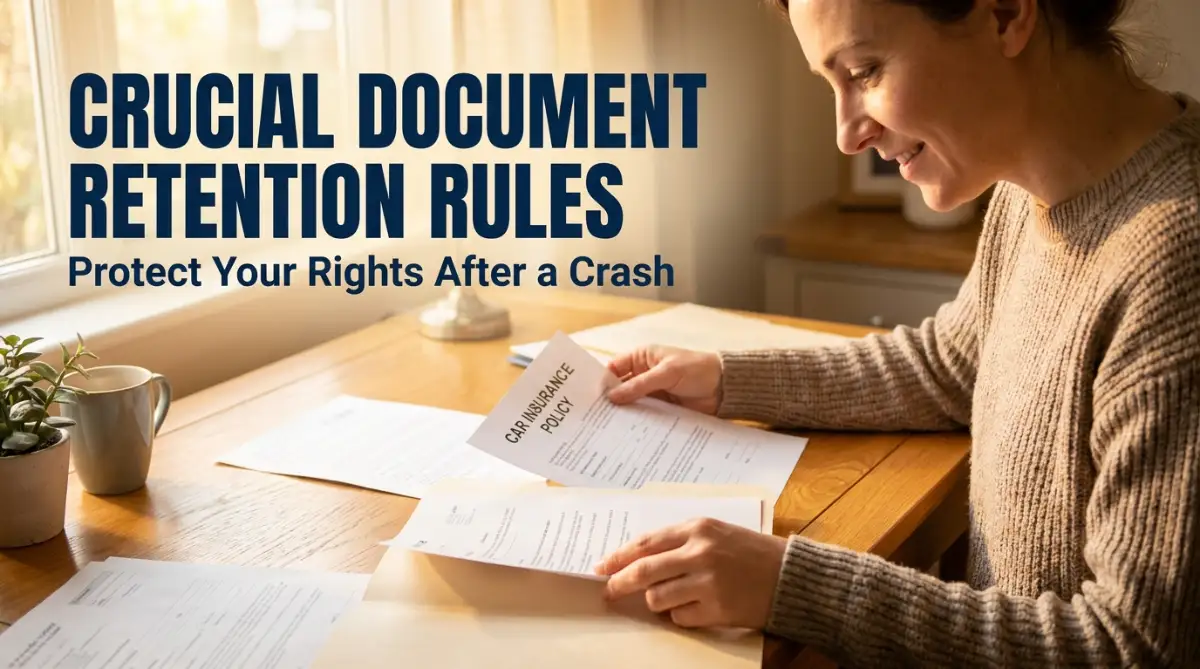
The Hidden Nightmare of the Paperwork Aftermath
I still remember sitting on my living room floor, surrounded by a mountain of scattered papers, feeling completely utterly helpless. My hands were shaking, not just from the lingering physical pain of the crash, but from the massive anxiety of dealing with insurance companies. I had just returned from the hospital, and already the mail was piling up with letters I barely understood.
I thought recovering physically would be my only challenge, but I was dead wrong. The real battle started when the insurance adjuster asked me for a specific emergency room receipt that I had accidentally thrown in the trash just two days earlier. I lost hundreds of dollars simply because I didn't understand what papers I needed to hold onto. That single mistake taught me a hard lesson about how easily a simple piece of paper can make or break your financial recovery.
Today, I see everyday people facing this exact same mental torture after a crash. You are already exhausted, dealing with doctor visits, missing out on work, and trying to fix your broken car. Adding a confusing pile of legal and medical documents to the mix feels like a heavy weight pressing down on your chest.
Your peace of mind completely vanishes when you are constantly terrified of making a wrong move. The fear of losing your rightful compensation simply because you misplaced a small receipt is a very real nightmare. People are losing sleep, desperately digging through trash cans, and arguing with spouses over missing police reports.
You do not have to live in this state of chaos and fear. Let me show you exactly how to take back control of your life and protect your rights with complete confidence.
Escaping the Clutter: A Proven Blueprint for Your Accident Files
Getting organized right after a motor vehicle accident is the single most powerful thing you can do for your peace of mind. You do not need to be a legal expert to get this right. You simply need a reliable system to ensure every piece of evidence is perfectly preserved.
We are going to build an invisible shield around your legal claim. By following a few logical steps, you will force the insurance companies to take you seriously. Let us break down exactly how you can manage your files like a professional.
Building Your Master Evidence Folder
Your very first step is to establish a central home for every single piece of paper related to your crash. Do not rely on random drawers or messy kitchen counters. You need a dedicated, physical master folder that stays in one secure location.
Buy a high-quality expandable folder with at least five different sections. Label these sections clearly: Medical, Vehicle Repairs, Police & Legal, Lost Wages, and Insurance Communications. Whenever a new letter arrives in the mail, it must immediately go into its specific section.
This simple physical barrier prevents documents from getting mixed up with your everyday household mail. It trains your brain to treat these files with the utmost respect. When your attorney or the insurance adjuster asks for a file, you will be able to pull it out in exactly three seconds.
The Myth of Digital-Only Storage
Myth: "I can just take a photo of my documents on my phone and throw the physical paper away."
Reality: While digital backups are incredibly important, many courts and formal legal proceedings strictly require original, physical copies to verify authenticity.
Never destroy original medical bills, police reports, or signed witness statements. Even a slightly blurry photo can be rejected by a stubborn insurance adjuster. Always keep the physical copy locked away safely in your master folder.
Mastering the Art of the Digital Backup
While you must keep the physical copies, relying solely on paper is a massive risk. Fire, water damage, or a simple accidental spill can destroy your only proof of injury. You need an impenetrable digital backup system.
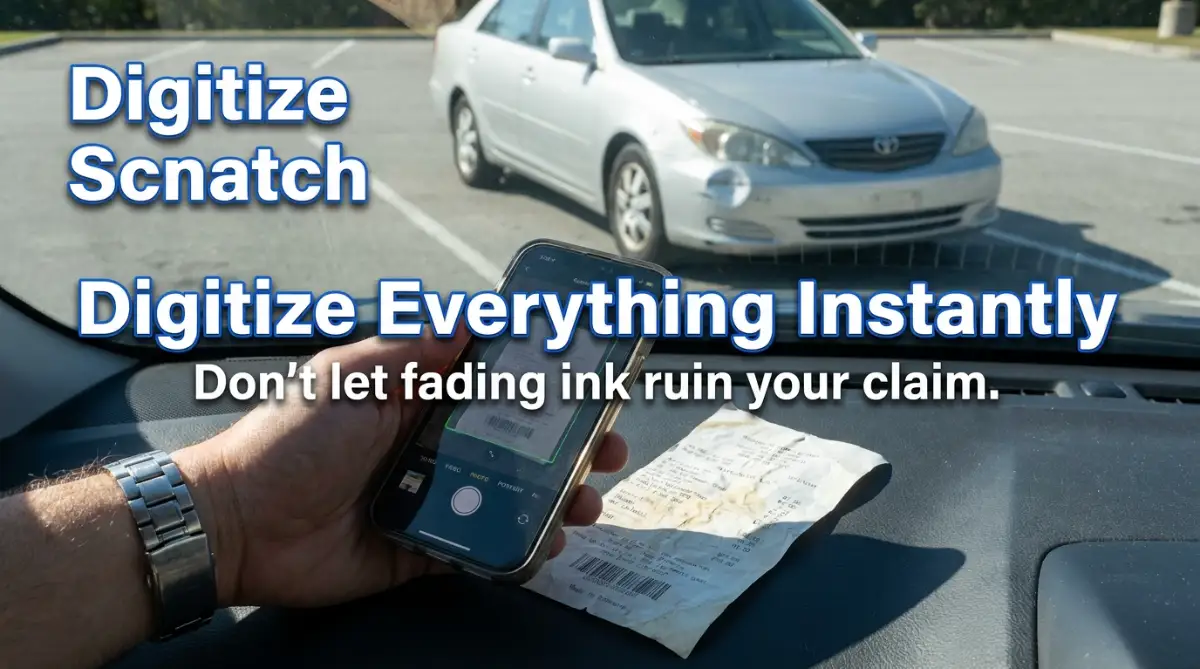
Download a free document scanning app on your smartphone right now. These apps use your camera to create clear, flattened PDF files instead of dark, shadowy photos. Scan every single document the moment it enters your house.
Create a dedicated folder on your preferred cloud storage service, like Google Drive or Dropbox. Name the main folder with your accident date. Inside, create sub-folders that exactly match your physical expandable folder.
Pro Tip: Early on in my own case, I relied on saving files to my computer's local hard drive until it suddenly crashed, wiping out a week's worth of downloaded medical records. I learned the hard way that if a file does not exist in the cloud, it practically does not exist at all. Back up everything online immediately.
Watch This Before Throwing Anything Away!
If you are feeling overwhelmed by the sheer amount of paperwork on your desk, this short video will show you exactly what to keep and what you can safely ignore to protect your injury claim.
Locking Down Your Medical Paper Trail
Medical documents are the absolute core foundation of your entire personal injury claim. Without proper medical documentation, the insurance company will aggressively argue that you were never hurt. You must keep every single item related to your physical recovery.
This includes obvious things like emergency room discharge papers, surgical reports, and physical therapy invoices. However, you must also keep the small, seemingly insignificant items. Keep your pharmacy receipts for painkillers, bandages, and heating pads.
Keep a detailed log of your mileage every time you drive to a doctor's appointment. These small out-of-pocket expenses add up to hundreds or thousands of dollars over time. If you do not have the receipt, the insurance company will refuse to pay you back.
Managing Law Enforcement and Official Records
The police report is the most objective piece of evidence you will ever have regarding the collision. It contains the responding officer's initial thoughts on who caused the crash. You must obtain an official, stamped copy of this report as soon as it becomes available.
Keep this police report in its own pristine section. Never write on the original police report or highlight it. If you need to make notes, make a photocopy first and write on the copy.
Along with the police report, you might receive citations or court summons related to the crash. Keep all traffic court documents, even if they were issued to the other driver. These papers establish a timeline of legal events that your lawyer will heavily rely upon.
Documenting Your Lost Income the Right Way
A motor vehicle collision does not just damage your car; it actively steals your ability to earn a living. Recovering lost wages is notoriously difficult because insurance companies will fight you tooth and nail over every missed hour. You need aggressive documentation to prove your financial loss.
Keep every single pay stub from the two months leading up to the accident to establish your normal earning baseline. Then, collect all pay stubs during your recovery period to show the dramatic drop in your income. If you are a freelancer or business owner, this becomes even more complex.
Self-employed individuals must keep past tax returns, current client contracts, and bank statements showing a dip in deposits. Ask your doctor to write a very specific note detailing exactly how many days you are forbidden from working. A generic "needs rest" note will get laughed at by the adjuster.
Creating an Ironclad Communication Log
One of the sneakiest tactics an insurance adjuster will use is the "misunderstood phone call." They will call you when you are tired, ask confusing questions, and later claim you admitted fault. You must stop relying on your memory of these phone calls.
Buy a simple, cheap spiral notebook and make it your official communication log. Every time you speak to an insurance agent, a body shop mechanic, or a billing department, open this notebook. Write down the date, the exact time, the person's name, and a summary of what they said.
If an adjuster promises to approve a rental car over the phone, write it down immediately. Better yet, politely ask them to send you that exact promise in an email. A verbal promise in the insurance world is completely worthless unless it is backed up by written proof.
Decoding Property Damage Documentation
Your car is likely your second biggest asset, and getting it fixed correctly is a massive headache. You must retain every single document generated by the body shop. Do not just accept the final shiny repaired car and throw away the paperwork.
Keep the initial written estimate from the insurance company's preferred shop. Next, keep the independent estimate you got from your own trusted mechanic. Compare these two documents to see what corners the insurance company is trying to cut.
Keep all receipts for towing companies and storage lot fees. Keep the final detailed invoice showing exactly which parts were replaced on your car. If your car breaks down a month later because they used cheap aftermarket parts, these documents are your only defense.
Understanding the Statute of Limitations
Every legal action has a strict ticking clock attached to it, known as the statute of limitations. This is the absolute deadline for filing a formal lawsuit. If you miss this deadline by a single day, your right to seek compensation is permanently erased.
Because these legal deadlines vary wildly depending on your specific location, you cannot assume you have plenty of time. You must hold onto all of your organized documents securely until well after this deadline has passed. Some injuries take a long time to fully reveal themselves.
Never throw away your files just because you feel better physically. Sometimes, a settlement can be reopened under very specific conditions, or a related legal issue might pop up down the road. Think of your master folder as a lifelong insurance policy; store it away safely even after the check clears.
Protecting Your Files from Prying Eyes
While you want your attorney to have easy access to your documents, you must protect them from everyone else. Medical records contain highly sensitive personal information, including your social security number and private health history. You cannot leave these papers sitting in your car or on your desk at work.
Invest in a small, fireproof lockbox for your home. This does not have to be an expensive bank vault, just a sturdy box that keeps casual snoops and houseguests away from your private life. Identity theft is incredibly common when sensitive medical papers are handled carelessly.
Be incredibly careful about what you share online. Never post photos of your medical bills, repair estimates, or settlement offers on social media. Insurance defense lawyers actively scour social platforms looking for any piece of information they can use to twist the narrative against you.
How to Handle Conflicting Medical Bills
One of the most frustrating things you will experience is receiving three different bills for the exact same hospital visit. You might get a bill from the hospital facility, a separate bill from the emergency room doctor, and another bill from the radiology department. This causes massive confusion.
Do not ignore these bills out of frustration. Create a simple spreadsheet to track exactly who is billing you and for what service. Cross-reference this list with the Explanation of Benefits (EOB) letters sent by your own health insurance company.
Often, hospitals will accidentally double-bill you or charge you for services you never received. By keeping everything organized and comparing the documents side-by-side, you can catch these expensive mistakes. Your organized files are your best weapon against medical billing fraud.
Preparing for the Final Settlement Push
When the time finally arrives to demand your rightful settlement, your master folder becomes your absolute best defense. Sending an insurance company a perfectly sorted, timeline-based stack of evidence shows them you mean serious business. It sends a loud and clear message that you are completely prepared to fight for your rights in court if they try to shortchange you.
Remember that insurance adjusters spend their entire day dealing with scattered, disorganized claimants. When you present them with a flawless physical record of your medical bills and lost wages, it instantly changes how they treat you. They quickly realize they cannot use missing paperwork or confusion to trick you into accepting a lowball offer.
I know keeping up with this takes a little extra effort, but I promise you it is absolutely worth it. Spending just five minutes every evening to scan and file your daily mail will save you from months of future panic and sleepless nights. You actually hold the power to control the outcome of your case, and that winning strategy starts with the very next piece of paper you pick up.
Next-Level Paperwork Strategies Used by Top Legal Experts
Once you have established your basic filing system, you are already ahead of most people. However, if you want to truly maximize your financial recovery, you need to think like a seasoned professional. The secret to long-term success lies in managing the small details that most people completely overlook.
You must treat your documentation process as a daily habit rather than a one-time chore. Insurance companies have teams of lawyers whose sole job is to find gaps in your paperwork. We are going to make sure they find absolutely nothing to use against you.
Let us explore some highly dynamic and proven strategies to fortify your legal claim. These are the exact methods attorneys use to build undeniable cases for their clients.
The "Three-Touch" Rule for Managing Mail
When you are recovering from a crash, the daily trip to the mailbox can feel incredibly overwhelming. You will receive letters from your own insurance, the at-fault driver's insurance, hospitals, and physical therapists. If you just toss these envelopes on the kitchen counter, you are asking for a disaster.
I highly recommend adopting the "Three-Touch" rule for every single piece of mail you receive. The first touch is opening the envelope the exact moment you bring it inside the house. Do not leave it sealed for "later" because later often turns into never.
The second touch is immediately taking a clear digital scan of the document using your smartphone app. The third and final touch is placing the physical paper directly into your master expandable folder. By handling the document exactly three times in quick succession, you completely eliminate the chance of it getting lost.
Documenting the Invisible: Creating a Daily Pain Journal
Medical bills prove that you received treatment, but they do not capture your daily suffering. An X-ray shows a broken bone, but it cannot show the sleepless nights or the inability to hold your child. You need a way to turn your invisible pain into solid, trackable evidence.
Start keeping a simple, handwritten daily pain journal right beside your bed. Every evening, spend exactly three minutes writing down your physical pain levels on a scale of one to ten. Write down any specific activities you could not perform that day because of your injuries.
This simple notebook becomes a powerful piece of evidence during settlement negotiations. It proves how the accident directly impacted your daily quality of life over a long period. If you want to understand how heavy these small details weigh in negotiations, reviewing fatal mistakes victims make before filing a personal injury claim can save you from a massive headache down the road.
Securing Electronic Evidence Before It Disappears
We live through our smartphones, and a lot of your accident-related communication will happen digitally. You might receive a text message from a witness who saw the crash happen. You might also get an email from an auto body shop promising a specific repair timeline.
Do not assume these digital messages are safe just because they are on your phone. Phones get lost, screens break, and text threads get accidentally deleted all the time. You must capture this electronic evidence immediately.
Take a screenshot of any relevant text message the moment you receive it. Email that screenshot to your own dedicated accident folder so it is securely backed up in the cloud. Treating text messages with the same respect as physical letters is exactly what the American Bar Association suggests when preserving personal injury evidence.
Expanding Your Property Damage File
When people think about property damage, they usually only think about the car's exterior. They gather receipts for the bumper, the headlights, and the paint job. However, they completely forget about the expensive items inside the vehicle that were destroyed during the impact.
Did your expensive prescription glasses fly off and shatter against the dashboard? Was your laptop in the trunk heavily damaged by the rear-end collision? You have the absolute right to claim compensation for every single personal item destroyed in the crash.
Find the original purchase receipts for these damaged items if you still have them. If you cannot find the receipt, look for the digital credit card transaction showing the purchase. Print these out and add them to a special "Personal Property" section in your master folder.
Long-Term Storage Strategies for Lasting Peace of Mind
Even after you receive your final settlement check, your job is not entirely finished. Sometimes, medical issues related to the crash can unexpectedly flare up years down the road. If you need to seek further treatment, having your old records easily accessible is a massive advantage.
Do not throw your master folder into the garbage just because the case is closed. Buy an inexpensive, waterproof plastic storage bin for your basement or closet. Place your organized expandable folder inside and label the outside of the box clearly.
Knowing that your documents are safely resting in a dry, secure location provides an incredible sense of mental relief. You have built a complete historical record of the event. No matter what happens in the future, you will always be prepared to verify your side of the story.

The Most Dangerous Paperwork Traps That Will Destroy Your Claim
Even the smartest people can make terrible decisions when they are stressed and in physical pain. Dealing with massive corporations and confusing medical billing departments is incredibly taxing. It is very easy to fall into traps that are specifically designed to minimize your financial payout.
When you make a mistake with your documentation, the insurance company does not politely point it out to you. They quietly use that mistake to lower their offer or deny your claim entirely. Let us expose these dangerous pitfalls so you can confidently walk right past them.
The Silent Threat of the Trash Can
The single most common mistake people make is assuming a document is "unimportant." You might receive a small, generic-looking letter from the ambulance company and throw it away, thinking your insurance will just handle it. Three months later, that same ambulance company might send a massive bill straight to a collections agency.
Never throw away anything that has your name, the date of the crash, or a medical code on it. Even if a letter looks like a duplicate, keep it. Hospitals are notorious for sending multiple versions of the exact same bill with very slight, hidden adjustments.
If you are dealing with aggressive billing departments because of missing paperwork, you need to understand your rights. Reading a reliable guide on stopping debt collector harassment can give you the exact tools you need to fight back. Keep your files tight, and these collectors will have zero leverage over you.
Trusting Verbal Agreements from Insurance Adjusters
Insurance adjusters are trained to sound incredibly friendly and helpful over the phone. They will ask about your family, sympathize with your pain, and make reassuring promises. They might say, "Do not worry about the rental car bill, we will take care of it."
Never, ever trust a friendly voice on the phone without written confirmation. If an adjuster promises to cover a specific expense, politely ask them to email you that exact promise immediately. If they refuse to put it in writing, they are absolutely planning to deny the charge later.
Your spiral notebook communication log is your best defense against this trap. When you can tell an adjuster, "On Tuesday at 2:15 PM, you explicitly stated this would be covered," they usually back down. A verbal promise in the insurance world is worth absolutely nothing.
The Nightmare of Skipping Follow-Up Medical Visits
Sometimes, victims start feeling slightly better and decide to skip their final physical therapy appointments. They assume that since they feel fine, they do not need any more documentation. This is a catastrophic mistake for your personal injury claim.
When you skip scheduled medical appointments, the insurance adjuster will notice immediately. They will officially argue that your injuries magically healed and cut off your compensation early. The Consumer Financial Protection Bureau (CFPB) often highlights how gaps and errors in medical billing history can complicate patient financial responsibilities and lead to unfair debt collection.
You must follow your doctor's exact orders until they officially discharge you in writing. Keep every single appointment card and discharge summary in your master folder. A continuous, unbroken chain of medical documentation is the only way to prove the full severity of your physical trauma.
Mixing Accident Documents with Everyday Household Mail
I have seen people store their highly sensitive legal documents in a messy drawer filled with takeout menus and old utility bills. When their lawyer asks for a specific radiology report, they spend three hours frantically digging through junk mail. This level of disorganization causes intense, unnecessary anxiety.
If you mix your accident papers with your normal household clutter, you will eventually lose something important. You might accidentally throw away a settlement offer mixed inside a grocery store flyer. You must maintain strict physical boundaries between your legal life and your home life.
If someone else in your family is helping you manage your daily mail because you are injured, make sure they understand these rules. Having a clear plan is incredibly helpful, much like understanding power of attorney rights when you need someone to act on your behalf. Everyone in your home must respect the master folder system.
Failing to Document the Impact on Your Work Life
Many victims collect their medical bills perfectly but completely forget to document their professional losses. If you use your hard-earned vacation days or sick leave to recover from a crash, you are losing money. The at-fault driver is legally responsible for those lost benefits.
Do not just assume your employer will explain this to the insurance company. You need to gather official letters from your Human Resources department detailing exactly how much paid time off you were forced to use. Keep these HR letters in the "Lost Wages" section of your folder.
If your injuries happened while you were driving a company car or running an errand for your boss, the paperwork becomes even more complex. You might need to explore workers compensation benefits alongside your auto claim. Missing the correct forms early on can result in an absolute denial of your rightful wages.
Your Roadmap to Taking Back Control Today
You have just absorbed a massive amount of highly effective, professional-grade information. I know that dealing with the aftermath of a crash feels like standing at the bottom of a massive mountain. However, you do not need to climb the entire mountain today; you just need to take the very first step.
By setting up a strong filing system, taking digital backups, and keeping a detailed daily journal, you are taking back your power. You are no longer a helpless victim waiting for the insurance company to dictate your future. You are building an undeniable wall of evidence that forces everyone to treat you with complete respect.
If your car suffered minor damage and you are handling the property claim on your own, do not be intimidated. Often, perfectly organized receipts and repair estimates are all you need when navigating small claims court for property damage. Organization is the ultimate equalizer against giant corporate insurance companies.
The Immediate 24-Hour Action Plan
Do not wait until next week to get your life organized. Start tonight by gathering every single piece of paper related to your crash that is currently sitting in your house. Put them all into one single pile on your dining room table.
Tomorrow morning, go to an office supply store and buy that expandable folder. Download a free scanning app while you are sitting in the parking lot. Spend just thirty minutes sorting that pile on your table into the correct categories.
You will be amazed at the massive wave of mental relief that washes over you once those papers are neatly filed away. The National Highway Traffic Safety Administration (NHTSA) constantly researches the profound impact of motor vehicle crashes on public health, emphasizing that reducing post-crash stress is essential for true physical recovery. You deserve to heal without the constant, lingering fear of missing paperwork.
A Personal Word of Encouragement
I want you to know that the heavy, crushing feeling in your chest right now will eventually fade away. My own journey through the chaos of accident paperwork taught me that taking small, organized actions every single day is the ultimate cure for anxiety. You have the strength to handle this, and by protecting your documents today, you are securing a much brighter, stress-free tomorrow.
Common Questions About Organizing Your Accident Papers
How long should I keep my medical bills after a crash?
You should hold onto every single medical bill and record until your case is permanently closed and the final settlement check has cleared your bank account. Even after the case is closed, keeping them safely boxed up at home is a smart move just in case related medical issues pop up years later.
Can I just take normal photos of my receipts instead of scanning them?
Taking a regular photo often results in dark shadows, blurry text, and strange angles that insurance adjusters will easily reject. You need to use a dedicated document scanning app on your phone to create a flat, highly readable PDF file. This makes your documents look incredibly professional and undeniable.
What if I already threw away my initial emergency room discharge papers?
Do not panic, but you need to take immediate action to replace them. Call the billing department of the specific hospital you visited and politely request a complete duplicate copy of your entire patient file. They are legally required to provide this to you, though they might charge a very small printing fee.
Should I keep my car repair estimates even if I decided not to fix the car?
Yes, absolutely keep those official repair estimates in your master folder. The insurance company owes you money for the exact value of the damage, regardless of whether you actually choose to spend that money at a body shop. The estimate proves the exact financial loss you suffered.
Do I need to document my missed time from work if I used paid vacation days?
You absolutely must document those used vacation days with a letter from your HR department. You earned those paid days off to enjoy a vacation, not to sit at home recovering from someone else's reckless driving. The at-fault driver's insurance is responsible for compensating you for that lost personal time.
Disclaimer: The information provided in this blog post is for educational and informational purposes only and does not constitute formal legal or financial advice. Every motor vehicle collision case is unique, and laws vary greatly by jurisdiction. Always consult with a qualified personal injury attorney in your area before making any major decisions regarding your specific legal claim.