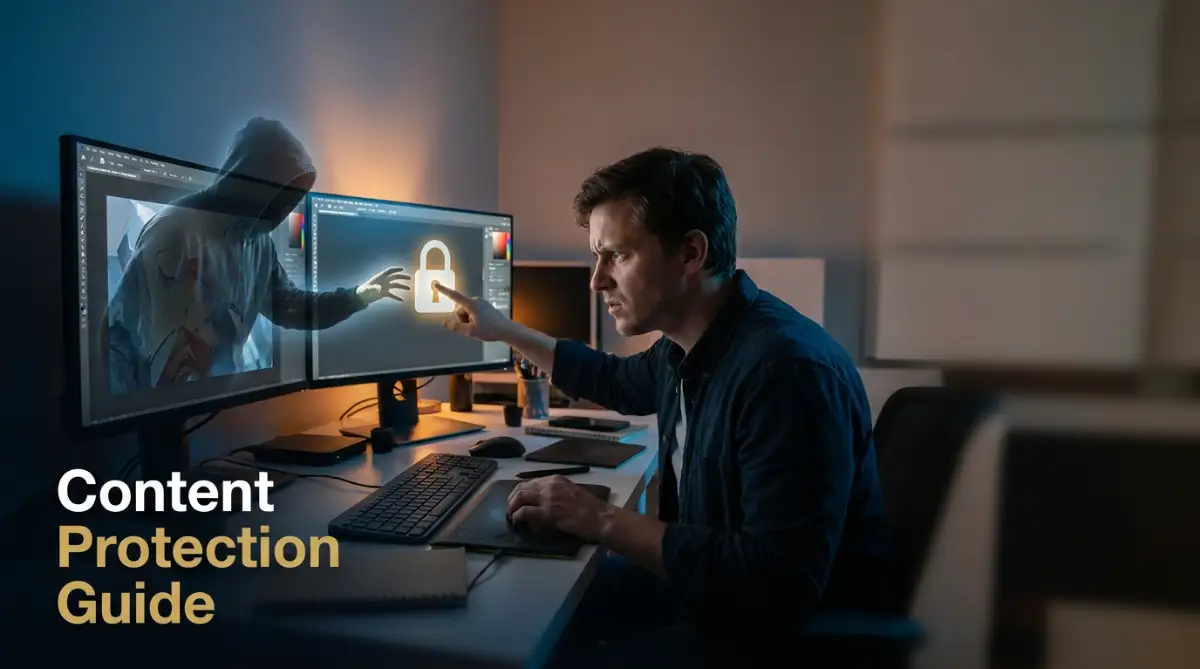
The Nightmare of Finding Your Stolen Work Online
I remember the exact moment my heart dropped into my stomach. I was casually scrolling through a popular social media platform when I saw my own digital artwork staring right back at me.
But there was a massive problem—someone else’s name was slapped right across my creation. I had spent weeks perfecting that piece, losing sleep, and pouring my soul into every tiny detail.
Now, a complete stranger was getting thousands of likes, shares, and even paid commissions using my hard work. I felt completely helpless, violated, and incredibly angry all at the exact same time.
My immediate thought was that my creative career was over before it even really started. I honestly questioned why I should even bother making new content if it was just going to be stolen by lazy copycats.
Sadly, I quickly realized I am not the only one fighting this silent, exhausting battle. Thousands of brilliant digital creators wake up every single day to find their videos, blog posts, and designs ripped off.
This constant fear creates a massive mental block for anyone trying to build a genuine online business. We end up spending way more time acting like angry internet detectives than actually creating the amazing art we love.
When you put your heart into building something from scratch, seeing it stolen feels like a personal attack. It completely drains your creative energy and leaves you feeling burned out.
Many creators actually stop posting their best work online simply because they are terrified of someone stealing it. This means the world misses out on incredible talent just because of a few bad actors.
Beyond the emotional toll, this theft directly impacts your ability to pay your bills. Every time someone steals your video or article and posts it on their own website, they are stealing your potential income.
They get the ad revenue, the sponsorships, and the new followers that rightfully belong to you. It is entirely unfair that you do all the heavy lifting while someone else enjoys the rewards of your labor.
You might feel like there is absolutely nothing you can do against these invisible online thieves. You might think that hiring a lawyer is too expensive or that the internet is just too big to police.
But I am here to tell you that you are not powerless in this fight. There are highly effective, completely free, and simple strategies you can use to lock down your digital property right now.
Your Iron-Clad Action Plan to Stop Content Thieves
You do not need an expensive law degree to protect your hard work from online pirates. You just need a solid, practical system that makes it incredibly difficult for anyone to steal from you.
Think of your digital content like a physical house that needs proper locks, an alarm system, and clear property lines. If you leave the front door wide open, bad people will naturally wander inside.
By setting up a few smart roadblocks, you will instantly discourage the vast majority of lazy content thieves. Let us walk through the exact, highly effective steps you can take today to secure your online empire.
Establish Your Invisible Digital Footprint
The very first thing you must do is make sure your name is permanently attached to your work behind the scenes. This is where hidden metadata becomes your absolute best friend.
Whenever you create a photo, video, or audio file, your software allows you to embed your specific copyright details right into the file itself. This data stays hidden inside the file even if someone copies it to another website.
If you use software like Adobe Lightroom, Photoshop, or Premiere, you can easily set up an automatic copyright preset. Every single time you export a file, your name, email, and website are permanently baked into the code.
Pro Tip: I used to think my stuff was not good enough to be stolen, so I never bothered with metadata. Once I realized my biggest viral post was stolen because I left the file completely untagged, I never made that painful mistake again. Always tag your files before uploading them anywhere!
This invisible footprint acts as undeniable proof that you are the original creator. If you ever need to prove ownership to a hosting company or a social media platform, that metadata is your smoking gun.
The Right Way to Use Visual Deterrents
We all know about watermarks, but most creators use them completely wrong. Slapping a massive, ugly logo right in the middle of your beautiful design ruins the experience for your real fans.
On the other hand, putting a tiny logo perfectly in the bottom corner makes it way too easy for thieves to just crop it out. You need to find the perfect middle ground to protect your work effectively.
Instead of a solid logo, try using a highly transparent, repeating watermark pattern across the less important parts of your image or video. This makes cropping it out mathematically impossible without completely destroying the file.
If you write articles or blog posts, you cannot really use a visual watermark. Instead, you should naturally weave your brand name, your personal stories, and internal links deep within your paragraphs.
If an automated bot scrapes your text and posts it on a spam website, your specific brand mentions will still be there. Your readers will instantly know the content was stolen from you.
Build an Automated Surveillance System
You cannot possibly spend your entire day searching the internet for your stolen work. You have to build a smart, automated system that does the heavy lifting for you while you sleep.
This is where setting up specific Google Alerts becomes incredibly handy and powerful. You can tell Google to send you an email the exact moment it finds your specific phrases or brand name on a new website.
Pick a few highly unique sentences from your best-performing blog posts and set up exact-match alerts for them. If a lazy blogger copies and pastes your article, Google will notify you almost instantly.
For visual artists and photographers, you should be doing a routine Reverse Image Search at least once a month. Tools like Google Images or TinEye allow you to upload your picture to see exactly where else it exists on the internet.
Wait, Want to See Exactly How This Works?
Watch this eye-opening, simple tutorial that shows you exactly how to hunt down stolen copies of your work in under five minutes.
Finding out someone stole your work is annoying, but finding out early gives you the upper hand. You can take immediate action before their stolen post gets any serious traction or search engine ranking.
The Power of the Ultimate Takedown Notice
So, what exactly do you do when you actually catch someone red-handed stealing your stuff? You do not need to send them an angry message or argue with them in their comment section.
Instead, you use the most powerful legal tool available to digital creators: the DMCA Takedown Notice. The Digital Millennium Copyright Act requires all web hosts and platforms to remove stolen content if the real owner complains.
You do not send this legal notice to the thief, because they will just ignore you anyway. You send it directly to the company hosting their website, like Shopify, WordPress, or their specific server provider.
Web hosting companies absolutely hate dealing with legal trouble, so they act surprisingly fast. Once they receive a properly formatted DMCA notice from you, they will usually force the thief to delete the content within 48 hours.
If the thief refuses to take it down, the hosting company will literally shut down their entire website. It is an incredibly effective way to protect your property without spending a single dime on expensive lawyers.
Register Your Work for Maximum Legal Power
While your work is technically protected by law the moment you create it, proving that in a serious legal battle is very hard. If you want maximum protection, you need to officially register your most important work.
Filing your content with the official government copyright office provides you with a massive legal shield. It gives you a public record of exactly when you created the asset and proves beyond a doubt that it belongs to you.
This step is especially important if you sell premium online courses, expensive software, or high-level consulting materials. If someone pirates a product that makes you money, having a registered copyright allows you to sue them for heavy financial damages.
Common Myths About Content Protection
There is a lot of terrible advice floating around the internet about how to protect your creative property. Relying on bad information can leave your online business completely vulnerable to attacks.
Let us clear up some of the most dangerous misunderstandings right now so you do not fall into these traps.
Understanding these basic rules gives you a massive advantage over the people trying to steal from you. You can confidently defend your territory because you actually know how the rules work.
Secure Your Work Before You Publish
The absolute worst time to think about security is after your content has already been stolen. You need to build a simple protection routine into your daily workflow before you ever hit the publish button.
Create a simple checklist on your desk that reminds you to add metadata, insert natural watermarks, and save your original files. Make it a habit to keep raw video footage and unedited photos safely backed up on a hard drive.
If a thief ever tries to claim your work is actually theirs, you can simply produce the raw, unedited files as proof. They will never have access to your raw files, which makes your case incredibly easy to prove to any hosting platform.
Educate Your Genuine Audience
Your biggest allies in the fight against online thieves are actually your true fans and loyal followers. If you build a strong, authentic connection with your audience, they will actively look out for you.
Do not be afraid to openly talk to your community about how much effort goes into creating your content. When they respect your hard work, they become your personal army of internet watchdogs.
Many creators find out about stolen content because a loyal fan sent them a direct message with a link. People love supporting honest creators, and they absolutely hate seeing those creators get taken advantage of.
If someone steals your work, let your community know what happened and how they can help report the fake account. A sudden flood of reports from real users will usually trigger platforms like Instagram or YouTube to delete the stolen content immediately.
Taking control of your digital property gives you incredible peace of mind. You can finally stop worrying about the copycats and get back to doing what you actually love—creating amazing content for the world to enjoy.
Next-Level Defenses Against Relentless Online Copycats
Once you have mastered the basic security steps, you are ready to build a truly impenetrable wall around your online business. Thieves are getting smarter every single day, which means your defense strategies must evolve alongside them.
You cannot simply rely on basic watermarks and hope for the best anymore. It is time to step into the big leagues and start thinking like a true professional who protects their digital empire at all costs.
Let us break down a few highly advanced, incredibly effective tactics that the top earners use to safeguard their digital property. These methods will give you the absolute upper hand against anyone trying to steal your hard work.
The Intimidation Factor of a Cease and Desist Letter
Sometimes, a simple takedown notice is not enough to scare away a truly stubborn thief. If someone is aggressively profiting off your stolen work, you need to turn up the heat immediately.
This is exactly where a formal Cease and Desist letter becomes your most powerful weapon. This document is essentially a highly formal warning shot that tells the thief you are fully prepared to take them to court.
You do not necessarily need a highly paid lawyer to draft the initial version of this letter. You can easily find free, legally binding templates online that outline exactly what the thief must do to avoid a massive lawsuit.
When a copycat receives a threatening legal document demanding they remove the content, they usually panic. The overwhelming majority of amateur thieves will instantly delete your stolen work because they are terrified of facing actual legal consequences.
Turn Thieves Into Paying Customers
Here is a brilliant strategy that very few creators ever talk about. Instead of just forcing a website to delete your stolen photo or article, you can actually force them to pay you for it.
This process is known as retrospective licensing, and it is an incredibly smart way to handle corporate content theft. If a legitimate company or a big brand uses your work without asking, they clearly saw massive value in it.
You can send them a polite but firm invoice for the commercial use of your digital asset. Let them know that since they are already using your property to make money, they now owe you your standard licensing fee.
Many businesses will quietly pay the invoice to avoid public embarrassment and expensive legal battles. This entirely flips the script, turning a stressful theft situation into a brand-new stream of unexpected income for you.
Create Airtight Collaborative Boundaries
As your audience grows, you will naturally start working with other digital artists, freelance editors, and marketing agencies. While collaborations are amazing for growth, they are also a massive risk for intellectual property disputes.
When you share your raw files, secret strategies, or unfinished projects with another person, you expose yourself to theft from the inside. You must set clear legal boundaries before you ever share a single file with a partner.
Always require your collaborators to sign a simple non-disclosure agreement or a basic freelance contract. If you are hiring help, you must carefully review hidden employment contract traps to ensure you maintain total ownership of the final product.
This simple piece of paper ensures that your partner cannot suddenly claim ownership of your joint project. It keeps everyone totally honest and protects your professional relationships from turning into ugly legal nightmares.
Leverage Global Monitoring Databases
If you are a serious photographer, graphic designer, or software developer, you need an automated watchdog that scans the entire globe. Basic search engines simply cannot catch everything happening in the hidden corners of the internet.
Professional creators use official global databases to lock down their most valuable assets across international borders. For example, registering your trademark or specific designs through the World Intellectual Property Organization provides a massive shield against overseas thieves.
This kind of global registration means that someone on the other side of the planet cannot legally copy your entire brand identity. It is an advanced move, but it is entirely necessary if you plan on building a globally recognized creative business.

Heartbreaking Security Mistakes That Cost Creators Everything
We have talked extensively about what you should do to protect your digital property. Now, we must have a very serious conversation about the dangerous mistakes that can destroy your entire creative career overnight.
When you are exhausted from creating content all day, it is incredibly easy to cut corners on security. Unfortunately, one lazy decision can leave your digital front door wide open for malicious attackers.
I have seen incredibly talented people lose their entire portfolios simply because they believed terrible advice or made easily avoidable errors. Let us walk through these devastating pitfalls so you never become a victim of your own oversight.
Believing Social Media Giants Will Save You
This is perhaps the single biggest trap that modern content creators fall into. You might think that because you posted a video on a massive platform, that giant company will automatically protect your rights.
The harsh reality is that these massive tech companies primarily care about protecting themselves from liability, not protecting your personal artwork. Their automated reporting systems are frequently broken, heavily delayed, or easily manipulated by bad actors.
If a coordinated group of thieves decides to mass-report your original account, the platform might actually ban you instead of the real criminals. Relying entirely on social media support tickets is a guaranteed recipe for massive heartbreak.
You must take personal responsibility for your own security off-platform. Always host your most valuable work on your own personal website, where you actually make the final rules.
Using Fake Legal Jargon to Scare People
Many amateur bloggers and artists try to sound intimidating by typing completely made-up legal warnings in their bios. They write things like "No one is allowed to screenshot my work under penalty of international law."
This kind of fake legal jargon means absolutely nothing in the real world and actually makes you look incredibly unprofessional. Smart content thieves know immediately that you have zero understanding of real copyright laws.
Instead of relying on empty threats, you need to understand exactly how the law actually protects your specific type of art. If you ever have to take a copycat to court, you must completely drop the myths about small claims court and prepare for a real, formal battle.
Always use standard, officially recognized copyright symbols and clear terms of service on your website. True professionals do not need to make up fake rules because the actual law is already on their side.
Waiting Too Long to Take Action
When you find out someone stole your entire website design or copied your best article, you might feel totally paralyzed by shock. Many creators wait weeks or even months to report the theft because they hate dealing with conflict.
This delay is an absolute disaster for your own search engine rankings and overall brand reputation. The longer the stolen content stays online, the more time search engines have to index it.
Sometimes, Google might accidentally think the thief is the original creator simply because their fake website gets more traffic than yours. If that happens, your genuine website will be heavily penalized, completely ruining your ability to generate ad revenue.
You must act within the first twenty-four hours of discovering a digital theft. Sending a swift takedown notice stops the copycat from gaining any permanent traction at your expense.
Mixing Business Assets with Personal Life
When you run a creative business from your bedroom, the lines between your personal life and your professional work get very blurry. You might use the exact same passwords, email addresses, and bank accounts for absolutely everything.
If a hacker steals your personal email password, they suddenly have total access to your entire digital portfolio, your client lists, and your revenue streams. They can completely lock you out of your own life's work in a matter of seconds.
You must build a strict firewall between your personal activities and your creative business. This separation is exactly how smart entrepreneurs survive when managing your small business cash flow during stressful, unexpected emergencies.
Set up dedicated email accounts, use heavy-duty password managers, and implement two-factor authentication on every single business account. Treat your digital art like a highly valuable physical storefront that needs heavy security doors.
Misunderstanding the 'Fair Use' Doctrine
A lot of content thieves will steal your work and claim they are protected under the legal concept of "Fair Use." They might add a tiny reaction face to your video and boldly claim they created a completely new, legal piece of content.
This completely confuses many original creators, leading them to back down and let the thief win. You must understand that simply slapping a filter over your photo does not automatically qualify as Fair Use.
True Fair Use generally requires the new creator to heavily transform the original work for the specific purpose of education, deep criticism, or clear parody. If you are unsure about where the line is drawn, you can always review the official guidelines provided by the U.S. Copyright Office to see exactly how the law defines transformative work.
Never let a lazy copycat bully you into giving up your legal rights with fake legal defenses. If their new content directly competes with your original work and hurts your potential income, you have every right to strike them down.
Your Future as a Bulletproof Digital Creator
Protecting your digital assets is an ongoing journey, but it absolutely does not have to be a stressful one. Once you implement these smart security systems, they mostly run themselves quietly in the background.
You no longer have to wake up in a cold sweat wondering if someone is secretly profiting off your latest masterpiece. You have built a solid fortress around your creative business, and that gives you incredible mental freedom.
This total peace of mind allows you to focus your energy entirely on what actually matters—creating breathtaking content that changes people's lives. You can finally share your greatest ideas with the world without holding anything back out of fear.
As your online business grows into a massive asset, your approach to security will naturally mature. Eventually, you will look at protecting your digital property exactly the same way you look at protecting your physical home or your retirement savings.
In fact, highly successful creators eventually secure their content portfolios right alongside their physical properties. They legally structure their entire empires to ensure everything is safe for the long term, deeply understanding the differences between wills and living trusts to protect their family's future wealth.
You have worked incredibly hard to develop your unique voice, your special skills, and your loyal audience. No one has the right to quietly slip in through the back door and steal the success you built from nothing.
Stand tall, claim your rightful ownership, and never apologize for fiercely defending your creative territory. You are completely in charge of your digital destiny now.
I know exactly how overwhelming all this legal stuff feels when you are just starting out. But taking that first brave step to lock down your digital property changed my entire career, and I know it will do the exact same for you.
Smart Questions Creators Ask About Property Rights
Does it cost a lot of money to claim ownership of my digital art?
Absolutely not! Your work is technically protected by automatic copyright the very second you create it and save it to your computer. However, formally registering it with a government office for maximum legal power usually only costs a small, completely affordable filing fee.
Can I actually sue someone if they steal my short social media video?
Yes, you entirely have the legal right to sue someone for stealing any of your original content, no matter how short it is. But lawsuits are expensive and highly exhausting, which is why sending a free DMCA takedown notice is always the smartest and fastest first step.
What exactly happens if someone files a completely fake DMCA against me?
If a malicious troll files a fake takedown against your original work, you can easily submit a formal "Counter-Notice" to the hosting platform. The platform will restore your content very quickly, and the person who filed the fake report can actually face heavy legal penalties for lying.
Do I need to hire a lawyer to protect my online business?
For everyday issues like sending takedown notices or adding watermarks, you absolutely do not need an expensive attorney. However, if you are signing massive collaboration contracts or dealing with severe corporate theft, having someone who truly knows about understanding power of attorney rights and business law is incredibly helpful.
How do I prove I created a digital file first if I never officially registered it?
This is why keeping your messy, original raw files is so incredibly important. You can easily prove ownership by showing the hidden creation dates in your metadata, displaying the unedited project layers, or showing original timestamped emails where you sent the file to yourself.
Legal Disclaimer: The information provided in this article is strictly for educational and informational purposes only and does not constitute formal legal advice. Laws regarding intellectual property, copyright, and digital rights vary heavily depending on your specific country and jurisdiction. We highly recommend consulting with a licensed attorney or a qualified legal professional before making any major legal decisions or taking formal action against copyright infringement.

![Secret Paperwork Habits That Win Auto Injury Claims [Step-by-Step]](https://enapulse.com/storage/uploads/blogs/1786637508_secret-paperwork-habits-that-win-auto-injury-claims-step-by-step.webp)