
The Morning Struggle: Why Your Bed Feels Like a Trap
I used to do everything right. I would turn off my phone, slip into bed at exactly 10 PM, and sleep all the way until my alarm went off at 6 AM. Yet, every single morning, my eyes felt heavy, my body ached, and my brain was covered in a thick fog.
I dragged myself to the bathroom mirror, wondering why I looked so exhausted after a full night of rest. It felt like my body was playing a cruel joke on me. I spent hours reading about sleep hygiene, buying expensive pillows, and even trying weird herbal teas.
Nothing seemed to fix that deep, bone-crushing tiredness that followed me around all day. I honestly started to think something was seriously wrong with my health. If you are reading this, I am guessing you know exactly how this frustrating cycle feels.
Millions of people are walking around like zombies right now, wondering why their solid eight hours of rest feel like nothing. This constant exhaustion does more than just make you yawn at your desk. It slowly steals your patience, ruins your focus, and drains your mental peace.
You end up snapping at your loved ones for no reason at all. Your performance at work drops, and you rely on multiple cups of coffee just to survive the afternoon. It is an awful way to live, feeling like you are constantly running on an empty battery.
The worst part is the guilt you feel when you cannot keep up with your daily tasks. People tell you to "just get more rest," but they do not understand that you are already spending enough time in bed. The math simply does not add up, and the frustration keeps growing.
The Invisible Battle Inside Your Brain
After tracking my habits for months, I finally realized a hard truth about morning fatigue. Just lying in bed for eight solid hours does not guarantee your body is actually resting. Even with your eyes shut tight, your brain might be fighting a hidden, exhausting battle all night long.
Most of us treat sleep like a light switch that we just turn off at night and flip back on at sunrise. But real, deep recovery is a highly sensitive process that easily gets thrown off track. If your natural sleep rhythm gets broken in the dark, you will wake up feeling like you spent the whole night running a marathon.
Imagine charging your smartphone overnight using a loose, broken cable. You confidently expect a fully charged battery by morning, but because the power kept cutting out, your phone is barely functioning. That is exactly what happens to your brain when your sleep quality is constantly interrupted without you knowing.
Myth vs. Reality: The "Eight-Hour" Lie
Society has aggressively pushed the idea that exactly eight hours is the magic number for everyone. This is one of the biggest myths keeping people stuck in a cycle of fatigue. Rest is deeply personal, and quality will always beat quantity.
Some people naturally need nine hours to repair their tissues and process memories. Others might feel incredibly refreshed after just seven hours of uninterrupted rest. Forcing yourself into a generic eight-hour box might actually be working against your natural body clock.
The Science of Waking Up: Why Timing Changes Everything
To really understand why you feel terrible in the mornings, we need to look at how your body cycles through rest. Every night, you move through different stages of sleep, shifting from very light dozing into deep, restorative phases.
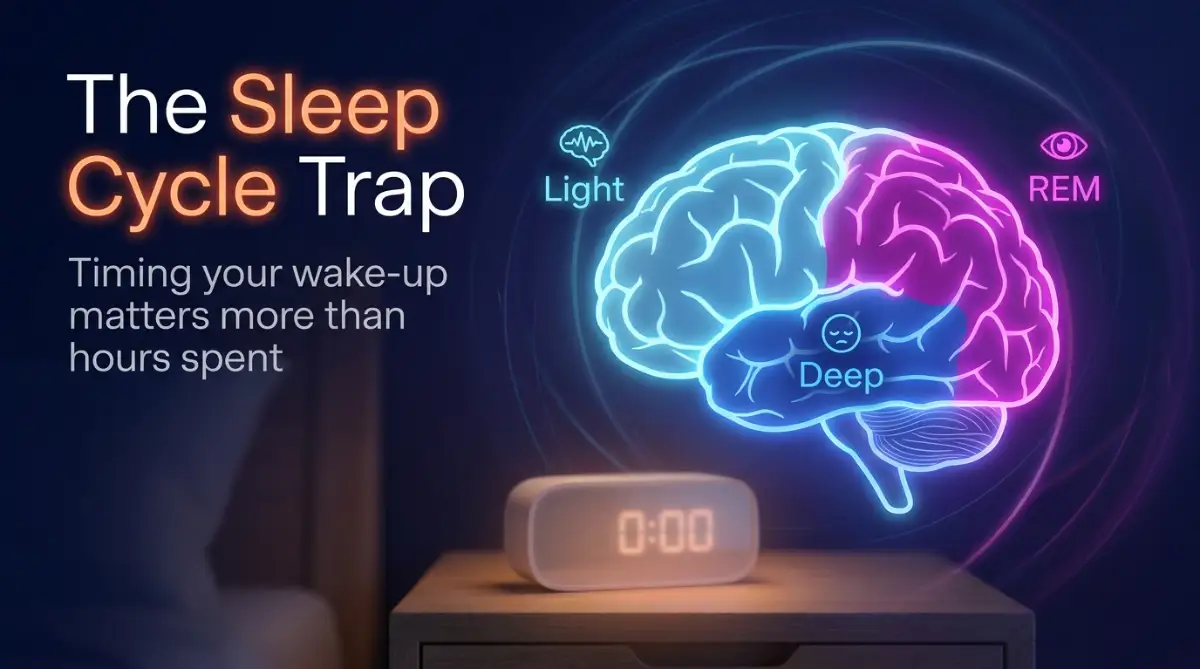
You do not just stay in one deep state all night long. Your body goes through a complete cycle roughly every 90 minutes. These cycles include light sleep, deep sleep, and Rapid Eye Movement (REM) sleep.
During deep sleep, your body repairs muscles, builds bone, and strengthens your immune system. During REM sleep, your brain processes emotions, files away memories, and clears out mental junk. Both of these stages are absolutely necessary for you to feel human the next day.
Beware of the "Sleep Inertia" Trap
Here is where the morning exhaustion usually begins. If your alarm clock wakes you up right in the middle of a deep sleep stage, your brain experiences a massive shock. Scientists call this sudden shock "sleep inertia."
When you are pulled out of deep sleep, your body is literally filled with hormones that are trying to keep you asleep. It is like trying to drive a car with the parking brake fully engaged. You can push the gas pedal all you want with coffee, but you are still going to feel heavy and sluggish.
This groggy, confused state can last anywhere from 30 minutes to several hours. This perfectly explains why you can sleep for eight hours but still feel completely drunk with fatigue when you stand up. The problem was not the amount of sleep, but the exact moment you woke up.
Watch This Eye-Opening Breakdown on Morning Fatigue
If you want to visually understand exactly why your brain refuses to wake up, this short video explains the biology behind morning exhaustion perfectly. Grab a notebook, because these insights are absolute game-changers for your daily energy.
Sneaky Environmental Factors Stealing Your Rest
You might think your bedroom is a peaceful sanctuary, but there are hidden energy thieves all around you. Your environment plays a massive role in how deeply your brain allows you to rest. Even small changes in your room can pull you out of deep recovery mode.
The Temperature Shock Factor
Most people sleep in rooms that are entirely too warm. When you prepare for bed, your core body temperature naturally needs to drop by a few degrees to initiate deep sleep. If your room is too hot, your body has to work overtime to cool itself down.
This constant temperature battle prevents you from staying in the deepest, most restorative stages of rest. You might not fully wake up, but your brain remains highly active, trying to regulate your heat. By morning, you feel exhausted because your body was physically struggling all night.
To fix this, experts suggest keeping your bedroom surprisingly cool, usually around 65 degrees Fahrenheit. It might feel a bit chilly when you first get under the covers, but it creates the perfect environment for deep recovery. You will notice a dramatic difference in how refreshed you feel.
The Hidden Light Pollution
Our brains are incredibly sensitive to light, especially the artificial blue light coming from our devices and streetlamps. Even with your eyes closed, your skin and the photoreceptors in your eyes can detect light changes in the room.
When your brain senses light, it stops producing melatonin, the hormone responsible for keeping you asleep. If your curtains let in streetlights, or if your TV is glowing in the corner, your sleep architecture gets completely ruined. Your brain thinks the sun is coming up, so it shifts you into a lighter, less restful state.
My personal realization about this was completely accidental, but it changed everything for me.
Pro Tip: I used to think a tiny bit of hallway light peeking under my door was harmless. Once I rolled up a towel to block that crack and wore a cheap silk eye mask, I experienced the deepest sleep of my life. Never underestimate how much your brain craves pitch-black darkness.
The Silent Breathing Epidemic
One of the most ignored reasons for morning fatigue is what happens to your airway while you are unconscious. You might be suffering from micro-awakenings without ever knowing it. This happens when you stop breathing properly for a few seconds at a time.
Conditions like mild sleep apnea or even heavy snoring can completely destroy your sleep quality. When your airway narrows, your oxygen levels drop. Your brain panics, sends a shot of adrenaline into your system, and wakes you up just enough to take a deep breath.
This terrifying survival loop can happen dozens of times an hour. Because these awakenings are so brief, you will not remember them in the morning. However, your brain was basically running a stressful marathon all night to keep you alive.
How to Tell if You Are Struggling to Breathe
If you wake up with an incredibly dry mouth, a sore throat, or a dull headache, you might have breathing issues. Another major red flag is waking up to use the bathroom multiple times a night. When your brain panics for oxygen, it often signals the bladder to release pressure.
You do not need to be overweight or older to suffer from disordered breathing. Even things like seasonal allergies, a deviated septum, or poor jaw posture can block your airway. Addressing your nighttime breathing is one of the fastest ways to get your daytime energy back.
Sneaky Lifestyle Habits Draining Your Night
We often blame our beds or our alarms, but our daytime habits dictate our nighttime success. What you do at 3 PM heavily influences how you will feel at 7 AM the next day. Everything from your diet to your stress levels plays a role.
The Late-Night Digestion Battle
Eating a heavy meal right before bed is a guaranteed way to wake up feeling tired. When you eat, your body directs a massive amount of blood and energy toward your digestive system. Digestion is a very active, heat-producing process.
If you fall asleep with a full stomach, your body cannot power down properly. Instead of repairing your muscles and brain cells, your energy is wasted on breaking down that late-night pizza. This keeps your heart rate elevated and prevents you from entering deep recovery stages.
Try to leave at least three hours between your last large meal and your bedtime. If you are truly starving, grab something tiny and easy to digest, like a small handful of almonds. Your digestive system needs to rest just as much as your brain does.
A Quick Habit Comparison
To make this easier to understand, let's look at how small choices drastically change your morning reality.
The Caffeine Curfew Mistake
Most people know that drinking a huge cup of coffee at 8 PM is a bad idea. However, very few people realize just how long caffeine stays in the human bloodstream. The half-life of caffeine is roughly five to six hours.
This means that if you drink a strong coffee at 4 PM to survive the afternoon slump, half of that caffeine is still actively stimulating your brain at 10 PM. You might feel tired enough to fall asleep, but that hidden caffeine will destroy your deep sleep phases.
Your brain will stay in a lighter, restless state all night long. You will toss and turn, wake up easily at small noises, and feel absolutely exhausted when the morning comes. Setting a strict caffeine curfew for 2 PM is highly recommended if you want to wake up with natural energy.
The Mental Load: Racing Thoughts and Cortisol
Physical exhaustion is only one piece of the puzzle. Mental and emotional stress will drain your energy faster than anything else. If you are going to bed worried, your body is treating your mattress like a danger zone.
When you stress about work, bills, or relationships, your body releases a hormone called cortisol. Cortisol is the exact opposite of melatonin; it is designed to keep you highly alert and ready to run from a threat. You cannot force a stressed brain into deep, peaceful recovery.
Even if you manage to fall asleep from sheer exhaustion, high cortisol levels will keep your sleep extremely shallow. You will likely wake up at 3 AM with your heart pounding, unable to fall back asleep. Learning to empty your mind before bed is not just a luxury; it is a biological necessity.
The "Brain Dump" Technique
If you struggle with a racing mind, try keeping a physical notebook on your nightstand. About twenty minutes before you want to sleep, write down every single thing you are worried about. Write down your to-do list for tomorrow, your random thoughts, and your frustrations.
Getting these thoughts out of your head and onto paper signals to your brain that they are safely stored. You do not need to hold onto them anymore. This simple psychological trick lowers your heart rate and allows your nervous system to finally power down.
Chronotypes: Fighting Your Natural Biology
Have you ever considered that your body simply hates your current schedule? Every human being has a natural internal clock, scientifically known as a chronotype. Your chronotype determines when you naturally feel most awake and when you naturally feel sleepy.
Some people are true early birds, waking up with the sun feeling energized and happy. Others are extreme night owls, finding their best focus and energy long after dark. The problem is that modern society forces almost everyone into a strict 9-to-5 schedule.
If you are a natural night owl forcing yourself to wake up at 6 AM, you are going to feel terrible. Even if you get eight hours of sleep by going to bed at 10 PM, your body is fighting its natural rhythm. You are basically living in a state of permanent social jetlag.
Aligning With Your True Schedule
While you might not be able to change your work hours, understanding your chronotype gives you power. If you know you are naturally a late sleeper, you can make smarter adjustments. You might need to focus heavily on morning light exposure to gently shift your internal clock.
Stepping outside into natural sunlight for just ten minutes right after waking up works wonders. Sunlight entering your eyes halts melatonin production immediately and signals to your brain that the day has begun. This simple habit can drastically reduce that foggy, heavy feeling you hate so much.
Next-Level Strategies for Unbreakable Morning Energy
Now that you understand the hidden biological traps keeping you exhausted, it is time to build a solid defense. You do not have to accept groggy mornings as your permanent reality. By tweaking just a few invisible habits, you can completely transform how your body recovers.
The goal here is not to just spend more hours staring at the ceiling. We want to maximize the deep, restorative phases of rest so you wake up feeling genuinely refreshed. Let’s look at some advanced, science-backed habits that actually work in the real world.
Master the Ninety-Minute Sleep Cycle Rule
Most people simply set their alarm for eight hours after they close their eyes. As we discussed earlier, this is a massive mistake because you might wake up during a deep sleep phase. Instead, you should start calculating your rest in ninety-minute blocks.
Your brain goes through a full cycle of light, deep, and REM sleep roughly every ninety minutes. To wake up feeling amazing, you need your alarm to go off at the very end of a cycle, not in the middle. This means sleeping for exactly seven and a half hours, or nine full hours, is often much better than eight.
Count backward from the time you need to wake up. If you need to be up by 6:00 AM, try falling asleep right at 10:30 PM to get exactly five full cycles. You can also look into public health guidelines for adult rest to see how experts recommend tracking your natural body rhythms.
The Morning Hydration Protocol
When you wake up, your body has just gone almost an entire workday without a single drop of water. You are waking up severely dehydrated, and dehydration immediately shrinks your brain tissue. This lack of fluid is a massive reason why you feel sluggish and have a dull headache in the morning.
Before you even think about walking to the coffee machine, drink a large glass of room-temperature water. To make it even more effective, add a tiny pinch of natural sea salt to the water. The salt provides essential electrolytes that help your cells absorb the hydration instantly.
This simple habit jumpstarts your metabolism and flushes out the toxins your brain cleared away during the night. You will be amazed at how much natural energy you feel just from rehydrating your organs.
Fix Your Nighttime Visual Environment
We live in a world that is overly bright, and our brains simply cannot handle it after sunset. If you are watching intense television shows or scrolling on your phone late at night, you are destroying your melatonin production. Many people do not realize how screen blue light secretly ruins your sleep and simple ways to fix it until they actually try a digital detox.
Your brain interprets this artificial brightness as the midday sun. It completely halts the chemical process that prepares your body for deep recovery. Try dimming the lights in your home at least two hours before you actually want to go to bed.
Switching to warm, amber-colored lamps in your bedroom signals to your nervous system that the day is over. It mimics a natural sunset, which gently guides your brain into a relaxed, sleepy state.
Supplement Smartly for Muscle Relaxation
Sometimes, your brain is exhausted, but your physical muscles refuse to relax. If your body holds onto physical tension, you will naturally stay in the lighter stages of rest. This is where a high-quality magnesium supplement can be a complete game-changer for your routine.
Magnesium naturally calms the central nervous system and helps your muscles release tension. Many people take a magnesium glycinate supplement about an hour before bed to help their body power down. You can check proper sleep hygiene protocols to see how diet and minerals play a massive role in nighttime recovery.
Always speak with your doctor before starting any new supplements, but fixing a mineral deficiency often solves years of restless nights. If you prefer getting it from food, try eating a small banana or a handful of pumpkin seeds in the evening.
Protect Your Mental Peace Before Bed
You cannot expect to sleep peacefully if you are carrying massive stress into your bedroom. If you are lying awake worrying about managing small business cash flow during unexpected economic downturns, your brain will pump out stress hormones. Cortisol will physically block you from entering deep recovery stages.
Create a firm boundary between your daily stress and your nighttime routine. Write down your financial worries, major tasks, or email replies on a piece of paper, and leave it in another room. Give yourself permission to let go of tomorrow's problems until the sun comes up.

The Hidden Traps Destroying Your Mornings
Even if you have the perfect mattress and a great nighttime routine, a few bad habits can ruin everything. People often unknowingly sabotage their own rest with things they think are actually helping them. Let's look at the most dangerous pitfalls you need to avoid right now.
The Snooze Button Addiction
Hitting the snooze button feels amazing in the moment, but it is actually the worst thing you can do for your energy. When your alarm goes off, your brain starts the waking process. By hitting snooze, you force your brain to fall back into a new sleep cycle that it will never get to finish.
Ten minutes later, the alarm violently yanks you out of that fresh sleep cycle. This creates intense sleep inertia, confusing your nervous system and flooding your body with stress hormones. You end up feeling ten times worse than if you had just gotten up the first time.
If you struggle with this, put your alarm clock across the room. Make it physically impossible to turn off the noise without standing up on your feet. Once you are standing, the hardest part of the morning is already over.
The "Weekend Recovery" Lie
Many of us try to survive the workweek on minimal rest, hoping to catch up by sleeping until noon on Saturday. Unfortunately, your brain does not work like a bank account where you can deposit extra hours later. This habit creates a miserable condition known as social jetlag.
By completely changing your wake-up time on the weekends, you confuse your internal biological clock. Come Monday morning, your body feels like it just flew across three time zones. You will wake up exhausted, grumpy, and completely out of sync.
You should aim to wake up within the same thirty-minute window every single day, including weekends. It sounds painful at first, but your body will quickly adapt to this consistent rhythm. Soon, you will start waking up naturally without even needing an alarm clock.
Using Alcohol to Power Down
A glass of wine before bed might help you fall unconscious faster, but it absolutely destroys the quality of your rest. Alcohol acts as a heavy sedative, knocking out your brain rather than letting it naturally transition into sleep. Scientific research on caffeine half-life and alcohol processing shows that these substances severely disrupt brain waves.
Once your liver processes the alcohol a few hours later, your body experiences a rebound effect. You will likely wake up sweating at 3:00 AM, with your heart racing and your mind wide awake. Alcohol specifically blocks REM sleep, meaning you get zero mental recovery during the night.
If you enjoy a drink, try to have it with dinner, leaving several hours for it to leave your system before bed. Replace your nightcap with a warm cup of herbal tea to get that relaxing feeling safely.
Ignoring Physical Discomfort
You might be waking up tired simply because your body is fighting physical pain all night long. If you spend your entire day slouching at a desk, your muscles will cramp up while you lie in bed. Many people ignore why your ergonomic chair is still causing lower back pain and how to fix it, taking that tension straight to their mattress.
Tossing and turning to relieve back or neck pain prevents you from staying in deep sleep stages. Even if you do not fully wake up, your brain remains highly active trying to find a comfortable position. Invest in a proper pillow that supports your neck alignment.
Do some light, gentle stretching on your bedroom floor before you get under the covers. Releasing that built-up physical tension allows your nervous system to fully power down and rest peacefully.
Thinking More Time in Bed Solves Everything
There is a strange assumption that if you feel tired, you simply need to spend more hours in bed. This is like assuming why overnight charging kills your smartphone battery faster than you realize; leaving it plugged in too long actually damages the system. Oversleeping can cause just as much fatigue as not sleeping enough.
Spending ten or eleven hours in bed often leads to highly fragmented, poor-quality rest. Your body gets confused by the lack of movement and daylight, making you feel sluggish all afternoon. Focus heavily on improving the depth of your rest, rather than just extending the time you spend lying down.
Your Action Plan for Unstoppable Energy
Waking up exhausted every single day is no way to live your life. You deserve to open your eyes feeling clear-headed, motivated, and ready to tackle your daily goals. The good news is that you have complete control over most of the factors causing your fatigue.
Start tonight by making just one or two small changes to your routine. Do not try to overhaul your entire life in a single evening, because that will only cause more stress. Maybe you start by blocking out the blue light earlier, or maybe you finally set a strict wake-up time for the weekend.
Pay close attention to your body temperature, your breathing, and the timing of your sleep cycles. Harvard health experts on circadian rhythms emphasize that consistency is the most powerful tool you have. The more consistent you are, the faster your body will learn to trust your routine.
Stop accepting heavy, miserable mornings as a normal part of getting older. Your body wants to heal, it wants to recover, and it naturally wants to give you energy. You just have to get out of your own way and provide the right environment for it to happen.
Common Questions About Morning Fatigue
Why do I still feel tired even after taking sleep vitamins?
Vitamins and supplements can support a healthy routine, but they cannot fix terrible habits. If your room is too hot, or you are staring at a bright phone screen, melatonin pills will not save you. You must fix your environment and bedtime consistency first before relying on supplements.
Can sleeping too much actually make you groggy?
Yes, absolutely. Oversleeping confuses your internal body clock and often causes you to wake up in the middle of a deep sleep cycle. This leads to intense sleep inertia, leaving you with a headache and a heavy, sluggish feeling all day.
How long does it take to fix a broken sleep schedule?
If you stay completely consistent with your wake-up time, it usually takes your body about three to five days to adapt. During those first few days, you will feel tired, but you must resist taking long afternoon naps. Force yourself to get sunlight in the morning to speed up the resetting process.
Does waking up during the night ruin my energy for the next day?
It depends on how quickly you fall back asleep. Brief awakenings are totally normal, but if you stress out and check your phone, you will ruin your deep rest. Keep the lights off, stay relaxed, and trust that your body will drift back into a natural rhythm.
Is it normal to need a nap after getting a full eight hours of rest?
Needing a short 20-minute power nap in the early afternoon is a normal human biological dip in energy. However, if you are desperately craving a two-hour nap every day, your nighttime rest is severely lacking quality. You might be suffering from micro-awakenings or poor breathing that needs to be addressed.
I spent years fighting my own alarm clock before I finally understood that sleep quality is entirely different from sleep quantity. My mornings completely changed once I stopped focusing on hours and started focusing on my nighttime environment. I truly hope you apply just one of these habits tonight, because waking up with natural energy will change your life forever.
Disclaimer: The information provided in this blog post is for educational and informational purposes only and is not intended as medical advice. Always consult with a qualified healthcare professional or a doctor before making significant changes to your sleep habits, taking new supplements, or if you suspect you have a medical sleep disorder like sleep apnea.
![How to Lower High Blood Pressure Naturally [Save Time & Money]](https://enapulse.com/storage/uploads/blogs/1786451818_how-to-lower-high-blood-pressure-naturally-save-time-money.webp)