
The Hidden Struggle of Thirsty Skin: A Personal Confession
I remember waking up every single morning, looking in the mirror, and feeling completely defeated by my own face. No matter how much thick, heavy cream I slapped on the night before, my skin always felt tight, flaky, and uncomfortably stretched by midday. I spent hours reading beauty magazines and emptied my wallet on high-end serums, hoping for a magical fix. Nothing worked, and I honestly felt like giving up on my complexion entirely.
I was embarrassed to wear makeup because it would just cling to the dry patches, making me look exhausted and older than my actual age. My confidence was completely shattered, and I found myself canceling plans just to avoid being seen in bright daylight. It took me a very long time to realize that I wasn't just dealing with basic dryness; I was battling severe, deep-rooted dehydration.
For so many of us, this daily battle feels like an endless cycle of frustration and wasted money. You buy the most highly-rated moisturizers, apply them faithfully, and yet your face feels like sandpaper a few hours later. It genuinely messes with your mental peace when you are trying so hard but seeing zero positive results.
People often assume you just are not taking care of yourself, which makes the emotional toll even heavier. You start dreading social events, taking photos, or even just standing under harsh lighting. The constant tightness and irritation make it impossible to feel comfortable in your own body.
We try to mask the flakiness with heavy foundations, but that only creates a cakey mess that draws more attention to the problem. It feels like you are trapped in a body that refuses to retain a single drop of water.
But what if I told you that the problem is not your skin, but rather the way you are delivering water to it? The science of holding onto moisture is entirely different from just applying oils or thick lotions.
Once you understand how moisture actually works on a molecular level, everything changes. Let us explore exactly why your face feels so thirsty and how you can permanently fix this issue using smart, science-backed methods.
The Surprising Mechanics of Moisture: How Your Skin Actually Behaves
Most people think that dry skin and dehydrated skin are the exact same thing, but they are completely different issues. Dryness means you lack natural oils, while dehydration means your cells are starving for water. You can actually have very oily skin that is simultaneously heavily dehydrated.
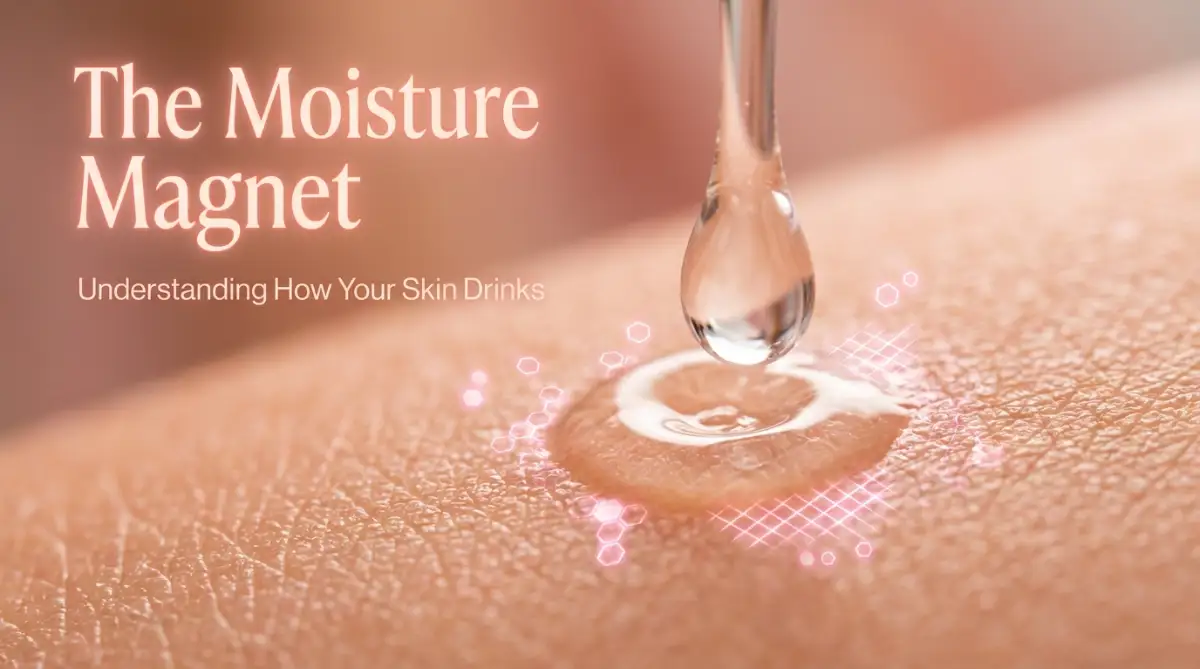
This is where the magic of specific water-binding ingredients comes into the picture. Certain molecules act entirely differently than standard lotions or thick butters. They do not just sit on top of your face; they actively pull moisture from the environment and bind it directly to your cells.
Imagine your face as a dry, hardened sponge sitting on your kitchen counter. If you put a heavy dollop of thick oil on that dry sponge, the oil will just sit on the surface, making it greasy but leaving it completely dry and hard inside.
However, if you expose that sponge to water and a binding agent, it suddenly swells up, becoming soft, bouncy, and flexible. This is exactly what a high-quality water-binding molecule does for your face.
The Magnetic Power of Water Binders
The science behind these natural moisture magnets is truly fascinating. They have the ability to hold up to one thousand times their own weight in water. When you apply them, they act like a micro-sponge, grabbing water molecules from the air and from within your body, holding them firmly in place.
But there is a catch that most skincare brands never tell you about. If you live in a very dry climate with zero humidity in the air, this powerful magnet has to get water from somewhere. It will actually pull moisture from the deeper layers of your own skin, bringing it to the surface where it evaporates.
This is exactly why some people say their highly-rated hydrating serums make them feel even drier. They are missing the most important structural steps in their routine. You have to give the magnet something to hold onto, or it will work against you.
High Weight vs. Low Weight Molecules: Why Size Matters
Not all hydrating serums are created equal, and this comes down to basic chemistry and molecular size. Some molecules are physically too large to penetrate deeply, so they sit right on the surface. These large molecules are amazing for creating an immediate, visible plumping effect and a beautiful dewy glow.
On the other hand, smaller molecules are designed to penetrate deeply below the surface. They provide long-lasting internal hydration that repairs the structural integrity of your cells.
The most effective routines combine both large and small molecules. This way, you get the instant surface glow while quietly repairing the deeper layers over time. Understanding this small scientific detail can completely transform your shopping habits.
The Actionable Blueprint for Maximum Hydration
Now that we understand the science of how these moisture magnets work, we need to talk about proper application. Buying a great product is only ten percent of the battle. The other ninety percent is how you actually put it on your face.
If you apply these products incorrectly, you are simply washing money down the drain. Let us break down the exact, step-by-step method to force your skin to hold onto water all day long.
The Damp Skin Secret
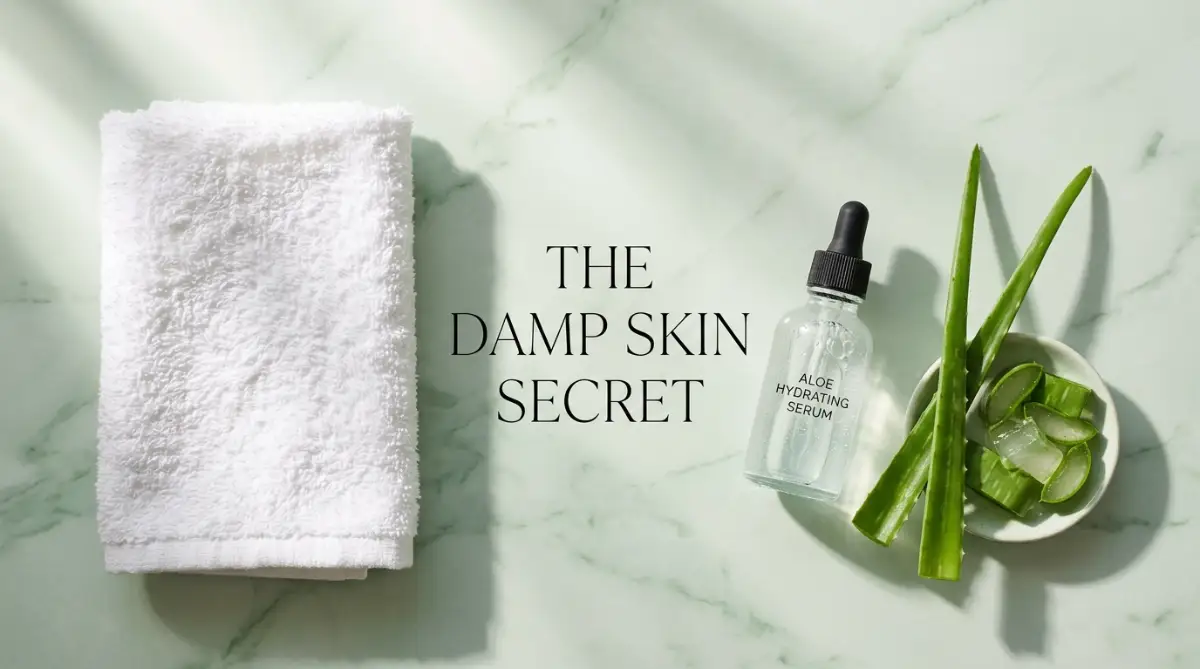
The single most important rule of hydration is to never apply water-binding serums to a completely dry face. Remember the hard sponge analogy? You must introduce water first.
After washing your face, gently pat it with a towel but leave it noticeably damp. Your face should feel wet to the touch before you apply your serum. This gives the ingredients an immediate pool of water to grab onto and pull into your cells.
I used to apply my expensive serums on bone-dry skin, thinking it would absorb better, which was a huge mistake. My skin ended up feeling even tighter and more irritated than before. Now, I always leave my face slightly wet after washing, and that simple shift completely changed how my skin holds moisture.
The Art of Layering
Once you have applied your serum to damp skin, you only have a short window of time before evaporation begins. You must seal that hydration into your skin immediately. Think of it like trapping water inside a glass jar by putting a tight lid on it.
You do this by applying a good quality moisturizer or a facial oil directly over the hydrating serum. This creates a physical barrier that stops the water from escaping into the dry air around you.
If you want to see exactly how skin experts layer their hydration products for maximum effect, you need to watch this quick visual breakdown.
Choosing the Right Sealant
The type of "lid" or moisturizer you choose depends entirely on your specific skin type. If you are naturally oily, a lightweight gel moisturizer will create the perfect seal without clogging your pores. It keeps the water trapped without adding unnecessary heavy lipids.
If you lean toward severe dryness, you need something much thicker. Look for creams containing ceramides or shea butter. These ingredients act like strong cement, repairing cracks in your protective barrier while keeping the water safely locked inside.
Many people skip this sealing step because they do not like the feeling of heavy creams. But without an occlusive layer, your hydrating serums will evaporate, taking your skin's natural moisture along with them.
Environmental Thieves: What Steals Your Moisture?
Even with the perfect skincare routine, you might still struggle with tightness if you ignore your environment. The world around us is constantly trying to steal water from our bodies. Understanding these environmental thieves is the key to maintaining a bouncy, fresh complexion all day.
The Threat of Indoor Heating and AC
Air conditioners and indoor heaters are designed to pull humidity out of the air to maintain temperature control. If you sit in an air-conditioned office for eight hours a day, the air is actively sucking the moisture right out of your face.
To fight this, consider keeping a small, portable humidifier right on your desk. This constantly pushes water back into the air, giving your hydrating serums a steady supply of moisture to draw from. It is a tiny investment that makes a massive difference in your daily comfort.
Hot Showers and Barrier Damage
We all love a long, steaming hot shower, especially during the colder months. However, hot water is an absolute nightmare for your protective barrier. It strips away all your natural oils, leaving your face completely defenseless against evaporation.
Always wash your face with lukewarm or cool water, even if you are taking a warm shower. The cooler temperature keeps your lipid barrier intact, which naturally prevents water loss throughout the day. It might feel less relaxing, but your face will thank you immensely.
Synergistic Skincare: Combining Ingredients Safely
Hydration does not happen in a vacuum, and no single ingredient can fix everything on its own. Your skin needs a balanced diet of different compounds to function perfectly.
The Magic of Ceramides
Ceramides are naturally occurring lipids that make up over fifty percent of your outer skin layer. They are the mortar that holds your skin cells together. When you combine water-binding serums with a heavy ceramide cream, you get unmatched results.
The hydrating serum pulls the water deep into the cells, and the ceramides rebuild the outer wall to trap it there. Together, they create an impenetrable fortress of moisture.
Ingredients to Avoid Mixing
While combining products is great, some combinations will instantly destroy your hydration goals. Strong exfoliating acids like glycolic acid or high-strength retinoids can severely damage your barrier if used incorrectly.
If your barrier is currently compromised and extremely flaky, stop using all strong acids immediately. Focus entirely on hydration and barrier repair for at least a few weeks before reintroducing any harsh exfoliants. You cannot hydrate a face that is constantly being stripped of its protective layer.
The Inside-Out Approach to Hydration
We cannot talk about holding onto water without discussing what you are actually putting inside your body. Topical treatments are amazing, but they can only do so much if you are internally dehydrated.
Drinking enough water is obvious, but it is not just about chugging glasses of plain water. You need electrolytes to help your cells actually absorb and hold that water internally. Eating water-rich foods like cucumbers, watermelon, and celery helps deliver hydration slowly and effectively to your tissues.
Additionally, excessive caffeine and alcohol consumption will actively work against your skincare routine. Both act as diuretics, meaning they flush water out of your system rapidly. If you are going to enjoy your morning coffee, make sure you are matching it with extra glasses of water to maintain your internal balance.
Myth vs. Reality: Common Hydration Misconceptions
The beauty industry is filled with aggressive marketing that often confuses consumers. Let us clear up some of the most common myths surrounding moisture and daily hydration routines.
Myth: Drinking a gallon of water a day will cure flaky skin.
Reality: While drinking water is healthy, it is the least efficient way to hydrate your outermost skin layers. The water goes to your major internal organs first, and very little makes it to the surface. Topical hydration is absolutely required for visible results.
Myth: Oily faces do not need any hydrating serums.
Reality: Oily faces often overproduce oil specifically because they lack water. When you properly hydrate an oily complexion, it often stops producing excess grease because it finally feels balanced.
Myth: You only need to apply heavy creams in the winter.
Reality: Summer heat and heavy sun exposure can dehydrate you just as fast as harsh winter winds. Your routine might become lighter in texture during warmer months, but the core steps of hydration and sealing should remain exactly the same.
Establishing a Powerful Morning Routine
Your morning routine should be entirely focused on protection and hydration. You want to prep your face to handle the environmental stress of the day.
Start by splashing your face with cool water or using a very gentle, non-foaming cleanser. You do not want to strip the natural oils you built up overnight. While your face is still dripping wet, gently pat in your favorite hydrating liquid or essence.
Immediately follow this up with your water-binding serum. Give it about thirty seconds to absorb, but do not let it dry completely. Before it evaporates, lock it down with a reliable, lightweight moisturizer.
Finally, never skip a broad-spectrum sunscreen. UV rays severely damage the structural proteins that hold moisture in your skin. Sunscreen is not just for preventing burns; it is the ultimate shield for your hydration levels.
Establishing a Restorative Night Routine
While the morning is for protection, the nighttime is for deep repair and heavy moisture recovery. This is when your body temperature rises slightly, and you naturally lose more water through your skin as you sleep.
Start with a thorough double cleanse to remove makeup, sunscreen, and pollution. Once your face is clean, apply a heavier layer of your hydrating serums on extremely damp skin. You can afford to be more generous with your products at night.
This is the perfect time to bring out the heavy creams, facial oils, or even sleeping masks. You want to create a thick, occlusive barrier that prevents overnight evaporation. When you wake up, your face will feel incredibly soft, bouncy, and completely renewed.
Taking control of your skin's moisture levels does not require expensive clinic visits or complicated procedures. It simply requires an understanding of basic science and a commitment to applying your products correctly.
By respecting your skin barrier, mastering the damp application method, and protecting yourself from environmental thieves, you can transform the driest complexion into something naturally radiant. Hydration is the foundation of all healthy skin, and once you master this foundation, every other aspect of your beauty routine will naturally fall into place.
Beyond the Basics: Advanced Tricks for Deep Cell Hydration
Many people think that putting on a single hydrating serum is enough to solve their dry skin problems. In reality, your skin requires a multi-layered approach to keep those water molecules trapped where they belong. We need to look closely at how different products interact with each other to get the best results.
The first step to advanced hydration is understanding how to pair different active ingredients in your daily routine. Combining your water-binding products with soothing agents can dramatically speed up your results. You can read our detailed guide on how to layer niacinamide and acids for glowing skin step-by-step to master this balancing act.
If you do not get this order right, you might cause unnecessary redness and irritation. Highly sensitive skin types require extra care when mixing different concentrated serums. Using the wrong combination can easily strip your natural glow and leave you feeling highly uncomfortable.
Before buying any expensive bottles, you must start by finding your specific skin type so you can target your issues correctly. Applying rich, heavy oils on an naturally oily face can lead to breakouts instead of actual hydration. Knowing your baseline is the secret weapon to saving money and avoiding painful trials.
Once you know your type, you can try the famous "hydration sandwich" technique. This involves spraying your face with a clean thermal mist both before and after applying your moisture-binding serum. This provides a generous pool of water for the formula to grab and pull into your cells.
This method is supported by extensive medical research into how the outer skin layers absorb liquids. According to a clinical review on skin quality and aging, topical applications must have enough surface moisture to penetrate the barrier effectively. Without that wet base, the formulas cannot perform their natural functions properly.
Additionally, you should pay close attention to the ambient humidity in your bedroom. Running a cool-mist humidifier while you sleep keeps the air moist and comfortable. This simple trick prevents dry air from stealing water from your face during your natural overnight healing cycle.
If you are currently experiencing extreme tightness, you might need to focus on healing a damaged skin barrier naturally first. A broken barrier is like a bucket with tiny holes in the bottom; no matter how much water you pour in, it will all leak out. Rebuilding that protective wall is your absolute first priority for long-term health.
This rebuilding process involves using natural lipids and fatty acids to patch up those tiny structural gaps. When your outer wall is solid and healthy, your hydration levels will naturally remain high. You will notice that you do not need to reapply your lotions nearly as often.
Many studies show that maintaining this barrier is highly effective for reducing premature signs of aging. According to a clinical study on topical serums, consistent moisture retention dramatically improves skin volume and smoothness. Keeping that water locked in is the easiest way to prevent fine lines from forming early.
Another advanced secret is to utilize the healing power of natural plant extracts. Ingredients like centella asiatica and green tea extract work incredibly well alongside your hydrating products. They calm down hyper-reactive cells and prepare them to hold onto water much more efficiently.
If your skin is currently feeling highly reactive, you should check out these calming methods for inflamed and sensitive skin to find instant relief. Calming the heat and irritation first makes it much easier for your hydrating serums to do their job. Peaceful, calm cells are much better at holding onto daily moisture.
Finally, you can explore the benefits of slow-release formulations that work throughout the day. These products use advanced capsule systems to deliver hydration gradually over several hours. This prevents the sudden dry-out that many people experience in air-conditioned offices.
Daily Hydration: Quick Do's and Don'ts
This simple cheat sheet is designed to help you make quick decisions during your morning and evening routines. Keeping these basic rules in mind will save you from making mistakes that drain your face of water. It is always better to focus on gentle, simple steps rather than using too many complex products at once.
If you follow these rules daily, you will notice a huge change in how comfortable your face feels. Your natural barrier will finally have the peace it needs to rebuild its defensive walls. You will save a lot of money by avoiding unnecessary, harsh treatments.
The Silent Saboteurs: Traps That Keep Your Skin Thirsty
It is incredibly easy to make simple mistakes that completely ruin all your hard work. You might think you are doing everything right, yet your face remains incredibly dry and uncomfortable. Let us look at the most common blunders that could be quietly draining your skin of its natural moisture.
The biggest mistake is ignoring the silent mistakes that ruin your protective barrier on a daily basis. Many people use harsh, stripping foaming cleansers that completely wash away their natural defensive oils. Once those oils are gone, your skin has no way to defend itself against dry indoor air.
Another major pitfall is applying too many heavy active products all at the same time. If you are adding retinoids to your evening routine without proper buffering, you might trigger severe flaking and irritation. Retinoids are highly effective, but they must be introduced slowly to prevent your barrier from breaking down.
You should also avoid applying your water-binding products to completely dry skin. If there is no moisture on the surface, these molecules will pull water out from your deep tissues instead. This causes severe internal dehydration, making your face look dull, tired, and sunken over time.
Many people also forget to adjust their routine when the weather changes drastically. Winter air lacks humidity, which means your summer gel lotions might not be strong enough anymore. You must switch to richer formulas to provide that necessary protective seal during colder months.
Another hidden trap is relying solely on facial oils to hydrate your dry face. Oils do not contain any water; they only provide lipids to lock in existing moisture. If you apply oil to a dehydrated face, you are simply sealing in the dryness, which solves absolutely nothing.
You must always apply a water-based product first, and then follow it up with your favorite oil. This simple change ensures that your cells get the drink of water they need before the seal goes on top. It is all about the order of application if you want to see real results.
Lastly, some people scrub their face aggressively with physical scrubs to get rid of dry flakes. This is highly damaging and creates microscopic tears in your outer protective layer. These tiny tears allow water to evaporate rapidly, leading to even more flakiness and redness the next day.
Instead of scrubbing, use gentle chemical exfoliants like lactic acid once or twice a week. Lactic acid is unique because it gently dissolves dead cells while actually helping your skin hold onto water. It is a much smarter, gentler way to keep your complexion smooth and hydrated.
According to dermatological studies published on the National Library of Medicine, keeping the barrier intact is key to preventing long-term skin issues. When you stop scrubbing and start protecting, your face naturally heals itself. You will notice a visible difference in how soft and supple your face feels within just a few days.
Your New Daily Roadmap for Glowing Skin
Achieving that perfect, dewy glow is not about luck; it is about building a consistent and intelligent daily routine. When you treat your face with the respect and science it deserves, the results will naturally follow. Let us look at a simple plan you can start using tonight to change your skin forever.
Action Plan for Tomorrow
First, swap out your harsh cleansers for a gentle, hydrating wash that does not leave your face feeling tight. Keep your skin damp after washing, and immediately apply your hydrating serum to trap that surface water. Seal everything in with a nourishing cream that matches your specific skin needs.
Second, take a close look at your indoor environment and try to add some moisture back into your space. Simple steps like using a humidifier or avoiding super hot showers can save your barrier from daily damage. Your face will feel much more comfortable, and you will use far less product over time.
Third, be patient with your skin and give it the time it needs to rebuild its natural strength. Real structural healing does not happen overnight, but consistent care will produce beautiful, lasting changes. Stay dedicated to the simple rules of hydration, and you will never have to deal with uncomfortable tightness again.
I spent years making these exact mistakes and felt so hopeless about my own dry, flaky skin. Once I started applying my serums to wet skin and protecting my barrier, my face completely transformed. I encourage you to take that first simple step tonight because you deserve to feel comfortable and confident in your skin.
Your Burning Skincare Questions Answered
Can I use hyaluronic acid every single day?
Yes, you can absolutely use this ingredient twice a day in both your morning and evening routines. It is incredibly gentle and works naturally with your skin cells to maintain daily moisture levels. Just make sure to always apply it to damp skin and lock it in with a good moisturizer.
Why does my face feel dry after using a hydrating serum?
This usually happens because you applied the serum to completely dry skin or failed to seal it with a moisturizer. Without a wet base or a protective cream, the serum will actually pull water out of your deep skin layers. Always follow the damp application method to keep the water trapped inside.
Is drinking water enough to fix my dehydrated skin?
While drinking water is highly important for your overall health, it rarely reaches the outermost layers of your face. Your body distributes water to your internal organs first, leaving very little for your skin surface. Using topical hydrating products is the only way to directly target surface dryness.
How long does it take to repair a damaged moisture barrier?
If you are consistent with your gentle routine, you can start seeing visible improvements within two to four weeks. However, deep cellular healing can take up to a few months depending on how badly your barrier was damaged. Be patient, avoid harsh scrubs, and focus entirely on rich, soothing hydration.
Can oily skin types still experience dehydration?
Yes, oily skin can easily become severely dehydrated because oil and water are completely different things. When your skin lacks water, it often overproduces oil to try and protect itself from drying out. Applying a lightweight, oil-free hydrating serum can actually help reduce excess greasiness over time.
Disclaimer: The information provided on this blog is for educational and informational purposes only and should not be construed as professional medical advice. Always consult with a qualified dermatologist or skincare professional before starting any new skincare routine or using new products, especially if you have pre-existing skin conditions or sensitive skin.