That Heart-Dropping Moment Behind the Wheel
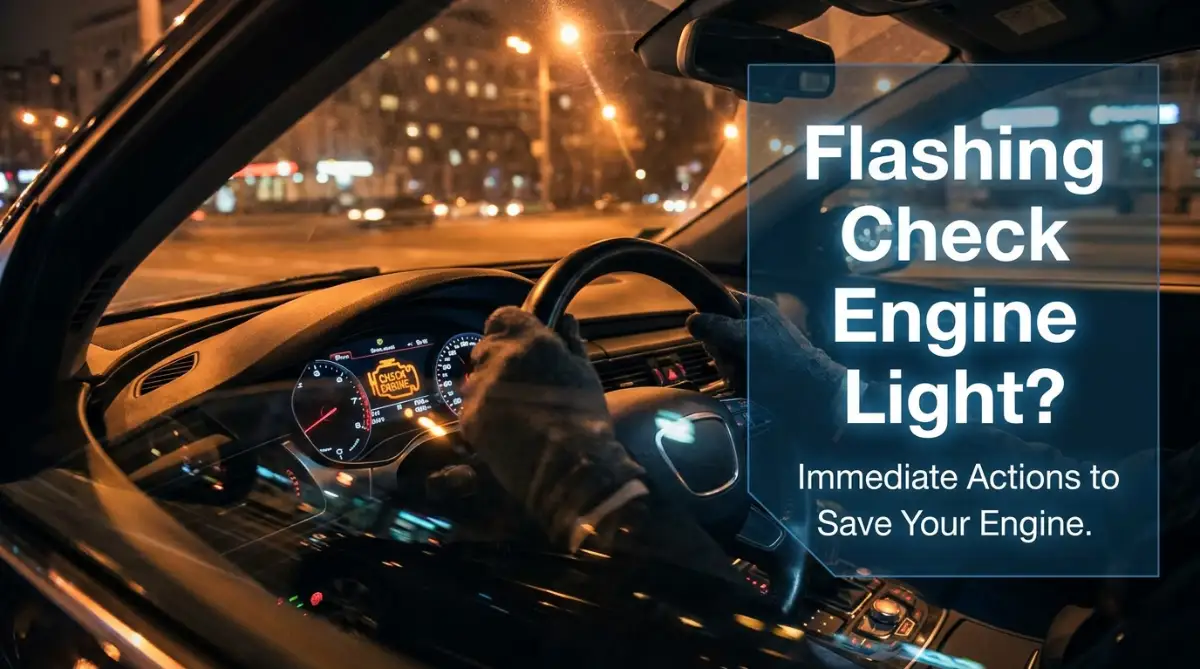
I will never forget the sudden panic that washed over me during a rainy evening commute home. I was cruising down the highway, listening to my favorite podcast, when the car suddenly jerked violently. Out of nowhere, the little amber engine symbol on my dashboard began to blink rapidly.
My heart instantly skipped a beat, and my grip on the steering wheel tightened. I had seen the solid engine light before, but this aggressive flashing felt entirely different. It felt like my car was screaming at me for help.
I honestly had no idea what to do in that exact second. Should I keep driving to the nearest gas station, or should I slam on the brakes right there on the highway? My mind started racing with terrifying thoughts of massive repair bills and a completely blown engine.
I could literally feel the engine shaking beneath my feet. The smooth ride quickly turned into a sputtering, rough nightmare. Every time I pressed the gas pedal even slightly, the entire car hesitated and vibrated.
The mental stress of that moment was overwhelming. You feel completely helpless when your daily transportation suddenly turns against you. It completely ruins your peace of mind, leaving you stranded with a deep sense of dread.
For most regular drivers, this exact scenario is an absolute nightmare. We rely on our cars to get us to work, pick up our kids, and live our busy lives safely. When a flashing light threatens all of that, the financial anxiety and emotional stress are totally paralyzing.
The Science of the Blink: What Is Actually Happening?
To understand why this specific warning is so dangerous, we need to look under the hood. A solid warning light usually means something is wrong with your emissions system, but it is rarely an emergency. A flashing light, however, is your car's way of yelling "Code Red."
In almost every modern vehicle, this rapid blinking indicates an active, severe engine misfire. This means that one or more of your engine's cylinders are failing to ignite the fuel properly. Instead of burning fuel to create power, the engine is just pumping raw, unburned gasoline straight into your exhaust system.
Think of your engine like a perfectly synchronized rowing team. If one rower suddenly stops paddling and drops their oar in the water, the entire boat jerks and loses momentum. That is exactly what your car is doing when it misfires.
Why Raw Fuel is a Massive Threat
You might be wondering why unburned fuel is such a big deal. The main issue lies right underneath your car in a highly expensive part called the catalytic converter. This part is designed to clean up exhaust gases, and it operates at very high temperatures.
When raw gas gets dumped into the glowing hot catalytic converter, it instantly ignites. This uncontrolled fire quickly melts the precious metals inside the converter. A part that usually costs thousands of dollars to replace can be completely destroyed in just a few minutes of driving.
This is why mechanics stress the absolute urgency of the situation. You are not just dealing with a simple spark plug issue anymore. You are actively racing against the clock to prevent a catastrophic melting of your exhaust system.
The Solid vs. Flashing Warning: A Quick Breakdown
To make things perfectly clear, I want to show you exactly how different these two warnings are. Knowing this difference can save you from a lot of unnecessary panic.
As you can see, the solid glow allows you to finish your trip and call a mechanic in the morning. The blinking light demands your immediate attention and action. Treating them as the same thing is one of the most expensive mistakes a driver can make.
Immediate Roadside Survival Steps
When that dreaded blinking starts, you need a clear, actionable plan to keep yourself safe. Panic is your worst enemy in this situation. Take a deep breath and follow these exact steps to protect both your safety and your vehicle.
Step 1: Execute a Safe Emergency Pull-Over
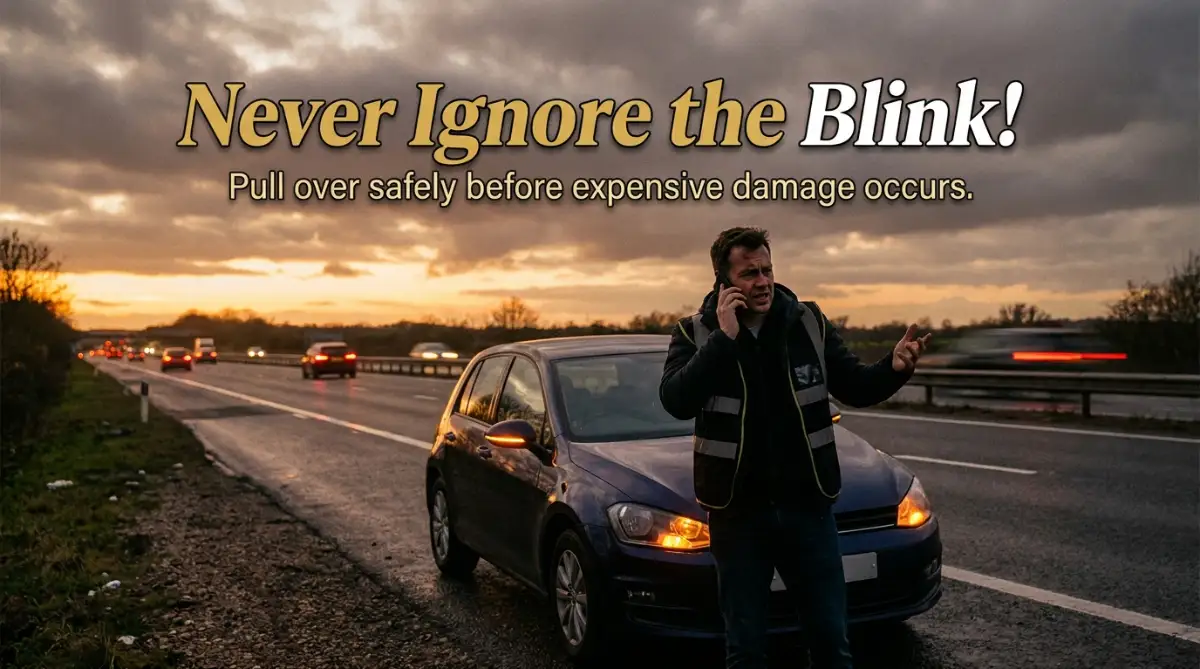
The very first thing you must do is remove your foot from the accelerator. Do not try to maintain your highway speed or push through the shaking. Reduce your speed gently and immediately turn on your hazard lights to warn the drivers behind you.
Look for the nearest, widest shoulder or an upcoming exit ramp. If you are on a busy interstate, do not stop in a live lane of traffic unless the engine completely dies. Coast your vehicle as smoothly as possible to a safe resting spot away from moving cars.
Once you are safely on the side of the road, put the car in park and turn the engine off entirely. Do not let it sit there and idle. Every single rotation of that idling engine is sending more raw fuel into your hot exhaust.
Step 2: Conduct a Quick Sensory Assessment
Now that you are safe and the engine is off, take a moment to use your senses. This will help you give accurate information to the tow truck driver or mechanic. Open your window slightly and take a quick sniff of the air around your car.
Do you smell a strong odor of raw gasoline? This confirms that unburned fuel is escaping the combustion chamber. Sometimes, you might even smell a nasty "rotten egg" odor. That specific sulfur smell is a major red flag that your catalytic converter is already overheating.
Next, think about what you heard and felt right before you pulled over. Did you hear a loud popping noise from the exhaust pipe? Did the steering wheel shake violently in your hands? Write these details down on your phone so you do not forget them.
Step 3: The Towing Reality Check
I know how tempting it is to just restart the car and try to limp home. You might think, "I am only two miles away, I can make it." Please, erase this thought from your mind immediately.
Driving even a short distance with a flashing warning can turn a simple spark plug replacement into a complete engine rebuild. The heat buildup happens incredibly fast. Calling a tow truck might cost you some money today, but it will save you thousands tomorrow.
If you have roadside assistance through your insurance or a AAA membership, this is the exact moment to use it. Sit safely inside your vehicle with your seatbelt on while you wait for the tow truck. Your safety on the shoulder of a highway is the absolute top priority.
My personal realization came the hard way. A few years ago, I decided to push my luck and drive just three more miles to my house while the light was blinking. That stubborn decision ended up melting my catalytic converter, turning a cheap ignition coil fix into a massive financial nightmare. Never gamble with a flashing engine light.
Myth vs. Reality: Clearing Up Bad Advice
When you are stressed out, it is easy to search online and find terrible automotive advice. I want to clear up some dangerous myths right now so you do not make things worse. There is a lot of misinformation out there about dashboard warnings.
Myth 1: "Just unhook the battery to reset the light."
This is a terrible idea for a blinking light. Disconnecting the battery might temporarily turn the light off, but it does absolutely nothing to fix the active misfire. As soon as you start driving again, the raw fuel will continue dumping into your exhaust. Plus, you will erase the diagnostic codes that your mechanic desperately needs to read.
Myth 2: "If you drive faster, it will clear out the engine."
Some people believe that "blowing the carbon out" by revving the engine will fix a misfire. This is incredibly dangerous when the light is flashing. Pushing more fuel and air into a failing cylinder will only accelerate the destruction of your engine components. Always reduce your speed; never increase it.
Myth 3: "It is probably just a loose gas cap."
A loose gas cap will absolutely trigger a solid check engine light. However, a loose gas cap will never, ever cause the light to flash. Do not waste time getting out of the car on a busy highway to check your gas cap if the light is blinking. You have a much larger mechanical failure happening.
What Will the Mechanic Actually Look For?
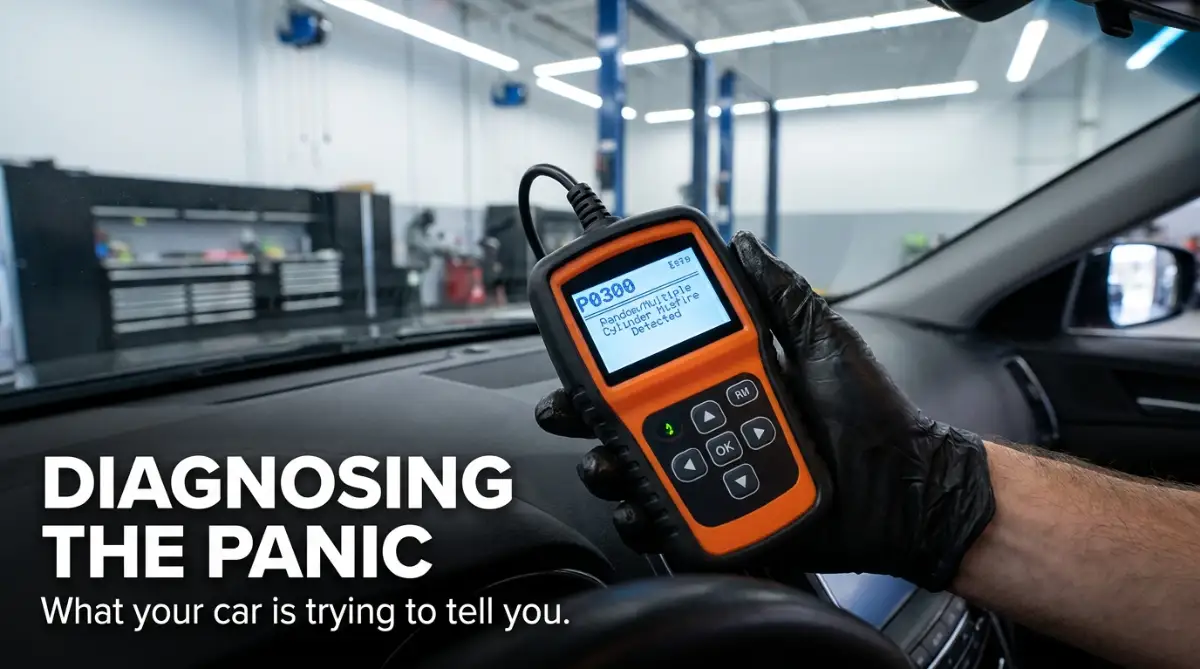
While you are riding in the tow truck, it helps to understand what the repair shop will do next. Knowledge is power, and knowing the process will help you feel more in control. The mechanic will start by plugging a special tool called an OBD-II scanner into your dashboard.
This scanner communicates with your car's main computer to retrieve specific error codes. For a misfire, they will usually see codes ranging from P0300 to P0308. A P0300 means a random misfire, while a P0301 means cylinder number one is the specific troublemaker.
Once they know which cylinder is failing, they will inspect the "Holy Trinity" of combustion. An engine needs exactly three things to create power: air, fuel, and a spark. If any of these are missing, the cylinder goes dead.
The Usual Suspects Behind the Breakdown
The most common culprit is a worn-out spark plug. These little devices have to generate a tiny bolt of lightning thousands of times per minute. Over time, the metal gap wears down, and the spark simply becomes too weak to ignite the gas.
If the spark plug is fine, they will check the ignition coil. The coil is essentially a mini-transformer that takes the low voltage from your battery and turns it into thousands of volts for the spark plug. When a coil burns out, that cylinder completely loses its spark.
Finally, they will test the fuel injectors. Sometimes an injector gets clogged with dirt and stops spraying fuel. Other times, it gets stuck open and floods the cylinder with way too much gas. Either way, the engine computer senses the imbalance and immediately triggers the flashing warning to save your vehicle.
Mastering Long-Term Engine Health and Expert Secrets
Now that we know exactly how to handle the immediate roadside emergency, let us talk about keeping your car healthy for the long run. Preventing a severe misfire is always much cheaper than fixing one. I want to share some expert-level secrets that mechanics use to keep their own cars running perfectly.
The most powerful tool you can own right now is a simple Bluetooth OBD-2 scanner. You can buy one of these small devices online for the price of a few cups of coffee. You just leave it plugged into the port under your dashboard, and it connects directly to a smartphone app.
If your car ever feels slightly rough, you can open the app and read the hidden engine data yourself. This completely removes the mystery of what your car is doing behind the scenes. It gives you the power to spot a failing spark plug weeks before the dashboard warning ever starts blinking.
The Real Truth About Fuel Quality
Another major secret to preventing engine misfires is understanding what you are actually putting into your gas tank. Many drivers just look for the cheapest gas station on the corner to save a few pennies. Unfortunately, cheap fuel often lacks the necessary cleaning detergents that your engine desperately needs.
Over time, this low-quality gas creates heavy carbon buildup on your fuel injectors and spark plugs. This sticky carbon chokes the engine, eventually leading to the exact misfire scenario we want to avoid. I highly recommend spending a little extra on "Top Tier" rated gasoline whenever you fill up.
Top Tier fuel contains specific additives endorsed by major automakers to keep internal parts sparkling clean. Think of it like eating a healthy diet to prevent heart issues down the road. Just as you might study managing small business cash flow during unexpected economic downturns, managing your car's "diet" prevents massive financial headaches later.
Listening to the Early Whispers
Your car will almost always try to warn you before a complete breakdown happens. The problem is that most of us are too distracted by loud music or phone calls to notice. An engine does not usually fail overnight; it slowly degrades over time.
Start paying close attention to how your car feels when it is idling at a red light. If you notice a tiny hesitation, a rough vibration in the steering wheel, or a slight drop in engine power, take note. These are the early whispers of an ignition coil or spark plug starting to struggle.
If you catch these tiny symptoms early, you can schedule a relaxed appointment with your mechanic. You get to drive there safely on your own terms. Addressing the whispers means you will never have to deal with the screaming panic of a flashing dashboard on a dark highway.
To understand more about environmental safety and emissions, you can always check the official guidelines from the Environmental Protection Agency (EPA). They provide excellent resources on why keeping your exhaust system healthy matters for everyone.
Dangerous Habits That Quietly Destroy Your Engine
We all make mistakes, especially when we are stressed out and just want to get home after a long day. However, when it comes to a blinking engine symbol, certain choices can instantly ruin your vehicle. I want to walk you through the most dangerous pitfalls that drivers fall into, so you can completely avoid them.
The biggest and most destructive mistake is giving into the "just one more mile" temptation. It is human nature to negotiate with a bad situation. You might see the warning and tell yourself, "The next exit is only two miles away, the car can handle it."
Every single minute you spend driving with a severe misfire pushes the temperature of your exhaust system higher. Raw gasoline is highly flammable, and your catalytic converter operates at extreme heat. By pushing the car just a little further, you are literally baking your own exhaust system until the internal metals melt together.
The Danger of Ignoring the Check Engine Light entirely
Many drivers drive around with a solid warning light for months because the car "feels fine." They get so used to seeing that amber glow on the dashboard that it just becomes part of the background. This is a massive psychological trap.
When you ignore a solid light, you have absolutely no way of knowing if a new, more severe problem develops. The light is already on, so it cannot warn you about a failing oxygen sensor or a dying ignition coil. Much like the hidden costs of buying your first home that nobody mentions, ignoring small car issues creates a snowball of massive hidden expenses.
Eventually, that ignored solid light will upgrade to a flashing one. By the time that happens, the damage is usually widespread and much more complicated to fix. Treat every single dashboard warning as a serious message from your vehicle that requires a timely inspection.
Falling for the Cheap Aftermarket Parts Trap
When the repair bill finally arrives, the sticker shock can make anyone feel sick to their stomach. To save money, many drivers ask their mechanic to install the cheapest aftermarket spark plugs or ignition coils available online. While this seems like a smart financial move today, it is a huge mistake for tomorrow.
Your car’s computer system is designed to work with highly specific electrical resistances. Cheap, unbranded parts rarely match the exact specifications required by the original manufacturer. They might work for a few weeks, but they almost always fail prematurely and trigger another misfire.
Always insist on Original Equipment Manufacturer (OEM) parts, or highly reputable brand names. Paying an extra fifty dollars for quality spark plugs now will save you hundreds in diagnostic fees next month. If you are struggling with complex technical choices, approaching car repairs is a lot like learning how to fix a stuck crypto transaction quickly; you need patience, the right tools, and accurate information.
Turning Up the Radio to Hide the Noise
This sounds funny, but it is a shockingly common reality. I have known several people who simply turn up their car stereo when they hear a strange engine noise. They hope that if they cannot hear the sputtering, the mechanical problem will just magically disappear.
Cars do not heal themselves. Mechanical parts wear out, rubber hoses crack, and spark plugs lose their electrical gap. Ignoring the physical symptoms is like ignoring a toothache; it only guarantees that the eventual fix will be incredibly painful for your wallet.
When diagnosing issues, you have to look deeper than the obvious signs. Just as figuring out why 8 hours of sleep leaves you exhausted requires investigating your hidden sleep habits, fixing a car requires looking past the dashboard light to find the root cause. Do not hide from the noises; let them guide you to the actual problem.
To ensure you are getting the most accurate diagnosis, always try to use a repair shop with certified professionals. You can look for mechanics accredited by the National Institute for Automotive Service Excellence (ASE), which guarantees a high standard of technical training.
Trying to "Clear the Engine" with High RPMs
There is an old, outdated piece of advice that refuses to die in the automotive world. Some people believe that if an engine is sputtering, you just need to press the gas pedal down hard to "blow the carbon out." If your dashboard light is blinking, doing this is practically a death sentence for your motor.
Forcing high RPMs on a misfiring cylinder creates violent stress inside the engine block. The unbalanced rotation can bend internal rods or damage the engine valves. Instead of a simple spark plug replacement, you could end up needing a completely new engine.
Whenever a car shakes or flashes a warning, your immediate reaction should always be to reduce power. Slow down, get to the right lane, and let the engine rest. Pushing a struggling machine harder never ends well.
Sometimes things just stop working smoothly, and finding the culprit takes patience. Just as you might troubleshoot why your Wi-Fi is slow by comparing 2.4 GHz vs 5 GHz, your mechanic has to test multiple electrical frequencies and sensors to find out exactly why your engine is stumbling.
Your Ultimate Action Plan for the Road Ahead
Dealing with automotive failures is incredibly stressful, but knowledge truly is your best defense. You now know exactly what a flashing engine light means and why it demands your immediate attention. You understand the hidden dangers of raw fuel melting your exhaust system, and you know how to safely pull over and handle the situation like a professional.
The next time you get behind the wheel, you do not need to feel anxious or afraid of the unknown. You have a clear, step-by-step roadmap in your mind. You know to reduce speed, find a safe shoulder, turn off the engine, and call for a tow truck without hesitation.
By practicing proactive maintenance and listening to your car's early whispers, you can easily avoid these roadside nightmares altogether. Invest in good quality fuel, keep up with your spark plug replacement schedule, and never ignore a solid warning light. Treat your vehicle with respect, and it will safely carry you wherever you need to go.
I remember the exact moment I finally understood how my engine worked; the fear of driving completely vanished. I realized that my car wasn't trying to ruin my day, it was just asking for a little bit of help. Take these lessons to heart, stay safe on the highways, and never let a blinking light panic you again!
Common Questions About Engine Warning Lights
Can low engine oil cause the light to flash?
Generally, no. Low oil pressure has its own specific red dashboard warning light that looks like a dripping oil can. A flashing check engine light specifically points to an ignition or fuel misfire in the cylinders. However, running extremely low on oil can severely damage internal parts, which might eventually lead to a misfire.
Is it safe to keep driving if the flashing light stops and turns solid?
If the light stops flashing and remains solid, the immediate, severe misfire has likely paused. You can carefully drive the rest of the way home or to a repair shop if the car feels relatively smooth. Just keep your speeds low, avoid hard acceleration, and get the vehicle scanned by a professional as soon as possible.
How much does it usually cost to fix an engine misfire?
The cost depends entirely on what caused the misfire in the first place. If you just need a new set of spark plugs, the bill might be anywhere from $100 to $250. However, if a faulty ignition coil or a clogged fuel injector is to blame, the repair can easily range from $300 to $600 or more.
Does a blinking light always mean my catalytic converter is broken?
No, it does not mean it is broken yet; it means your catalytic converter is currently in extreme danger. The light blinks to warn you that unburned fuel is actively threatening the converter right now. If you pull over and turn the engine off immediately, your converter will usually survive completely unharmed.
Can a bad car battery cause a misfire code?
While a weak battery causes many electrical gremlins, it rarely causes an active misfire while driving. Once your car is running, the alternator takes over to supply power to the spark plugs and ignition coils. If your alternator starts failing and voltage drops significantly, that could potentially trigger random engine stumbles and warning lights.
Disclaimer: The information provided in this blog post is for general educational and informational purposes only. Automotive diagnostics and repairs can be dangerous and complex. Always consult with a certified, professional mechanic for accurate diagnostics and repairs specific to your vehicle. We are not responsible for any damage, injury, or financial loss resulting from the use of this information. Drive safely and always follow local traffic laws when pulling over.