The Heavy Cost of Trying to Do the Right Thing
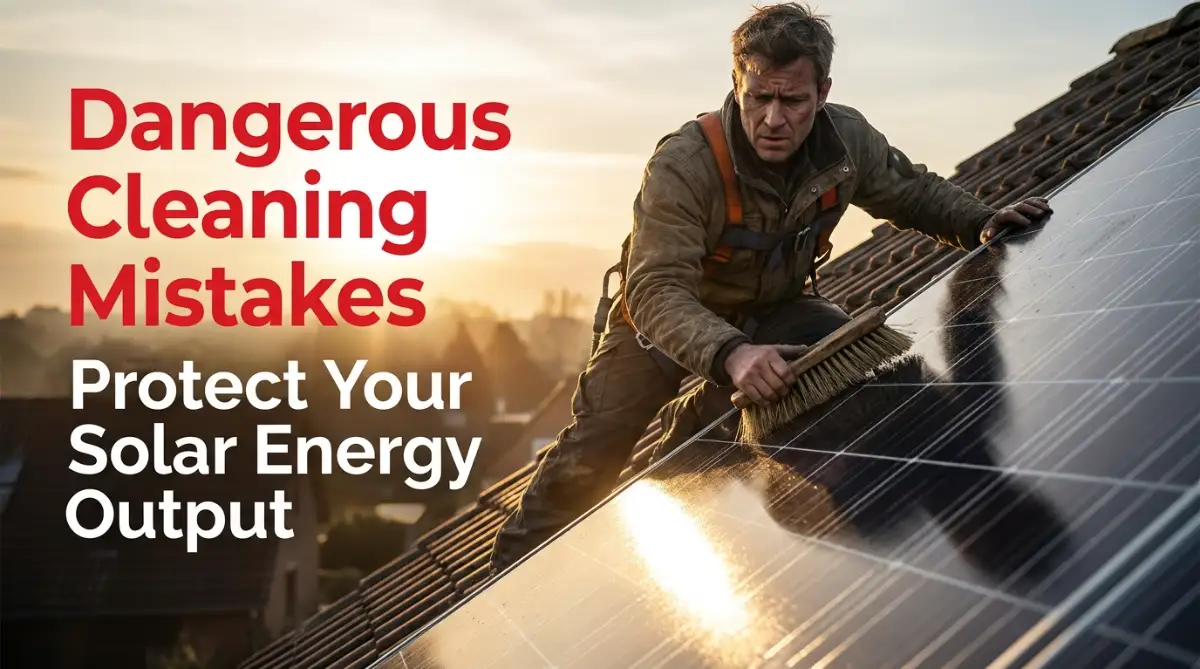
I will never forget the morning I checked my home energy monitor and noticed a massive, unexplained drop in my daily power production. I panicked instantly, assuming my expensive rooftop system was completely broken. I decided to take matters into my own hands and clean the panels myself using some random dish soap and a stiff push broom I found in the garage.
I scrubbed incredibly hard, pouring buckets of cold water over the glass, hoping to see the production numbers jump back up by noon. Instead, I accidentally stripped the anti-reflective coating off three of my most expensive panels. My desperate attempt to save a few dollars ended up permanently reducing their power output, and I felt completely foolish.
Everyday homeowners invest heavily into green energy, hoping for the peace of mind that comes with lower utility bills. But when you see your energy production dropping day by day, a heavy knot of anxiety forms in your stomach.
You start worrying about your return on investment and wonder if you made a massive financial mistake. The stress of opening a surprisingly high electric bill, even though you have a roof completely covered in panels, is incredibly frustrating.
You eventually decide to fix the problem yourself to avoid paying expensive professional maintenance fees. You drag a heavy ladder outside on your only day off, risking your physical safety just to scrub off stubborn bird droppings and thick layers of summer dust.
But nobody tells you exactly how fragile these advanced glass surfaces really are before you start. The constant anxiety of not knowing if you are actually doing more harm than good completely ruins your weekend peace.
Families everywhere are losing sleep, wondering why their perfect green energy dream is slowly turning into a stressful maintenance nightmare. Instead of enjoying free, abundant electricity, you feel trapped in an endless cycle of dropping performance and confusing internet advice.
You read one forum that tells you to use a pressure washer, while another warns you that it will void your warranty entirely. It is overwhelming, confusing, and financially draining when things go wrong.
The Silent Chemical Warfare on Your Roof
One of the biggest misunderstandings in the solar community revolves around the chemicals we use to wash glass. We are naturally trained to think that whatever cleans our bathroom mirrors will work perfectly on our outdoor energy systems. This is a very expensive assumption that catches thousands of smart homeowners off guard every single month.
Your solar panels are not just ordinary pieces of thick window glass. They are covered in a highly sensitive, microscopic layer known as an anti-reflective coating (ARC). This specific coating is engineered to capture sunlight and stop it from bouncing back into the sky. When you spray standard household window cleaners, especially those containing ammonia, you are actively burning off this protective layer.
Why Dish Soap is Your System's Worst Enemy
Many people grab a bottle of liquid dish soap, mix it in a bucket, and head up to the roof. Dish soap is designed to strip tough grease and baked-on food from your dinner plates. When applied to a baking hot solar panel, it leaves behind a thick, sticky chemical film that is nearly impossible to rinse away perfectly.
This invisible soapy residue acts like a giant magnet for dirt, pollen, and airborne pollution. Within just a few days of washing, your system will actually look dirtier than it did before you started the job. The sticky film blocks the sun's rays, dropping your overall energy efficiency by a noticeable margin.
Pro Tip: I remember the exact moment I realized my mistake with dish soap. I looked closely at the glass under the bright afternoon sun and saw a hazy, rainbow-colored chemical smear across the entire array. Do yourself a favor and only use plain, ultra-pure water or specifically formulated solar cleaning solutions, throwing away those household soaps right now.
The Micro-Scratch Nightmare You Cannot See
Physical damage is another massive threat that quietly destroys the earning potential of your setup. When we see a stubborn piece of tree sap or hardened bird dropping, our first instinct is to scrub it aggressively. We grab abrasive sponges, heavy-duty scrub brushes, or even the green side of a kitchen sponge.
The Hidden Danger of Hard Bristles
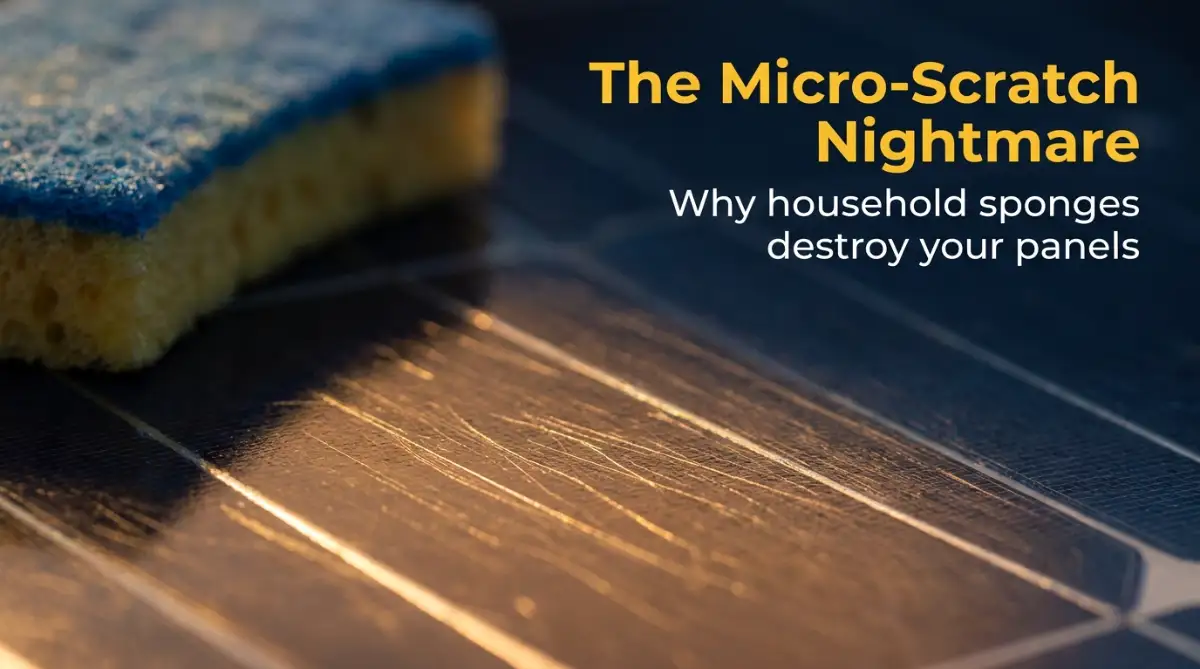
The glass on your roof seems tough because it is designed to withstand heavy hail and harsh weather. However, the top surface is incredibly prone to micro-scratches when rubbed with stiff, synthetic bristles. Every single time you push a harsh brush back and forth, you are carving microscopic canyons into the glass.
These tiny scratches might seem completely harmless, but they disrupt the path of incoming light. Instead of the light traveling straight down into the silicon solar cells, it gets scattered in a hundred different directions. This light scattering permanently reduces the energy-producing capability of that specific panel.
The Right Way to Handle Stubborn Grime
If you encounter baked-on bird droppings, you must practice extreme patience instead of aggressive force. The best method is to heavily soak the specific spot with pure water and let it sit for ten minutes to soften naturally. Once the organic material is fully hydrated, it will easily wipe away with a high-quality, ultra-soft microfiber cloth.
Never use anything rougher than a cloth designed for detailing expensive cars. If a tool feels even slightly rough against the skin on the back of your hand, it is far too aggressive for your panels. Protecting that smooth surface is your top priority for long-term energy gains.
The Invisible Glass Killer: Thermal Shock
This is perhaps the most common and immediately destructive mistake anyone can make on a sunny afternoon. Picture a hot summer day where the ambient temperature is extremely high, and the sun is beating down on your dark-colored panels. The surface temperature of that glass can easily reach a blistering high heat, making it literally too hot to touch with bare hands.
If you suddenly spray a blast of cold water from your garden hose onto that roasting glass, you trigger a violent physical reaction called thermal shock. The sudden, extreme drop in temperature causes the glass to contract rapidly and unevenly.
Watch this eye-opening demonstration showing exactly what happens when cold water hits roasting hot solar glass, and learn how to time your maintenance perfectly.
The Heartbreak of Shattered Panels
When thermal shock occurs, the tension becomes too much for the material to handle. You will instantly hear a loud, sickening pop, followed by the sight of your expensive panel shattering into thousands of spiderweb cracks. A cracked panel is completely ruined, unsafe, and must be replaced immediately to prevent electrical fires.
To avoid this disaster, you must heavily restrict your maintenance schedule to very specific times of the day. The safest time to introduce water to your system is extremely early in the morning before the sun has a chance to warm the equipment. Alternatively, you can do it late in the evening after the sun has completely set and the glass has cooled naturally.
The Disastrous Appeal of High-Pressure Washers
Pressure washers are incredibly fun and satisfying tools for cleaning concrete driveways and wooden decks. It is very tempting to point that powerful stream of water at your roof to blast away dirt in record time. However, using a pressure washer on electrical equipment is a recipe for absolute disaster.
Destroying Weather Seals in Seconds
Your solar panels are built with delicate rubber and silicone seals along the aluminum framing. These seals are perfectly designed to keep natural rain and ambient moisture away from the sensitive electrical wiring inside. A pressure washer generates an unnatural amount of force that easily rips right through these protective barriers.
Once water forces its way past the weather seals, it creates massive internal moisture ingress. This trapped water will quickly corrode the silver electrical connections, creating dangerous short circuits. This specific type of water damage will instantly void your manufacturer warranty, leaving you entirely responsible for the massive replacement costs.
Safe Water Pressure Techniques
You only ever need the standard pressure that comes out of a normal residential garden hose. The goal is to gently cascade water over the surface to rinse away loose dust, not to blast the surface. Think of it like gently rinsing a fragile newborn baby rather than aggressively power-washing a dirty truck.
The Silent Threat of Hard Water Calcification
Depending on where you live, the water coming out of your outdoor tap might be heavily loaded with invisible minerals. We call this "hard water," and it typically contains high levels of dissolved calcium and magnesium. When you wash your system with hard water and let the sun dry it, you are making a massive error.
How Minerals Bake Onto the Glass
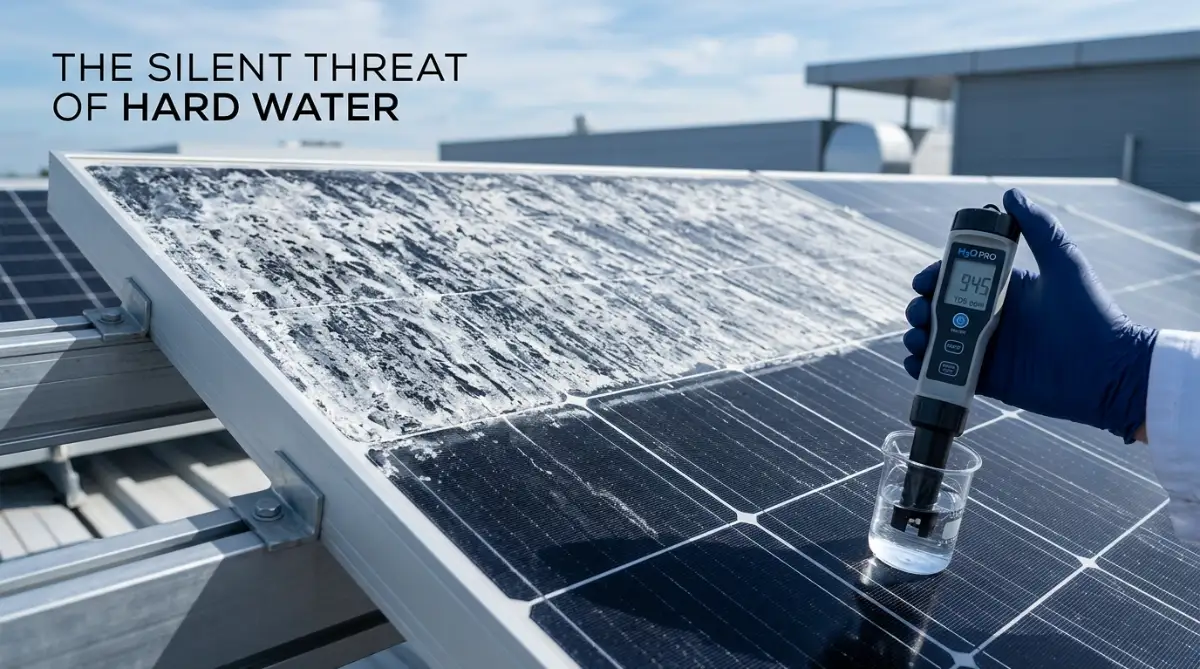
As the water droplets slowly evaporate under the heat, they leave behind thick, white, chalky mineral deposits. Over several months, these deposits build up into a hard, crusty layer known as calcification. This chalky layer acts perfectly like a thick white blanket, blocking the sun from reaching the silicon cells beneath the glass.
Removing calcification is incredibly difficult and often requires specialized, mildly acidic professional cleaners that can be dangerous to handle. If left untreated, hard water stains will permanently blind your panels, causing your monthly utility bills to skyrocket.
The Ultimate Pure Water Solution
Professional cleaners completely avoid this issue by using advanced deionization (DI) tanks or reverse osmosis (RO) systems. These specialized filters strip every single mineral out of the water, creating a completely pure liquid. Pure water acts like a hungry sponge, naturally pulling dirt off the glass and evaporating without leaving a single spot behind.
If you do not want to buy an expensive filtration system, you can easily attach an inline RV water filter to your garden hose. While not as perfect as professional DI water, it will significantly reduce the number of minerals hitting your glass. Always use a squeegee to manually dry the panels to prevent any remaining water from sitting on the surface.
Understanding the Hidden Damage of Physical Weight
Many people assume that because panels are mounted on a roof, they are structural items you can lean on or walk across. You might find yourself needing to step on the edge of an array to reach a higher spot for cleaning. This is one of the most dangerous and heavily misunderstood habits in the entire industry.
Creating Invisible Micro-Cracks
The silicon cells hidden just beneath the protective glass are incredibly thin and brittle, much like a potato chip. When you apply focused human body weight onto the glass, it flexes downward just enough to snap the silicon cells underneath. You will not see this damage from the outside, because the flexible top glass will just bounce back to its original shape.
These invisible fractures are known as micro-cracks, and they severely restrict the flow of electricity across the panel. Over time, the trapped electrical energy turns into intense heat, creating a "hot spot" that burns through the protective backing. Never rest your body weight, heavy buckets, or tools on any part of the system.
Simple Myth vs Reality for Safe Maintenance
There are so many rumors floating around neighborhoods about the best ways to keep a system running. Let us clearly separate the common myths from the actual scientific realities of safe maintenance.
Myth: Heavy rain will wash my panels perfectly and I never need to clean them manually.
Reality: Rainwater captures dust and pollution from the air as it falls. When the rain dries, it leaves behind a dirty film. Think about what your car looks like after a light rainstorm; it usually looks much dirtier.
Myth: If I clean them once a week, I will get the absolute maximum power possible.
Reality: Over-cleaning increases the risk of scratching the glass and dropping tools on the array. For most residential setups, a gentle wash twice a year is more than enough to maintain high efficiency.
Quick Comparison: Safe vs Unsafe Methods
To make this extremely simple to remember, here is a quick breakdown of what you should and should not be doing. Keep this basic logic in mind before you drag your ladder out of the garage.
Taking care of your investment does not have to be a stressful or overly complicated process. By simply avoiding these dangerous errors, you ensure your system runs at peak performance for decades. Treat the glass gently, respect the heat of the sun, and always prioritize pure, chemical-free water. You will sleep much better at night knowing your green energy setup is safely pumping out maximum power.
Next-Level Maintenance Secrets for Maximum Power Extraction
Keeping your energy system running at peak performance requires more than just an occasional spray from a garden hose. You need to develop a smart, data-driven approach to completely avoid unnecessary physical labor and accidental damage. The most successful homeowners treat their rooftop arrays like high-end luxury vehicles. They never guess when the system needs attention; they rely on actual data and proven scientific methods.
My best advice is to stop staring at the roof and start staring at your smartphone instead. Almost every modern solar setup comes with a dedicated monitoring application tied directly to your inverter. This application tracks your daily energy production down to the exact kilowatt-hour. Instead of guessing if your panels are dirty, let the daily performance graphs tell you exactly what is happening up there.
If you notice a slow, steady drop in energy production over three or four weeks during sunny weather, you likely have a dust accumulation problem. However, if your production suddenly drops overnight, dirt is probably not the main issue. A sudden drop usually points to a hardware failure or a massive piece of debris, like a fallen tree branch, blocking the sunlight. Monitoring these apps requires a stable internet connection, so you might want to learn why your local network speeds suddenly drop to ensure your inverter is always sending accurate data.
The Magic of Deionized Water Systems
If you are truly committed to doing this job yourself, you need to upgrade your equipment immediately. The secret weapon of every professional solar technician is a portable deionization (DI) water filtration tank. These clever tanks contain specialized resin beads that instantly strip every single mineral out of your regular tap water.
When you spray pure DI water onto dirty glass, it acts like a chemical magnet. The pure water naturally wants to absorb the dirt, dust, and pollen sitting on the surface without needing any heavy scrubbing. Best of all, because there are zero minerals left in the water, it dries completely spot-free under the sun. You will never have to worry about chalky calcium stains blocking your energy production ever again.
The Partial Shading Domino Effect
You might think that a small patch of bird dropping on a single panel is not a big deal. Unfortunately, this is a massive misunderstanding of how modern electrical arrays actually function. Most residential rooftop setups are wired together in a series, much like old-fashioned holiday string lights.
If a large, stubborn stain covers just one specific section of a single panel, it acts like a giant roadblock for the electricity. The shaded cells cannot produce power, and worse, they actually resist the power coming from the other clean panels. This resistance creates localized heat, known as a "hot spot," which can permanently burn through the protective back sheet. According to the U.S. Department of Energy's guide on solar photovoltaic system design [1], even a small amount of hard shading can drastically reduce the output of the entire connected string.
This means a single, ignored bird dropping can literally drag down the energy production of your entire roof. You are losing money every single hour the sun is shining because of one dirty spot. This exact scenario perfectly highlights why regular visual inspections are so incredibly important for your wallet.
Knowing When to Hire a True Professional
There comes a time when climbing a ladder is simply not worth the physical risk or the potential equipment damage. If you have a highly pitched roof, a two-story home, or an incredibly large array, hiring a professional is the smartest choice. But you cannot just hire the neighborhood window washer and expect great results.
You must ask the right questions before letting anyone near your expensive green energy investment. Ask them directly if they use reverse osmosis water, and check if they use specialized, scratch-free nylon solar brushes. If they say they use ordinary window soap and standard squeegees, politely decline their services and find a certified expert. Taking the time to properly vet a contractor will ultimately protect the hidden costs of your property upgrades.
The Hidden Traps That Destroy Solar Efficiency
Even with the best intentions, I see smart homeowners accidentally ruin their expensive systems every single week. These massive errors usually happen when people try to rush the job to save a little bit of time on their weekend. Let us break down the exact actions you must avoid to keep your hardware completely safe.
The Danger of Heavy Chemical Degreasers
When people notice sticky tree sap on their panels, they often reach for heavy-duty chemical degreasers from the garage. Products designed to clean car engines or concrete floors are incredibly harsh and highly acidic. When these aggressive liquids touch the aluminum framing of your solar panels, a severe chemical reaction begins immediately.
The strong chemicals will rapidly oxidize the protective coating on the aluminum, turning the sleek metal into a chalky, weakened mess. Over time, this chemical corrosion can eat through the mounting brackets that hold the entire system to your roof. If a heavy storm rolls in, those weakened brackets might fail, causing the entire array to rip right off your shingles. It is always better to stick to extremely gentle methods rather than risking structural failure.
The Winter Ice Scraping Disaster
If you live in an area that gets heavy frost or freezing rain, you face a completely different set of dangerous challenges. Waking up to see your expensive panels covered in thick ice is incredibly frustrating. Many people grab a plastic car windshield scraper and climb up to forcefully chip the ice away.
This is an absolute nightmare for the delicate anti-reflective glass. Driving a hard plastic edge across the surface will leave hundreds of deep, permanent gouges. Instead of forcefully scraping, you just have to let the sun do its natural job. The dark color of the silicon cells will naturally absorb ambient heat and melt the ice safely on its own.
Ignoring the Risk of Severe Electrical Shock
We often forget that we are dealing with a live, high-voltage electrical power plant sitting right above our heads. A typical home array can easily generate hundreds of volts of direct current (DC) electricity while the sun is shining. If you are blindly spraying water around damaged or cracked glass, you are putting your life at serious risk.
Water is a fantastic conductor of electricity, and any broken weather seal can allow moisture to touch the live internal wires. If you happen to be touching the metal frame or standing in a puddle of water on the roof, that electricity will find a path right through you. Always do a close visual inspection for cracked glass or chewed wires before you ever turn on the garden hose.
The Physical Hazards of DIY Roof Work
The biggest mistake you can make has nothing to do with the panels, but rather with your own personal safety. Carrying heavy buckets of water up an aluminum extension ladder is incredibly awkward and dangerous. Once you get on the roof, the combination of soapy water and slanted shingles turns the surface into a deadly slip-and-slide.
I strongly suggest investing in a proper safety harness and securing it to a solid anchor point before you start walking around. The safety standards for residential fall protection clearly state that working at heights requires proper fall arrest gear. A simple slip could put you in the hospital for months, creating a massive financial burden. If you are a business owner, an unexpected medical bill like this will easily ruin your ability to manage your daily cash flow effectively.
Do's and Don'ts for Instant Success
To keep things perfectly clear in your mind, I have put together a rapid-fire checklist of habits you should memorize. Keeping these simple rules in mind will prevent almost every major disaster.
DO: Inspect the entire glass surface for spiderweb cracks before spraying any water.
DON'T: Never lean your body weight on the glass to reach a difficult corner.
DO: Use an extended carbon fiber water-fed pole so you can clean from the safety of the ground.
DON'T: Never use bleach, ammonia, or abrasive powders to remove stubborn animal droppings.
DO: Check your mobile monitoring app after a cleaning session to ensure the power output actually went back up.
Your Roadmap to Safe and Profitable Energy Habits
Taking care of your renewable energy system is not supposed to be a stressful or overly complicated burden. You invested in this amazing technology to save money, help the environment, and gain true energy independence. By simply respecting the delicate nature of the materials, you instantly secure the long-term value of your home.
You now understand that patience and gentle techniques will always outperform aggressive scrubbing and harsh household chemicals. You know that timing your maintenance for the cool morning hours entirely eliminates the massive risk of shattered glass. Every time you make the smart choice to use pure, filtered water, you are guaranteeing maximum sunlight absorption. These small, smart habits compound over time, directly increasing the amount of free power your home generates.
Consider treating your energy array like a long-term financial asset that requires gentle, calculated protection. Just like you would carefully plan out the true lifetime cost of a high-interest loan, you must plan out your maintenance carefully. The more educated you become about how these systems function, the easier it is to keep them running perfectly. Remember, knowledge is your absolute best defense against costly repair bills and voided warranties.
If you are ready to expand your knowledge on smart financial and property management, explore our massive library of free resources today. Protecting your assets is an ongoing journey, and we are here to guide you every single step of the way.
As a homeowner who learned these lessons the hard way, I promise that changing your cleaning habits today will completely eliminate your maintenance anxiety. I want you to look up at your roof tomorrow morning and feel absolutely confident that your system is generating every single watt of power possible. Take a deep breath, put away those harsh scrub brushes, and start treating your solar investment with the respect it truly deserves.
Common Questions About Protecting Your Solar Investment
Do I really need to turn off my solar system before washing it?
Yes, it is highly recommended to shut down the entire system at the main breaker box before spraying any water. This completely eliminates the risk of an accidental electrical shock if water seeps into a cracked panel or a damaged wire. It only takes five seconds to flip the switch, and it guarantees your personal safety while working.
Will rain naturally clean my solar panels enough to keep them efficient?
Light rain is actually terrible for your system because it pulls floating dust and pollution out of the air and deposits it on the glass. A very heavy, torrential downpour can wash away loose surface dust, but it will never remove sticky sap or baked-on bird droppings. You will always need some form of gentle manual maintenance to maintain optimal energy production.
Can I use a squeegee to dry my solar panels after washing?
Using a high-quality, perfectly clean rubber squeegee is a great way to prevent hard water spots from baking onto the glass. However, you must be incredibly gentle and ensure the rubber blade is completely free of tiny rocks or dirt particles. If a piece of hard grit gets trapped under the rubber, you will drag a massive scratch straight across your expensive array.
How often should I realistically clean my rooftop solar array?
For most normal residential neighborhoods, doing a gentle wash once in the early spring and once in the late autumn is perfectly sufficient. If you live near a busy dusty highway, an active agricultural farm, or an airport, you might need to clean them four times a year. Always let your mobile monitoring app dictate your schedule; if production drops, it is time to check the roof.
Does homeowner's insurance cover solar panels if I accidentally break one?
Most standard policies will cover damage from extreme weather events like massive hail or falling trees, but they rarely cover accidental DIY damage. If you accidentally shatter the glass by spraying freezing water on a hot summer day, you will likely have to pay for the replacement out of your own pocket. This is exactly why understanding proper asset protection strategies and careful maintenance is so incredibly important for your wallet.
Disclaimer: The information provided in this blog post is for educational and informational purposes only and does not constitute professional electrical or structural advice. Solar panel systems operate with dangerously high voltages and present significant physical risks when working at heights. Always consult with a licensed, certified solar technician before attempting any maintenance, and refer to your manufacturer's specific warranty guidelines to prevent accidental voiding of your coverage.