The Embarrassing Airport Security Nightmare
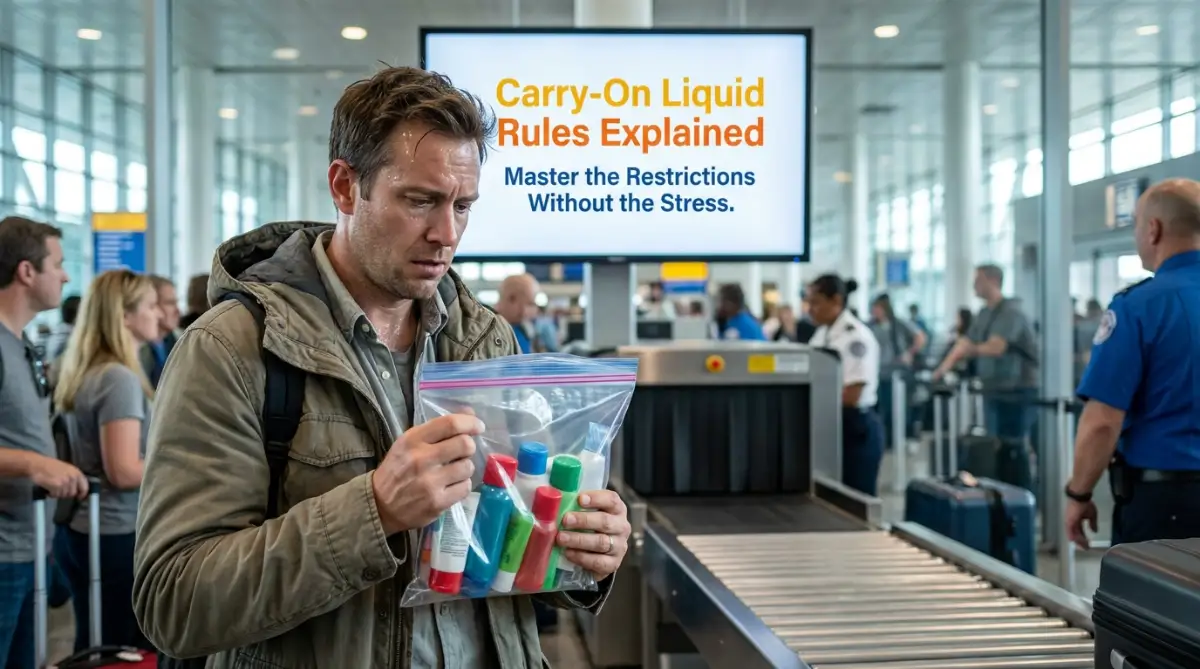
I still remember the exact moment my heart dropped at the airport security checkpoint. I was heading out for a much-needed vacation, completely exhausted from packing the night before. As my carry-on bag rolled through the X-ray scanner, the agent pulled it aside with a stern look on his face.
He unzipped the front pocket and pulled out my brand-new, expensive face lotion. Because the bottle was over the allowed limit, I had to stand there and watch him throw it directly into the trash bin. My face turned bright red as the long line of impatient passengers sighed and stared at me.
I felt like a criminal over a simple bottle of moisturizer. This exact, embarrassing scenario plays out thousands of times a day at airports everywhere. Everyday travelers lose their expensive perfumes, favorite shampoos, and essential skincare products simply because of a slight packing mistake.
It is incredibly frustrating to throw away your hard-earned money right before your trip even begins. The anxiety usually starts the night before your flight. You stand in your bathroom, staring at your toiletry bag, wondering if your toothpaste is going to cause a massive scene at the airport.
Families traveling with children face even more stress, constantly worrying if their baby food, milk, or juice will be confiscated by strict agents. This constant fear of making a mistake absolutely ruins the excitement of travel.
We just want to get through the security line peacefully, without drawing attention or holding up the people behind us. The good news is that you never have to feel this panic again once you understand exactly how the system works.
Cracking the Airport Liquid Code (No More Guesswork)
Understanding airport security restrictions does not require a degree in rocket science. The entire system is built around a very specific formula that you can easily master with a little bit of practice.
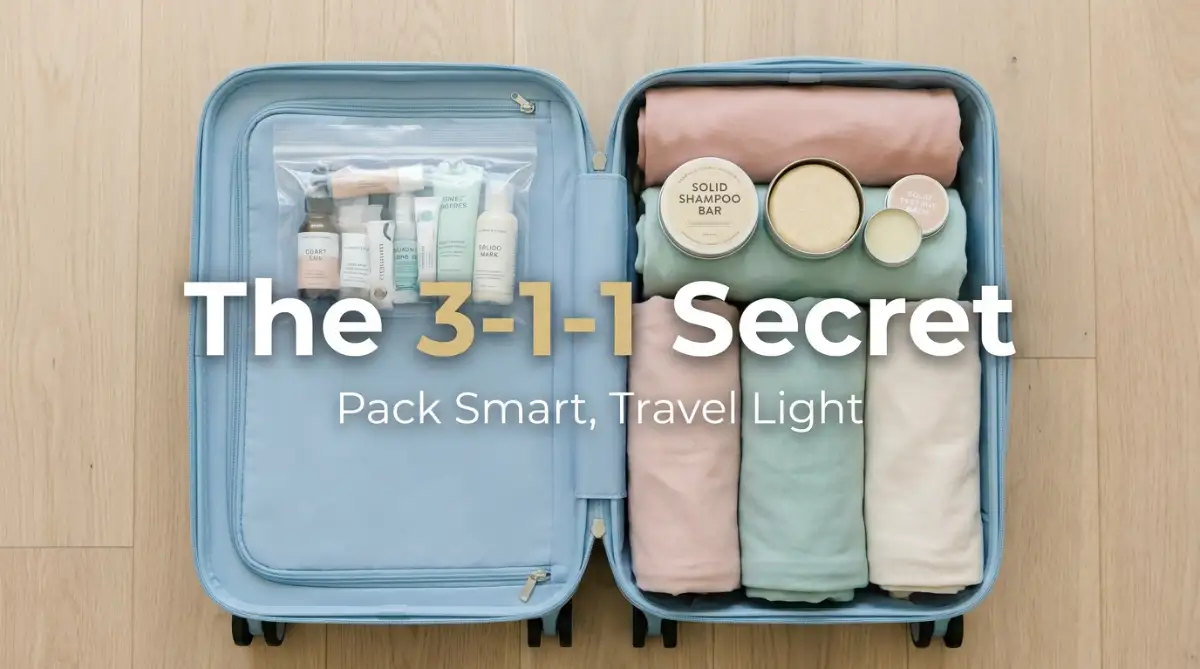
The core of this system is universally known as the 3-1-1 rule. This simple number combination is the absolute foundation of packing your hand luggage successfully.
Let us break down exactly what these numbers mean so you can pack with total confidence. The "3" stands for 3.4 ounces, which equals 100 milliliters.
This means every single liquid, gel, or aerosol item in your bag must be in a container that is 3.4 ounces or smaller. Notice that I said the container size, not the amount of fluid left inside it.
If you bring a giant 10-ounce shampoo bottle that only has a tiny drop of soap left at the bottom, security will still throw it away. The container itself must clearly state that it holds 3.4 ounces or less.
The first "1" in the rule stands for one quart-sized bag. All of your little travel bottles must fit comfortably into a single, clear, resealable plastic bag.
You cannot bring three different plastic bags hidden in different parts of your suitcase. Everything must go into one transparent bag so the agents can easily see what you are carrying.
The final "1" simply means one bag per passenger. If you are traveling with your family, every single person gets their own clear bag.
Sneaky Items You Didn't Know Were Liquids
One of the biggest reasons travelers get pulled aside is because they misunderstand what actually counts as a fluid. It is not just about water, juice, and shampoo.
The security agents classify anything that you can spread, smear, spray, or pump as a restricted item. This catches so many people completely off guard.
For example, peanut butter is considered a liquid. If you try to bring a large jar of creamy peanut butter for a snack, it will end up in the trash bin.
The same rule applies to items like cream cheese, yogurt, honey, and jelly. If it jiggles or spreads easily with a knife, it must go in your checked luggage or be under 3.4 ounces.
Makeup and cosmetics are another huge trap for everyday travelers. Your mascara, lip gloss, liquid foundation, and concealers are all subject to the exact same restrictions.
Even gel deodorants and aerosol hairsprays count toward your limit. Solid stick deodorants are perfectly fine to pack in any size, but anything that sprays or rolls on as a wet gel is restricted.
My Biggest Packing Mistake (And How You Can Avoid It)
I used to think I was so smart by buying the cheapest refillable plastic bottles I could find at the local dollar store. I would fill them to the very top with my favorite expensive shampoo to save money. When my flight reached high altitude, the cabin pressure caused those cheap bottles to burst, completely ruining my favorite clothes with a sticky mess.
Now, I only use high-quality silicone travel tubes, and I never fill them past the 80 percent mark. Leaving a little bit of empty air at the top gives the fluid room to expand during the flight, saving your clothes and your sanity.
Watch This Quick Visual Breakdown Before You Pack
Sometimes seeing the process in action is much easier than reading about it. Check out this incredibly helpful video that shows you exactly how to fit a surprising amount of items into a single quart-sized bag without breaking any rules.
Family Travel and Essential Exceptions
The strict numbers we just talked about can sound really scary if you have medical needs or are flying with a baby. Thankfully, the authorities are actually quite reasonable when it comes to human necessities.
You do not have to stuff your prescription liquid medications into that tiny quart-sized bag. Medications, baby formula, breast milk, and toddler drinks are entirely exempt from the 3.4-ounce limit.
You are allowed to bring these items in reasonable quantities needed for your journey. However, you must tell the security officer that you have these items before your bags go through the X-ray machine.
Simply pull them out of your bag and place them in a separate bin for screening. The officers might need to test these fluids for explosives, but they will not throw them away.
Even things like liquid nutrition supplements or frozen gel packs used to keep your medication cold are perfectly acceptable. Just communicate openly with the agents, and you will breeze right through.
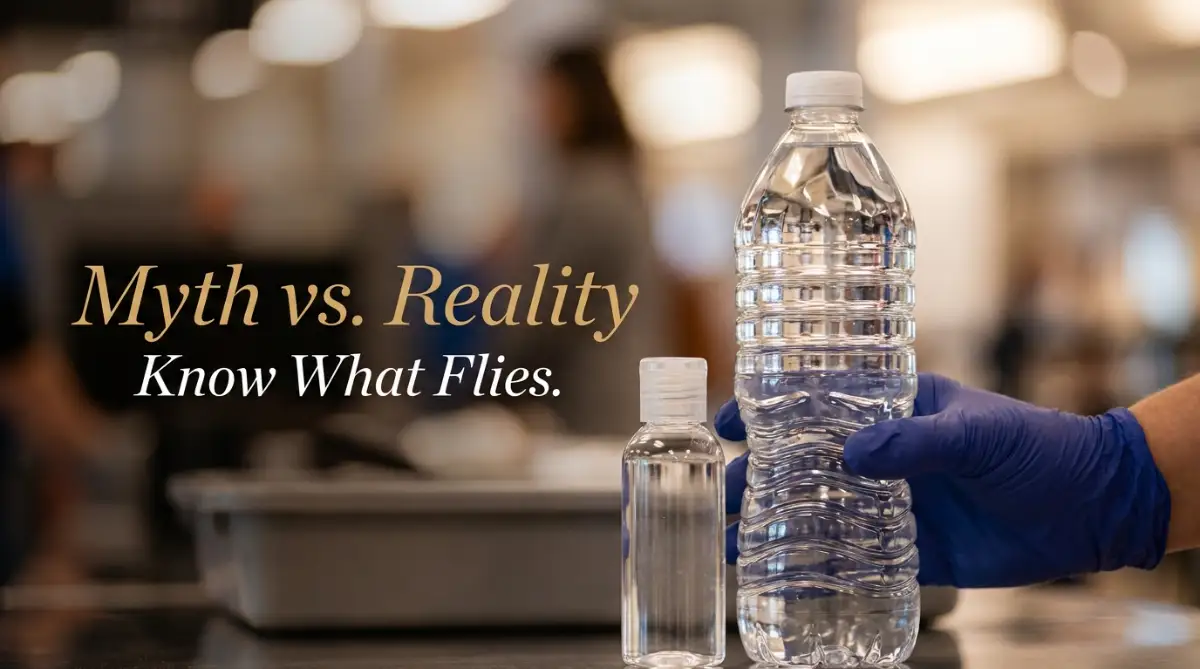
The Myth vs. Reality of Airport Rules
There is a lot of bad advice floating around on the internet about how to trick airport security. Let us clear up some of the most common myths so you do not make a silly mistake.
Myth: Freezing your large bottle of water turns it into a solid, so it is allowed through security.
Reality: While a completely frozen block of ice is technically allowed, even a tiny amount of melted slush at the bottom will cause it to be confiscated. It is rarely worth the risk.
Myth: Duty-free alcohol bought at the airport does not count toward your limits on connecting flights.
Reality: This is a very dangerous assumption. If you buy a large bottle of perfume or alcohol in the secure zone, you are fine for your first flight. However, if you have a layover where you must re-enter security, that large bottle will be taken away unless it is placed in a special secure, tamper-evident bag by the retailer.
Myth: Zip-top bags are the only acceptable container for your items.
Reality: You do not have to use a flimsy kitchen bag. Reusable, clear silicone or PVC toiletry bags are perfectly fine as long as they are roughly the size of a quart.
The Ultimate Liquid vs. Solid Swap Table
One of the easiest ways to beat the stress of the security line is to simply stop carrying so many wet items. The beauty industry has created some amazing solid alternatives that completely bypass these strict regulations.
Here is a quick reference guide on how to swap your favorite items to save massive space in your clear plastic bag:
By swapping just two or three of these items, you free up so much space in your quart-sized bag for the things you absolutely cannot live without.
Surviving the Actual Security Checkpoint
All of your brilliant packing strategies will not help if you panic when you finally reach the front of the line. The key to a smooth experience is mental preparation and physical organization.
Before you even step into the security area, take off your jacket and empty your pockets. Put your phone, wallet, and boarding pass safely inside your personal bag so you are not juggling them in your hands.
Keep your quart-sized toiletry bag at the very top of your carry-on luggage or in an easy-to-reach front pocket. When you get to the bins, you should be able to pull it out in exactly three seconds.
Place your clear bag directly into the gray bin where the agent can easily see it. Do not try to hide it inside a shoe or under your laptop.
Transparency is your best friend in this situation. When the officers see that you are highly organized and respectful of their time, they are much less likely to scrutinize your belongings closely.
If an agent does pull your bag aside for a random check, take a deep breath and stay perfectly calm. Getting angry or defensive will only make the situation worse and delay your flight.
Simply answer their questions politely and let them do their job. Most of the time, they just need to double-check a suspicious shadow on the X-ray screen.
By understanding exactly what is allowed, packing strategically, and keeping your cool, you transform a stressful nightmare into a completely boring, routine experience. And honestly, a boring security checkpoint is the absolute best way to start an amazing trip.
Insider Strategies to Breeze Through the Security Scanner
Have you ever watched an experienced flight attendant walk through the airport? They never look stressed, and they never get pulled aside for a bag check. They have mastered the exact science of packing, and you can easily borrow their everyday tricks.
Most travelers completely overthink their packing strategy and end up bringing way too much stuff. If you want to travel like a professional, you need to change how you look at the containers you use. Stop buying those cheap, hard plastic bottles from the local drugstore.
Instead, invest in a set of high-quality, flexible silicone travel tubes. These silicone bottles are an absolute game-changer because they easily squeeze into the tight corners of your clear bag. You can play a perfect game of packing Tetris, maximizing every single inch of space you have.
Another amazing secret is looking beyond the travel aisle for your containers. For thick creams, moisturizers, or heavy liquid foundations, a standard contact lens case is your best friend. A clean contact case holds exactly enough product for a four-day trip and takes up virtually zero room in your bag.
When you start understanding your unique skin type, you realize you only need a tiny drop of your favorite serums anyway. You do not need to bring a massive glass bottle of face oil for a short weekend getaway.
The Air Pressure Vacuum Trick
One of the most annoying things that can happen during a flight is opening your bag to find your shampoo has exploded everywhere. The cabin pressure in an airplane causes the air inside your bottles to expand rapidly. If your bottles are packed tight, that pressure forces the liquid straight out of the cap.
You can prevent this completely with a very simple habit. Before you snap the cap shut on your travel bottle, gently squeeze the sides to push out the extra air. When you close the lid, the bottle will look a little bit sucked in.
This creates a small vacuum inside the container. When the airplane climbs to a high altitude and the pressure changes, the bottle simply expands back to its normal shape instead of exploding. It takes two seconds to do, but it saves your clothes from becoming a sticky, soapy mess.
Navigating Medical Liquids Like a Pro
If you travel with essential liquid medications, the standard rules do not apply to you, but you still need to be smart about it. The Transportation Security Administration (TSA) clearly states that you can bring larger amounts of medically necessary liquids, gels, and aerosols in reasonable quantities for your trip.
However, you must declare these items to the officer right away. Do not wait for them to find your medicine on the X-ray monitor. The moment you step up to the bins, take your medication out of your bag and tell the agent what it is.
It is always a great idea to keep prescription liquids in their original pharmacy packaging. While it is not always legally required, having your name clearly printed on the pharmacy label removes all doubt and speeds up the entire process. If you want extra peace of mind, reading up on official TSA liquid medication guidelines can help you feel totally prepared.
The Top-Layer Rule for Carry-On Bags
How you pack your suitcase is just as important as what you put inside it. A major mistake travelers make is burying their clear toiletry bag at the very bottom of their luggage. When they reach the security line, they have to unzip their entire suitcase and dig through their dirty clothes just to find their toothpaste.
Your quart-sized bag should always be the absolute last thing you pack. Place it right on top of your clothes, right under the main zipper of your suitcase. If your backpack has a dedicated, easy-access front pocket, that is the perfect home for your liquids.
When you are thinking about arriving at the airport on time, remember that security delays are often caused by unorganized passengers. Keep your fluids easily accessible, grab them quickly, and drop them in the bin without breaking your stride.
The Heartbreaking Packing Blunders You Must Escape
It is incredibly painful to watch someone throw away a brand-new, expensive bottle of perfume at the security checkpoint. People often get angry at the agents, but the truth is, the rules are very clear if you know what to look for. The saddest part is that almost all of these confiscated items are lost due to a few very common, highly avoidable misunderstandings.
If you do not want to watch your hard-earned money end up in an airport trash can, you need to pay close attention to these massive pitfalls.
The "Nearly Empty" Logic Trap
This is by far the most common argument at the airport screening area. Imagine you have a large, 8-ounce bottle of expensive face lotion. You have used almost all of it, and there is only a tiny, quarter-ounce drop of lotion left at the very bottom.
You pack it in your bag, thinking the agent will see that it is almost empty and let you pass. This is a fatal mistake. The security scanners and the agents only care about the printed volume on the container, not what is actually inside it.
If the bottle says it holds 8 ounces, it is automatically banned from your carry-on luggage. The agents do not have the time or the tools to measure the exact amount of leftover fluid in your bottle. If you are trying to layer niacinamide and acids perfectly on your trip, transfer those precious drops into a tiny travel jar before you leave home.
Forgetting the "Spread or Smear" Rule
Many people completely forget that food items often count as restricted fluids. You might pack a nice picnic lunch for your flight, completely unaware that you are breaking the rules. Think about things like hummus, creamy peanut butter, soft brie cheese, and salsa.
If you can spread it on a cracker with a knife, the security team considers it a liquid. I once saw a traveler lose a beautiful, expensive jar of local honey they bought as a souvenir because they put it in their backpack instead of their checked bag.
This rule even applies to everyday items like snow globes. Because a snow globe is filled with water, it must follow the strict sizing rules. Unless the snow globe is roughly the size of a tennis ball or smaller, it will not make it past the checkpoint.
Ignoring the Hidden Danger of Aerosols
Aerosol cans confuse a lot of travelers because they do not feel like traditional wet liquids. Things like dry shampoo, aerosol hairspray, and spray deodorants all fall under the exact same strict restrictions. The Federal Aviation Administration (FAA) strictly monitors hazardous materials, and pressurized cans are a major focus for safety.
You cannot bring a full-sized can of dry shampoo in your hand luggage. It must be a travel-sized mini can that clearly states it is 3.4 ounces or less. Furthermore, make sure all of your spray bottles have a protective cap over the nozzle so they do not accidentally spray inside your bag.
The Danger of Arguing with Agents
When an officer pulls your bag aside to inspect a prohibited item, the absolute worst thing you can do is argue with them. Getting defensive, raising your voice, or demanding an exception will never work in your favor. They are simply doing their job to keep the airplane safe.
If they tell you an item has to be thrown away, you really only have a few options. You can surrender the item to the trash, you can exit the line and put the item in your checked bag, or you can mail it to yourself if the airport has a postal kiosk.
Arguing will only delay your flight and potentially get you removed from the security area entirely. Just like ignoring the hidden passport rule can ruin your entire vacation, picking a fight over a bottle of shampoo is never worth the stress. Take a deep breath, accept the loss gracefully, and move on to enjoy your trip.
Your Next Steps to Stress-Free Flying
Traveling should be an incredibly exciting adventure, not a source of deep anxiety. When you finally understand how the airport screening process works, you take all of the scary guesswork out of packing. You are no longer crossing your fingers and hoping for the best; you are stepping into the airport with total confidence.
Start looking at your bathroom cabinet differently today. Identify the massive bottles you can leave behind and look for clever, solid alternatives that make packing a breeze. Remember to buy a sturdy, transparent toiletry bag and keep it right at the top of your carry-on luggage for instant access.
If you are dealing with travel breakouts and need to calm inflamed and irritated sensitive skin, you can now pack your soothing serums without any fear of confiscation. You have the knowledge to pack smartly, efficiently, and safely.
I used to literally sweat as my bag went into the X-ray machine, terrified that I made a silly mistake. Now, I use these exact strategies, and I breeze through the line in minutes with a smile on my face. Take control of your packing routine today, and I promise your next trip will start off perfectly peacefully!
Traveler's Rapid-Fire Q&A
Can I bring an empty reusable water bottle through security?
Yes, absolutely! You can bring any empty metal, glass, or plastic water bottle through the X-ray machine. Once you clear the security checkpoint, you can fill it up for free at any of the airport water fountains before you board your flight.
Does stick deodorant count toward my liquid allowance?
No, standard solid stick deodorants do not count toward your strict fluid limits. You can bring a full-sized solid deodorant in your carry-on bag without placing it in your clear plastic bag. However, if you use a roll-on gel or an aerosol spray deodorant, those must be travel-sized and packed in your clear bag.
Can I pack my electric toothbrush and standard toothpaste?
Your electric toothbrush is completely fine to pack in your hand luggage and does not have any restrictions. However, your standard tube of toothpaste is considered a gel and must be 3.4 ounces or smaller. If you want to avoid this rule completely, try packing dry, chewable toothpaste tablets instead.
What happens if a travel bottle leaks in my luggage?
If a bottle leaks, it can quickly repair the damage fast by wiping down your items, but it is better to prevent it entirely. Always place a tiny piece of plastic wrap over the opening of your bottle before twisting the cap back on. This acts as a secondary seal and stops sticky messes from ruining your clothes in the air.
Are wet wipes and makeup remover cloths considered liquids?
No, regular baby wipes, antibacterial wipes, and makeup remover cloths are not considered liquids by the security agents. You can pack them in any quantity without squeezing them into your quart-sized clear bag. They are fantastic to have on hand for long, tiring travel days.
Disclaimer: The information provided in this article is for educational and informational purposes only. Airport security guidelines and regulations can change frequently and without notice. Always verify the most current baggage policies with your specific airline and the official transportation security authorities in your country before traveling. We are not responsible for confiscated items or missed flights resulting from packing decisions.