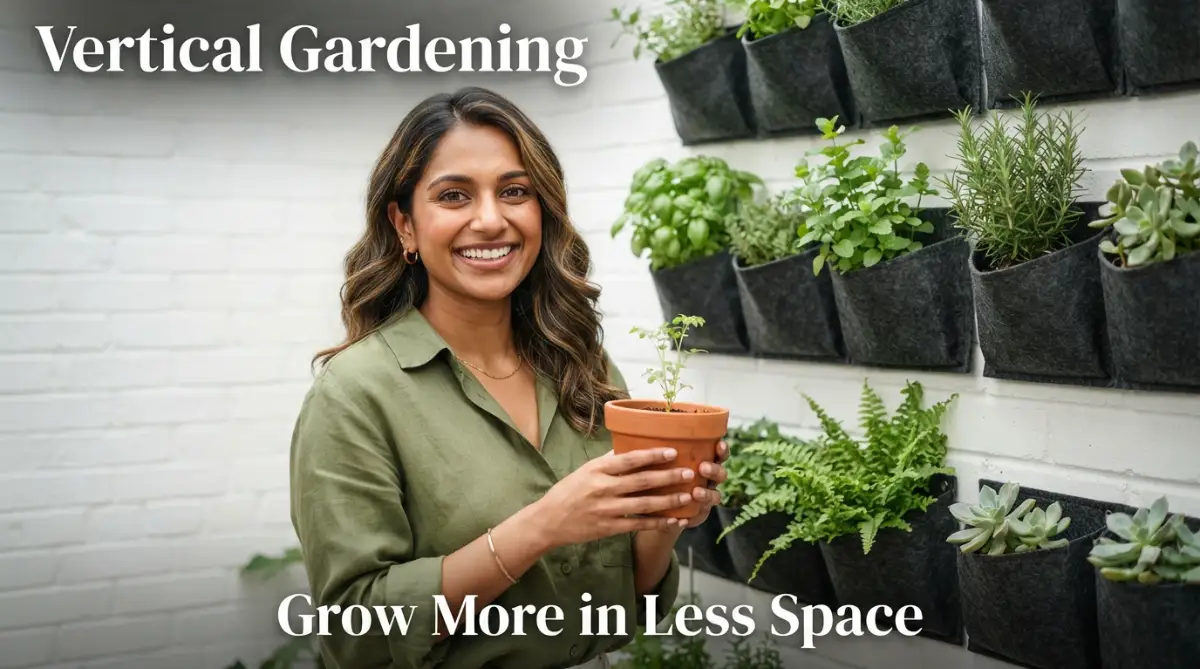
The Concrete Jungle Trap: Why Your Balcony Feels So Empty
You look out your apartment window and all you see is gray. Concrete walls, black asphalt, and endless traffic fill your view.
You miss the smell of wet soil after a soft rain. You miss the bright colors of living plants and the simple joy of pluck-and-eat freshness.
But your balcony is barely the size of a doormat. How can you build a garden when you can barely stand out there yourself?
Many city dwellers try to buy a few traditional potted plants to fix this. Soon, the balcony floor gets completely crowded with round pots.
You find yourself tripping over a container of tomatoes just to hang your laundry. The basil pot blocks your doorway, and the space feels messy instead of peaceful.
This clutter causes a lot of frustration and makes you want to give up. It feels like gardening is a luxury only meant for people with huge backyards.
Living in a concrete box makes us feel cut off from the natural world. This lack of green space can actually affect our mood, making us feel more stressed.
You might think you simply do not have the room to grow anything. But the real issue is not the size of your balcony.
The real issue is that you are looking down at the floor. You need to start looking up at the walls.
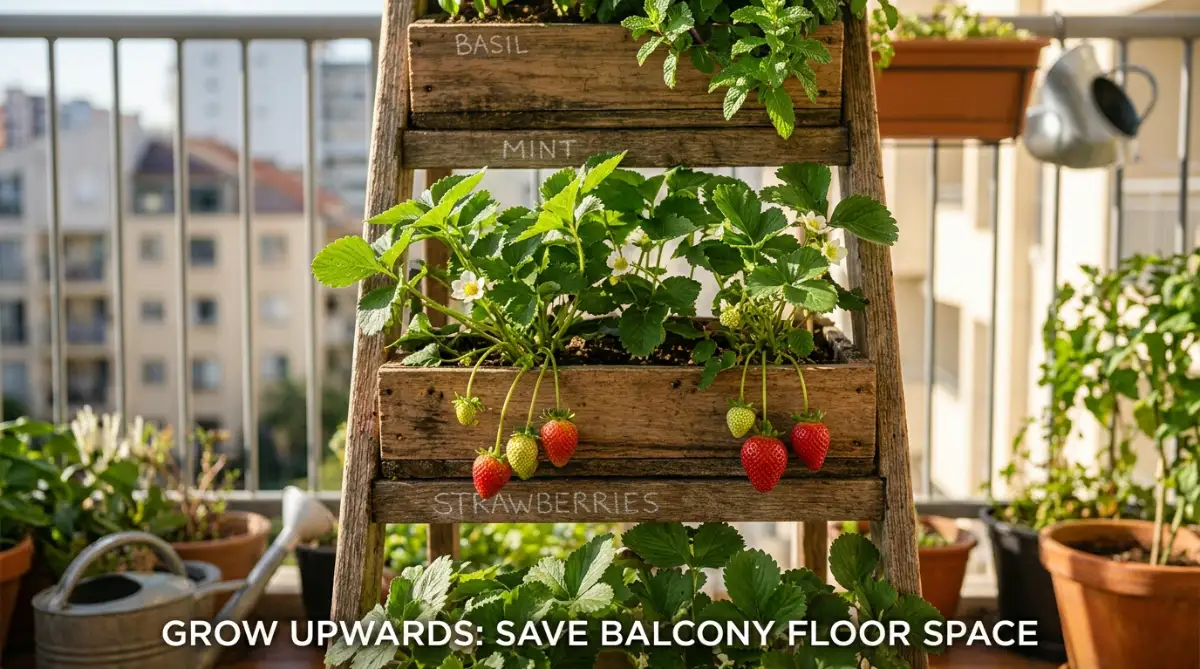
How to Shift Your Focus and Grow Upwards
To fix the space problem, you must change how you think about gardening. Think of your balcony like a busy city. When a city runs out of ground space, it does not stop growing. It builds skyscrapers to fit more people in a small area.
You can do the exact same thing with your plants. By using vertical space, you can grow ten times more food without losing your floor space.
Vertical vs. Horizontal Gardening Comparison Table
The Magic of Gravity and Air Flow
When you lift your plants off the ground, amazing things happen. First, you get better air circulation around the leaves of your plants.
In crowded ground pots, moisture gets trapped easily. This trapped moisture often leads to fungal diseases and root rot. Vertical systems keep your plants spread out in the air. The wind dries the leaves quickly, which keeps your plants healthy naturally.
Gravity also works in your favor when you water from the top. The excess water from the top shelf drips down to feed the plants below.
This simple flow saves water and keeps you from making a muddy mess. It is an easy way to make your daily gardening routine clean and simple.
Finding the Right Spot for Sunlight
Before you hang any pots, you need to watch how the sun hits your balcony. Not all balconies get the same amount of light.
An eastern balcony gets soft morning sun, while a western one gets hot afternoon heat. Southern balconies get sun all day, and northern ones stay in the shade.
Map out where the light lands on your walls during the day. This simple step will help you decide which plants go on top and which go on the bottom.
Choosing Your Vertical Setup
You do not need to spend a lot of money to start. There are many easy ways to build your upward garden.
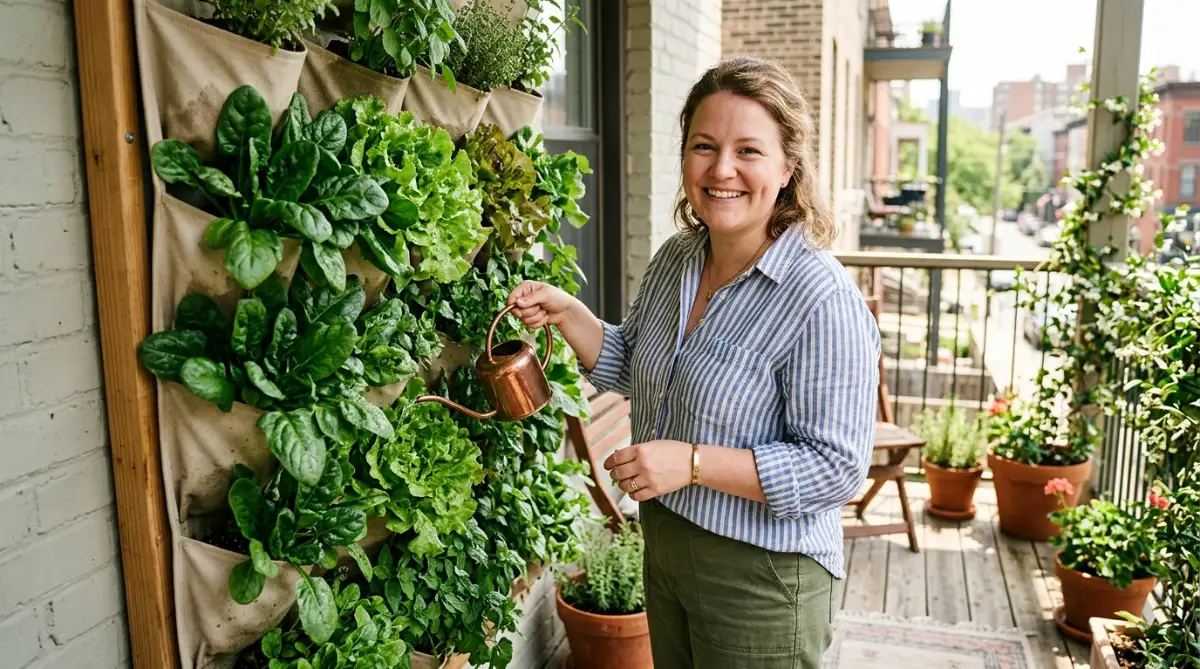
You can buy felt wall pocket organizers that hang on a couple of hooks. These pockets are lightweight and perfect for holding shallow-root herbs.
Another cheap option is using a wooden ladder shelf. You simply lean the ladder against the wall and place your pots on the steps.
If you like DIY projects, you can hang plastic soda bottles from a sturdy string. Just cut a hole in the side of each bottle, fill it with dirt, and stack them.
Myth vs. Reality in Vertical Gardening
- Myth: Vertical plants dry out too quickly to survive.
- Reality: While they dry faster than ground soil, using the right potting mix keeps them moist.
- Myth: You need expensive irrigation systems.
- Reality: A simple plastic bottle with a tiny hole in the cap can act as a slow drip system.
- Myth: Only small herbs can grow vertically.
- Reality: You can grow bush tomatoes, strawberries, and even small cucumbers if your support is strong.
The Secret Soil Mix for High-Altitude Plants
You cannot use regular backyard dirt in your vertical planters. Garden soil is too heavy and gets packed down like cement when watered.
Heavy pots can pull your wall hangers down and damage your balcony. Plus, packed dirt suffocates plant roots, stopping their growth.
You need a mix that is extremely lightweight and holds moisture well. The ideal mix contains three simple ingredients.
The Perfect Lightweight Soil Mix
- 1/3 Coco Peat: It acts like a sponge to hold water so you do not have to water constantly.
- 1/3 Perlite: It creates tiny air pockets in the soil so plant roots can breathe easily.
- 1/3 Compost: It provides rich, organic nutrients for steady, healthy plant growth.
Coco peat acts like a sponge, keeping the roots wet without drowning them. Perlite looks like tiny white foam balls and keeps the soil fluffy.
Compost gives your plants the food they need to grow big and green. When you mix these three together, you get the perfect vertical soil.
This mix is so light that even a large hanging pocket will feel light. It protects your balcony structure while helping your plants thrive.
The Best Plants for Your Sky Garden
Not every plant wants to climb or hang on a wall. You want to choose plants that do not mind limited root space.
Leafy Greens are Your Best Friends
Spinach, lettuce, and kale are perfect for vertical pockets. Their roots are shallow, so they do not need deep soil.
You can harvest the outer leaves of lettuce and let the center keep growing. This method gives you a continuous supply of salad greens for months.
These greens also do well in partial shade, making them perfect for lower shelves. They will stay tender and sweet without burning in the hot sun. Best choice leafy greens that's are your best friend.
A Vertical Wall of Fresh Herbs
Imagine walking onto your balcony to pluck fresh basil for your pasta. Herbs like mint, oregano, thyme, and chives love vertical life.
Mint is famous for taking over entire gardens if planted in the ground. In a vertical pocket, its roots are contained, keeping it on good behavior.
Keep rosemary and thyme on the top shelves where the sun is strongest. They love hot, dry conditions and will smell amazing when the sun hits them.
Hanging Sweet Strawberries
Strawberries are natural climbers and danglers. When you grow them vertically, the red berries hang down in the air.
This keeps the fruit off the wet dirt, preventing rot and bugs from eating them. It also makes them incredibly easy to pick without bending over.
The hanging red berries look like beautiful ornaments on your green wall. It turns your balcony into a functional piece of living art.
Smart Watering Hacks for Busy City Dwellers
Watering a vertical garden can sometimes feel tricky. If you water the top too fast, it runs right out the bottom.
If you do not water enough, the shallow pockets dry out in a single afternoon. You need a system that delivers water slowly and evenly.
The Gravity Drip Method
You can make a simple drip system using an old plastic water bottle. Poke a tiny hole in the bottle cap using a warm needle.
Fill the bottle with water and place it upside down in the top planter. The water will slowly drip out over several hours, keeping the soil damp.
The runoff will slowly soak into the pots directly below. This ensures every plant gets a drink without wasting a single drop.
Protecting Your Neighbors Below
When you garden on a balcony, you must be polite to the people living downstairs. No one wants dirty garden water dripping onto their clean laundry.
Always use trays at the very bottom of your vertical setups to catch excess water. If you use hanging pockets, choose ones with waterproof backings.
This keeps the water inside the system and off your neighbor's property. It also protects your apartment walls from moisture damage and mold.
Daily Care and Maintenance in Tiny Spaces
A vertical garden does not take hours of work, but it does need daily attention. Because the pots are small, things happen fast.
Get into the habit of checking the soil moisture every morning with your finger. If the top inch of soil feels dry, it is time to water.
Prune away any yellow or dead leaves as soon as you see them. This keeps the air flowing and stops pests from moving in. With a small space, you are always close to your plants. This close connection makes it easy to spot problems before they get big.
You will find that your morning garden check becomes the most peaceful part of your day. It is a quiet moment of nature right in the middle of the noisy city.
Pro-Level Secrets for a Thriving High-Rise Garden
Balcony gardening is more than just hanging pots on a wall. It is about understanding how wind, sun, and water behave high above the ground.
When you garden on a balcony, you are dealing with a completely unique environment. High-rise spaces face different challenges than ground-level yards.
Mastering Your Balcony's Unique Micro-Climate
The climate on a fourth-floor balcony is vastly different from the climate on the ground. Wind moves much faster as you go higher up.
This constant wind can dry out plant leaves in just a couple of hours. Additionally, glass windows behind your plants can act like magnifying glasses, reflecting heat and sunlight.
To keep your plants happy, you must watch how light bounces off your apartment walls. If you have a white wall, it will reflect heat, which is great for Mediterranean herbs like rosemary.
According to research on vertical gardening methods from Virginia Cooperative Extension, elevating plant growth helps maximize space while keeping foliage dry and disease-free. This extra air movement keeps pests from settling on your leafy greens.
Liquid Gold: Custom Organic Feeding
Because vertical planters hold small amounts of soil, nutrients wash out quickly during watering. Your plants can eat up all the food in their soil in just a few weeks.
To keep them growing strong, you must feed them regularly. Traditional solid fertilizers do not work well in small wall pockets.
Instead, you should use liquid organic fertilizers like seaweed extract or worm casting tea. These liquid feeds go straight to the roots and are absorbed instantly.
Apply a weak liquid feed once every two weeks during the growing season. This simple routine ensures your plants never run out of the energy they need to produce food.
The Vertical Feeding Schedule
Smart Wind Barriers for High Balconies
If your balcony is very windy, your delicate plants will get damaged. The leaves will tear, and the soil will dry out before the roots can drink.
You can solve this by building a natural green shield. Place larger, woodier plants on the outer edge of your balcony to block the wind.
Plants like dwarf conifers or sturdy ornamental grasses make excellent windbreaks. Behind this green wall, your delicate herbs and salads will grow in peace.
Balancing Indoor and Outdoor Wellness
Spending time in your vertical garden is not just good for the plants. It is also incredibly good for your physical health.
After spending hours working on a computer screen, stepping onto your balcony to check your plants is a great way to rest. If you struggle with dry or tired eyes from working indoors, you can learn how to relieve screen eye strain naturally to keep your vision comfortable.
Green leaves and natural sunlight help relax your eye muscles. It is a simple, healthy break that fits perfectly into a busy day.
Hidden Traps That Can Ruin Your Vertical Garden
When people first start growing upwards, they often make simple mistakes. These mistakes can lead to dying plants, messy balconies, or even structural damage.
Understanding these common traps will save you time, money, and frustration.
The Heavy Wet Soil Disaster
The biggest mistake is ignoring the total weight of your garden. A plastic wall pocket is light when you buy it from the store.
But once you fill it with dirt and soak it with water, it becomes extremely heavy. If you hang this heavy weight on a cheap adhesive hook, it will eventually fall.
A falling planter can ruin your plants and break your tiles. Always use strong metal screws or heavy-duty zip ties to secure your planters to wall studs or sturdy railings.
Choosing the Wrong Pot Materials
Another common trap is using the wrong materials for your pots. Metal containers look beautiful and modern, but they heat up like ovens under direct sunlight.
This intense heat will cook your plant roots, killing them in a few days. Black plastic pots also absorb too much heat in the summer.
Instead, choose light-colored felt pockets or breathable terracotta clay pots. These materials let air flow through, keeping the roots cool and healthy.
Choosing the Right Container
- Felt Pockets: Best for herbs, extremely lightweight, and breathes easily to prevent root rot.
- Terracotta: Keeps soil cool and looks beautiful, but can be quite heavy when wet.
- Plastic: Holds water well and is very cheap, but can easily overheat plant roots in direct sun.
Ignoring Your Own Physical Protection
We often get so excited about protecting our plants that we forget about ourselves. Working with rough wooden pallets, dry potting soil, and strong winds can be harsh on your body.
Your hands can easily get scratched, dry, and cracked after a afternoon of planting. While caring for your high-rise garden is highly rewarding, spending hours handling dry soil, wind, and sun can take a toll on your hands and skin.
Just as you take care of your plants' protective layers, you should look into the natural way to repair your damaged moisture barrier fast to protect your skin from drying out. Taking care of your skin ensures you can enjoy your hobby without any discomfort.
Your Green Action Plan for Tomorrow
You do not need a massive backyard to enjoy the fresh taste of homegrown herbs. Your small balcony is full of unused potential just waiting to be discovered.
By simply turning your focus toward the walls, you can build a lush, living escape. You will save floor space while growing fresh, healthy food right outside your door.
Easy Steps to Start This Weekend
- Step 1: Spend five minutes measuring the sunniest wall on your balcony.
- Step 2: Choose a lightweight hanging pocket organizer or a simple wooden ladder shelf.
- Step 3: Mix equal parts coco peat, perlite, and organic compost for a lightweight soil.
- Step 4: Plant easy-to-grow herbs like mint, basil, or chives to build your confidence.
Do not let the fear of a small space keep you from planting your first seed. Every leaf that grows on your green wall is a small victory against the gray concrete of the city.
Start small with just one or two wall pockets this weekend. Once you taste your first home-grown strawberry, you will never look at an empty wall the same way again.
Disclaimer
The information provided in this article is for educational and informational purposes only. When installing vertical structures on balcony railings or building walls, always consult your local building codes, apartment association guidelines, and structural safety standards to prevent accidents.