The Late-Night Loop We All Blindly Walk Into
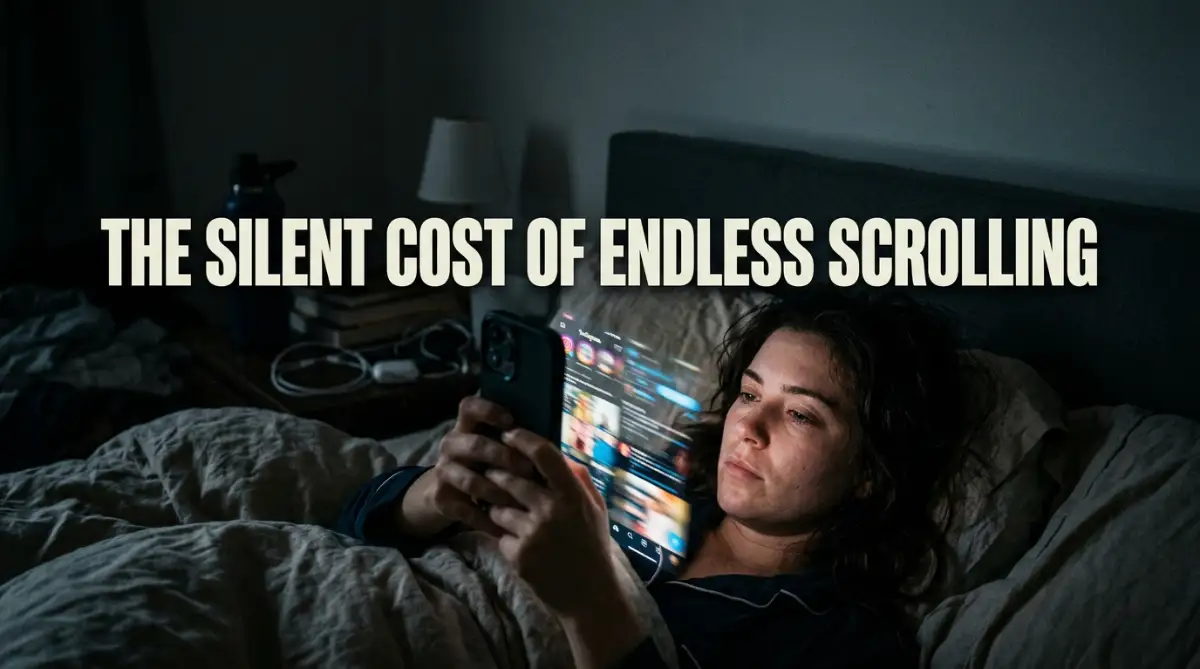
Picture this highly familiar scenario. You just got into bed after a long, exhausting day of work and responsibilities. Your body is heavily tired, and your eyes are practically begging you to shut them.
I remember a time when my phone was the absolute last thing I saw before sleeping and the very first thing I grabbed in the morning. I used to tell myself I was just "unwinding," but honestly, I was waking up feeling completely exhausted every single day. It took me a long time to realize that my harmless night routine was actually destroying my mental peace and stealing my sleep.
But instead of turning off the bedside lamp and closing your eyes, your hand automatically reaches for the nightstand. You tell yourself, "I will just check my messages for two minutes."
Those two minutes magically turn into forty-five minutes of completely mindless swiping. You watch videos of strangers making dinner, read negative news articles, and scroll through endless perfectly edited photos. By the time you finally put the device down, your brain feels completely wired.
Your heart is beating just a little bit faster, and that peaceful sleepy feeling is entirely gone. You wake up the next morning feeling like you never even slept.
Does this exact pattern sound deeply familiar to you? You are definitely not alone in this invisible trap.
We bought these devices to make our lives easier and to stay connected with the people we love. Yet, for millions of ordinary people, this glowing piece of glass has quietly turned into a massive source of daily anxiety.
We rarely notice the damage while it is happening. The shift in our mental state is incredibly slow and silent. You just start feeling a little more easily irritated. You notice you are constantly drained, even on your days off.
You might brush it off as normal stress from a busy life. But the harsh truth is that your daily screen habits might be the exact thing stealing your joy. Let us look closely at what is actually happening behind the screen and inside your brain.
Recognizing the Invisible Alarms in Your Daily Life
Admitting we are trapped in a bad habit is almost always the hardest step to take. When checking your phone seamlessly blends into your morning coffee routine, you simply stop viewing it as a real danger. It just feels like a normal, comforting part of your day.
Our brains have a very clever way of making unhealthy routines feel perfectly safe. Your mind quietly whispers that looking at a glowing screen all day is completely harmless. Yet, biology tells a completely different story about how this endless digital noise slowly damages our nervous system.
If we genuinely want to get our mental peace back, we have to wake up and notice these quiet red flags. Let me walk you through the most common, scientifically proven signs that your relationship with your device has quietly turned toxic.
Red Flag 1: The "Phantom" Buzz in Your Pocket
Have you ever reached into your pocket because you clearly felt your phone vibrate, only to find nothing there? This is actually a widely recognized psychological phenomenon called Phantom Vibration Syndrome.
Your brain has become so heavily conditioned to expect a notification that it literally invents the physical sensation. This is a massive warning sign regarding your current stress levels.
It means your nervous system is trapped in a permanent state of high alert. You are never truly relaxed because part of your brain is always waiting to be interrupted.
Think about a guard dog waiting to hear a suspicious noise in the dark. That is exactly how your brain is acting when it waits for a text message or an app alert. This constant anticipation slowly drains your daily energy reserves without you ever realizing it.
Red Flag 2: The Fog of Endless Doomscrolling
You sit on your living room couch to relax for five minutes before making dinner. You open your favorite app just to see what is happening in the world.
Suddenly, an hour has passed. Your thumb is moving entirely on autopilot, completely disconnected from your conscious mind.
You are consuming bad news, aggressive debates, and highly triggering content one after another. We call this destructive behavior doomscrolling, and it is terrible for your emotional well-being.
Your brain naturally seeks out danger to protect you, which is why negative news catches your attention so easily. App developers know this biological secret, so their algorithms feed you endless negativity to keep you glued to the screen.
Myth vs Reality: The Dopamine Trap
The Common Myth: We scroll through social media because it makes us genuinely happy and relaxed.
The Scientific Reality: You are not scrolling for happiness; you are scrolling for dopamine hits. Dopamine is the chemical of wanting, not liking. You keep swiping hoping the next video will make you feel good, leaving you in a permanent state of unfulfilled craving.
If you want to see exactly how these apps are secretly tricking your brain into a never-ending scrolling loop, you need to watch this short video. Once you understand the hidden psychology shown below, the rest of the recovery steps in this article will make perfect sense!
Red Flag 3: The Incredible Shrinking Attention Span
Try to remember a time when you could easily sit down and read a long book for an hour. Or think back to when you could watch a two-hour movie without looking down at your lap even once.
If trying to do those completely normal activities today feels like torture, your attention span has severely degraded. We are training our minds to crave constant, rapid changes every three to five seconds.
When your brain gets used to flashy videos and instant rewards, normal reality starts to feel painfully boring. This does not just affect your entertainment choices; it heavily damages your professional life and personal goals.
You will likely find yourself making silly mistakes at your job or completely tuning out when your family members are speaking to you.
Normal Focus vs Scattered Focus
Red Flag 4: "Screen Apnea" and Physical Tension
Did you know there is a very high chance you hold your breath when you read emails or scroll through feeds? Researchers have studied this exact behavior and named it "screen apnea."
It is a very real, measurable physical reaction to the digital stress caused by our devices. When you hold your breath or breathe very shallowly, your body naturally assumes you are in physical danger.
Your fight-or-flight response gets activated. Your heart rate slightly goes up, and your neck muscles get incredibly tight.
This biological reaction is exactly why your shoulders heavily ache after a long session of mindlessly swiping on the couch. You are putting your body through a mild panic attack just by checking your daily messages.
Red Flag 5: The Bitter Taste of Digital Comparison (FOMO)
You open a photo-sharing app and immediately see your friends hanging out at a beautiful cafe without you. A sudden, heavy wave of sadness and rejection hits your chest.
This deep fear of missing out (FOMO) makes you feel incredibly isolated and lonely. Interestingly, you probably wanted to stay home in the first place, but seeing the pictures still hurts your feelings.
When you spend hours consuming content, you start believing everyone else has a perfect, wealthy, and happy life. You are comparing your messy behind-the-scenes reality with someone else's perfectly edited highlight reel.
This constant, invisible competition is a massive poison for your personal self-esteem. It slowly convinces you that you are falling behind in life, which directly leads to heavy depressive thoughts.
Red Flag 6: The Terrifying Fear of Total Silence
When was the absolute last time you simply sat on a park bench, looked at the trees, and did absolutely nothing? For most people living today, doing nothing feels completely terrifying and awkward.
We instantly reach into our pockets to grab our phones just to fill the quiet void. If waiting for a cup of coffee for exactly two minutes makes you feel highly anxious without a screen, that is a huge warning sign.
We are actively using our smart devices as adult pacifiers to block out our own inner thoughts. We run away from our own minds by distracting ourselves with random internet noise.
But those rare quiet moments are exactly when your brain naturally processes difficult emotions and generates creative ideas. When you kill the silence, you essentially kill your own personal growth.
Expert Insight For Daily Relief:
If you want to test your actual dependency right now, try leaving your phone in completely another room for exactly one hour. Pay very close attention to how your body reacts. Do you feel a sudden tightness in your chest? Do your hands feel awkwardly empty? Acknowledging these uncomfortable withdrawal symptoms is the exact first step to regaining your mental freedom.
Red Flag 7: Sleep Revenge Procrastination
Let us circle back to the exact story we started with at the beginning of this post. Why do we stay up late looking at our screens even when we are painfully exhausted?
Psychologists refer to this harmful habit as "revenge bedtime procrastination." When you feel like you have zero control over your daytime hours due to work or chores, you try to steal time back at night.
Your smartphone becomes the easiest tool to claim some personal entertainment time. However, the blue light from your screen severely tricks your brain into thinking the sun is still up.
Your body aggressively stops producing melatonin, the essential chemical you need to fall asleep naturally. So not only are you going to bed incredibly late, but the actual quality of your sleep is completely ruined.
Waking up exhausted creates a terrible cycle. You feel tired the next day, so you rely on more screen distraction to get through the work hours, leading to more stress.
Breaking this exact cycle is entirely possible, but it requires a very specific plan and a strong commitment to your own health. You do not need to throw your device in the garbage, but you do need to set strong boundaries starting today.
Rewiring Your Brain: Proven Strategies for Digital Freedom
Now that we deeply understand how these glowing screens hijack our nervous system, we must take immediate action. You cannot simply wish your digital habits away. Your smartphone was specifically engineered by some of the smartest engineers on earth to hold your attention hostage.
To win this silent battle for your mental health, you have to outsmart the device. We are not talking about throwing your phone into the ocean or moving to a cabin in the woods.
We need highly practical, everyday strategies that actually fit into a normal routine. By intentionally adding small amounts of "friction" to your digital life, you can easily reclaim your peace of mind. Let us look at some highly effective ways to break the invisible chains.
The Magic of the Grayscale Method
Think about a brightly colored slot machine in a busy casino. The flashing red lights, the bright golds, and the deep blues are all designed to trigger immediate excitement in your brain.
Your smartphone app icons use this exact same color psychology to grab your focus. A bright red notification badge practically forces your eyes to look at it.
You can completely destroy this visual manipulation by changing your phone screen to grayscale mode. You can easily find this option in the accessibility settings of almost any modern smartphone.
When your screen turns entirely black and white, the device instantly becomes incredibly boring to look at. Browsing a colorful social media feed suddenly feels like reading a dull newspaper from decades ago.
You will honestly be shocked at how quickly you want to put the phone down when the bright colors disappear. This one simple setting change can heavily reduce your daily screen time without any extra willpower required.
When I first tried this grayscale trick, I actually felt annoyed because my favorite apps suddenly looked incredibly boring. But that tiny moment of frustration was a massive wake-up call for me—I finally saw how easily my brain was tricked by bright, flashy colors.
Creating True "Tech-Free" Safe Zones
Your home should be a relaxing sanctuary, not just another place to endlessly consume internet content. When you allow your phone into every single room, your brain never gets a clear signal to shut down and rest.
The most powerful boundary you can set today is banning the smartphone from your bedroom entirely. Your bed should be reserved for sleeping and resting, absolutely nothing else.
When you charge your phone right next to your pillow, you are practically inviting the whole stressful world into your bed. Buy a cheap, old-school digital alarm clock instead of relying on your phone to wake you up.
If you leave the device charging in the kitchen overnight, your mornings will completely transform. You will wake up and stretch, instead of immediately reading stressful work emails with one eye open.
This simple physical separation does wonders for your physical health as well. When you stop staring at glowing screens in the dark, you will also notice a massive improvement in your physical comfort, especially if you are actively looking into naturally relieving screen eye strain caused by late-night scrolling.
The "Friction" Strategy for App Management
Most people keep their most highly addictive apps right on their home screen. All it takes is one quick tap of your thumb, and you are instantly lost in a sea of videos.
You need to make bad habits much harder to perform. Start by completely deleting social media applications from your device and only logging in through the mobile web browser.
Using the browser version is often clunky, slow, and slightly annoying. That slight annoyance is exactly what you want! It creates a tiny window of time where your brain can pause and ask, "Do I really want to be doing this right now?"
If you absolutely must keep the apps for your job, hide them inside a folder on the very last page of your phone. Turn off every single non-human notification.
Unless a real human being is directly texting or calling you, your phone should remain completely silent. You do not need a breaking news alert interrupting your dinner with your family.
A Quick Exercise in Mindfulness
The next time you automatically reach for your device, force yourself to answer one simple question out loud. Ask yourself, "What exactly am I looking for right now?"
If the answer is "I do not know, I am just bored," force yourself to leave the phone on the table for ten more minutes. This tiny pause helps you switch from mindless autopilot back to conscious decision-making.

Why Most Digital Detoxing Attempts Fail Miserably
When people finally realize their screen time is totally out of control, they often panic. They decide to fix the problem overnight by taking extreme, dramatic measures.
They delete every single app, turn off their internet router, and declare they are quitting technology forever. This highly aggressive approach almost always ends in a massive failure within a few days.
Your brain has been heavily relying on this device for constant dopamine hits for several years. When you suddenly cut off that chemical supply completely, you will experience genuine psychological withdrawal symptoms.
Let us explore the common traps people fall into when trying to improve their digital habits. Understanding these hidden pitfalls will save you a massive amount of frustration.
The "Cold Turkey" Illusion
Imagine someone who drinks five cups of heavy coffee every single day. If they suddenly stop drinking coffee altogether, they will get terrible headaches and feel incredibly sick.
Digital habits work in a surprisingly similar way inside our nervous system. According to the American Psychological Association's research on technology stress, sudden and extreme digital disconnection can actually increase anxiety for heavy users because they feel entirely cut off from their social support networks.
Instead of completely abandoning your digital life, you must slowly reduce your usage step by step. If your screen time is currently six hours a day, simply aim for five hours this week.
Small, manageable reductions build long-lasting confidence. Extreme deprivation only builds heavy frustration and eventually leads to a massive binge-scrolling session later.
Swapping One Glowing Screen for Another
A very funny thing happens when people try to spend less time on their smartphones. They put the phone away, pat themselves on the back, and immediately open their laptop to watch a movie.
Or they grab their tablet device and start playing a mobile game instead. You are simply trading one glowing rectangle for a slightly larger glowing rectangle.
Your brain does not know the difference between a phone brand and a tablet brand. It only recognizes the rapid visual stimulation and the artificial blue light hitting your eyes.
If you want to truly rest your mind, you have to step away from digital screens entirely. Read a physical paper book, go for a walk outside, or do some simple stretching exercises on your living room floor.
Ignoring the Physical Body's Warning Signs
We often talk about phone habits purely as a mental health issue. However, we completely ignore how this addiction physically damages our bodies.
When we stress about our digital lives, we tend to slouch heavily and tense our shoulders. You might even find that your ergonomic setups fail to stop back pain because the actual root cause is the terrible posture you maintain while checking your phone at your desk.
Your physical comfort is deeply connected to your mental peace. When your neck is incredibly stiff from looking down at a screen for three hours, your brain naturally feels stressed and tired.
Pay close attention to how you physically hold your device. Keep your head up, take deep breaths, and actively relax your jaw muscles when you read your messages.
The Trap of Self-Guilt and Shame
Perhaps the biggest mistake of all is being incredibly harsh on yourself. You will definitely have days where you mess up and scroll for way too long.
You might get sucked into a negative news cycle on a Tuesday night. When this happens, do not call yourself lazy or weak.
Remember that you are fighting against billion-dollar algorithms that were literally built to exploit human psychology. Beating yourself up only creates more emotional stress, which actually makes you want to hide in your phone even more.
Treat yourself with deep kindness and simply try again the next day. A small slip-up does not completely ruin all the amazing progress you have made so far.
Your Personal Action Plan For A Calmer Tomorrow
We have covered a massive amount of ground today regarding your digital wellness. You now deeply understand how those tiny notification sounds manipulate your nervous system.
You know the hidden signs of digital burnout, from phantom vibrations to revenge bedtime scrolling. Most importantly, you now possess the exact tools needed to break this exhausting cycle.
You do not have to live your life constantly reacting to other people's emergencies and internet drama. You absolutely have the power to decide exactly when and how you use your technology.
It is time to slowly shift your identity from being a "mindless consumer" to becoming a highly intentional user. Let us wrap things up with a simple, practical checklist you can start using today.
Your First 48 Hours: A Simple Checklist
- Tonight: Move your phone charger completely out of your bedroom before going to sleep.
- Tomorrow Morning: Do not look at your screen for the first 30 minutes after waking up. Drink a glass of water first.
- Tomorrow Afternoon: Turn on grayscale mode during your busiest work hours.
- Tomorrow Night: Turn off all non-human application notifications from your settings menu.
Taking back your mental real estate is an ongoing, gentle journey. Every single time you choose to look at the sky instead of looking at your screen, you are actively healing your brain.
Start taking these small, powerful steps today. Your future self will deeply thank you for the renewed energy, the quiet focus, and the beautiful peace of mind.
Trust me, breaking away from your screen is not about punishing yourself; it is about getting your real life back. Once I finally put my phone away and started looking up at the real world, I found a sense of calm and happiness that no app could ever give me, and I know you can find that too.
Disclaimer: The information provided in this article is strictly for educational and informational purposes only and does not constitute professional medical or psychological advice. If you are experiencing severe anxiety, depression, or mental health struggles related to digital dependency, please consult a qualified healthcare provider or licensed therapist immediately.